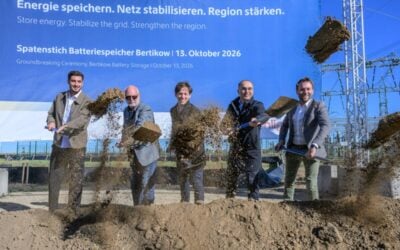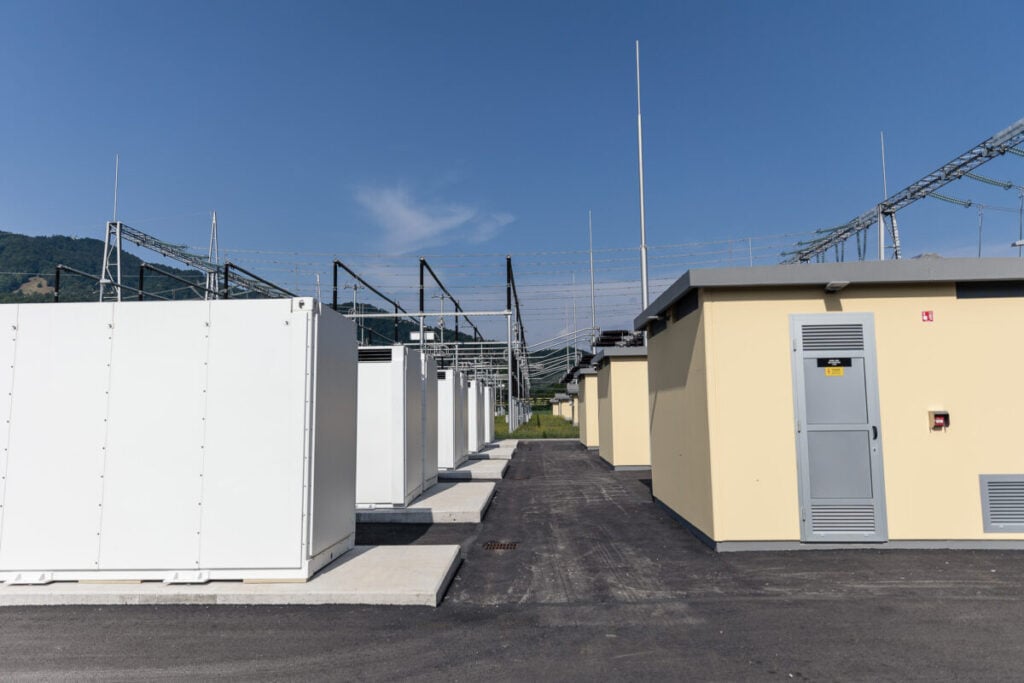
The European Commission (EC) has approved a financial support scheme to accelerate the deployment of battery storage technologies in Slovenia.
The EC said on Friday (31 July) that the €59 million (US$68 million) State aid scheme, aimed at supporting the deployment of 370MWh of battery energy storage system (BESS) capacity, is aligned with the European Union (EU) Clean Industrial Deal.
Clean Industrial Deal was launched in February 2025 to drive growth in European industries through decarbonisation. That includes taking action to lower energy bills, boosting demand for low-carbon technologies, supporting manufacturing within Europe, increasing circularity and sustainability, forming global partnerships, and developing a skilled workforce.
After the decarbonisation package was passed, the EC adopted a new State aid framework, the Clean Industrial Deal State Aid Framework (CISAF), which is in force until the end of 2030.
Try Premium for just $1
- Full premium access for the first month at only $1
- Converts to an annual rate after 30 days unless cancelled
- Cancel anytime during the trial period
Premium Benefits
- Expert industry analysis and interviews
- Digital access to PV Tech Power journal
- Exclusive event discounts
Or get the full Premium subscription right away
Or continue reading this article for free
The new Slovenian State aid package was approved under the CSIAF. The framework enables aid measures to accelerate the rollout of clean energy, support electricity costs for energy-intensive users, facilitate industrial decarbonisation, boost clean energy manufacturing, and de-risk private investments.
The EC agreed that the scheme contributes to the objectives of the Clean Industrial Deal. Standalone BESS deployments will help Slovenia increase the integration of renewable energy to the grid, which the commission said “will lead to increased stability, reliability and efficiency.”
“More storage capacity will enable better integration of the renewable energy sources in the power system and help ensure security of electricity supply for Slovenians,” EC executive VP for Clean, Just and Competitive Transition, Teresa Ribera, said.
Aid will take the form of direct grants for construction of new standalone BESS assets. The EC said the scheme’s design, where aid will be granted by the Slovenian state and based on an estimated volume and budget, relative to each project’s investment cost, was in line with CSIAF conditions.
A €150 million State aid scheme was approved for Romania in March under the CSIAF. That scheme aims to support the installation of at least 2,174MWh of new electricity storage facilities, contributing to Clean Industrial Deal objectives.
The Slovenian scheme will be financed by the EU Just Transition Fund and ETS Modernisation Fund, whereas the Romanian scheme will be financed by the ETS Modernisation Fund.
Other EU schemes to support energy storage deployment have been administered under prior frameworks, such as a package for Lithuania approved in 2024 under the State aid Temporary Crisis and Transition Framework (TCTF), which is a programme to help mitigate the impacts of Russia’s invasion of Ukraine on EU Member States. The EU previously also approved a €150 million State aid package for Slovenia under TCTF to support renewable energy and energy storage deployments in 2023.
Similar programmes have been approved for countries including Spain, Czechia, and Poland. In 2025, trade association Energy Storage Europe (then known as EASE) said that EU State aid frameworks, including the Clean Industrial Deal, would likely be a big driver for energy storage deployment in the coming years.