The Ministers of Energy and the Environment in Lithuania have approved an additional €37 million (US$43 million) for an energy storage capex grant scheme, while Trina Storage has secured orders in the country.
The additional funds from the Ministry of Energy were announced last week (18 July). The first call from the Environmental Project Management Agency (EPMA), which closed on 17 June, saw 50 applications for €197.86 million in support, nearly twice the €102 million which is available.
The scheme is part of a €180 million package approved by the EU late last year, funded by the State aid Temporary Crisis and Transition Framework (‘TCTF’). The TCTF is a programme to help member states economies and energy transition in the context of Russia’s invasion of Ukraine.
Lithuania’s scheme provides capex grants for up to 30% of costs for projects ranging between 15MW and 150MW intended to provide balancing services to the country’s transmission system operator (TSO) Litgrid.
Try Premium for just $1
- Full premium access for the first month at only $1
- Converts to an annual rate after 30 days unless cancelled
- Cancel anytime during the trial period
Premium Benefits
- Expert industry analysis and interviews
- Digital access to PV Tech Power journal
- Exclusive event discounts
Or get the full Premium subscription right away
Or continue reading this article for free
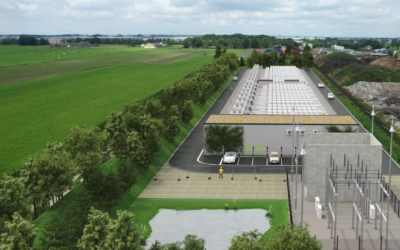
The news came a few days before solar PV firm Trinasolar announced firm deployment plans in Lithuania and the wider Eastern Europe region. Via its battery energy storage system (BESS) arm, Trina Storage, it will deploy three 30MW/60MWh projects totalling 90MW/180MWh in Anyksciai, Skuodas, and Jonava via a partnership with EPC firm Stiemo, with plans for multiple gigawatt-hours over the next 2-3 years.
For the first three projects, deliveries are scheduled to begin in December 2025 with commercial operations expected by mid-2026.
Lithuania grows as a storage market
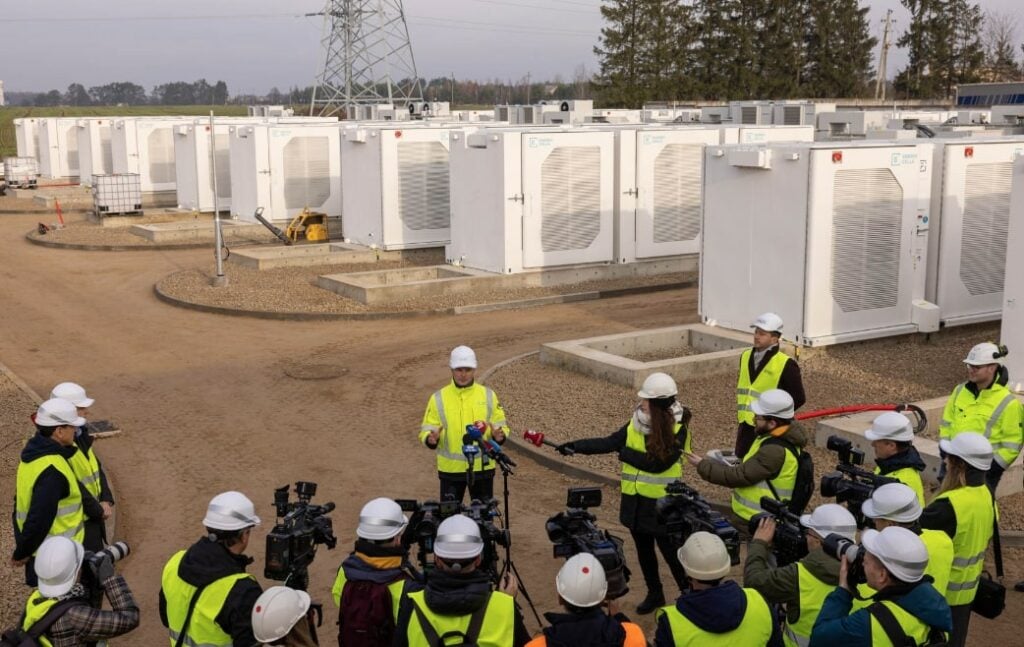
The Baltic states disconnected from Russia’s grid and connected to mainland Europe earlier this year, and BESS played a significant role in the process. Litgrid has deployed its own storage-as-transmission projects with system integrator Fluence.
The Ministry of Energy of Lithuania is aiming for 1.5GW/4.4GWh of new energy storage by 2028. The first call in June aimed to support the deployment of at least 800MWh, while the overall €180 million scheme aimed for 1.2GWh.
“We have allocated additional financing in response to the interest expressed by market participants to contribute to the stability of the Lithuanian energy system and the development of renewable energy. This shows that investors are ready to develop high-power electricity storage capacities, which will be necessary for accelerating the development of renewable energy and strengthening the flexibility and reliability of the electricity system,” said Minister of Energy Žygimantas Vaičiūnas.
“Lithuania has made significant progress in the field of renewable energy, therefore energy storage facilities are a prerequisite for its further development. This support for residents not only strengthens our positions and increases energy independence, but also contributes to reducing greenhouse gas emissions and accelerating progress in green changes,” added Minister of the Environment Povilas Poderskis.
Just this month, local investment vehicle UAB Karjerų linija and utility Ignitis Group invested in large-scale BESS projects in Lithuania while in February independent power producer (IPP) E energija Group launched construction on one.