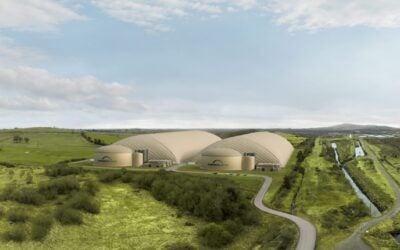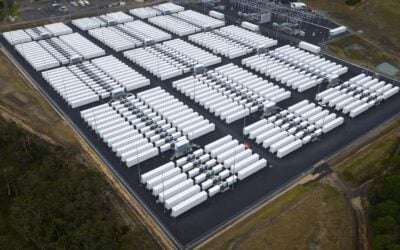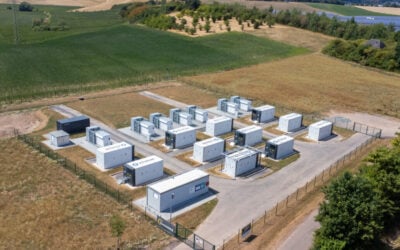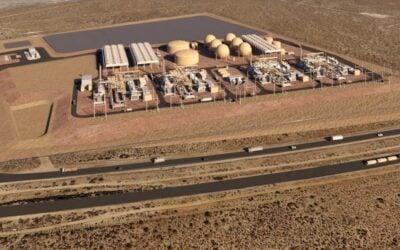
ESS Inc. has received UL1973 certification for the battery modules in its utility and industrial flow battery energy storage systems.
The company, headquartered in Oregon, US, said earlier this week that the S200 modules powering its Energy Warehouse commercial and industrial (C&I) products and Energy Center large-scale utility and grid battery storage have received the key certification.
ESS holds the IP for its proprietary flow battery technology, which is based on an iron and saltwater electrolyte. Not only is it safer from a fire risk perspective than lithium batteries, but is also non-toxic, unlike the electrolyte used in some other flow batteries, according to ESS.
UL1973 concerns the safe operation of battery energy storage system (BESS) technology, including evaluation of the systems’ ability to withstand simulated abuse conditions within the charge-discharge and usage parameters specified by the manufacturer.
Try Premium for just $1
- Full premium access for the first month at only $1
- Converts to an annual rate after 30 days unless cancelled
- Cancel anytime during the trial period
Premium Benefits
- Expert industry analysis and interviews
- Digital access to PV Tech Power journal
- Exclusive event discounts
Or get the full Premium subscription right away
Or continue reading this article for free
As such it is considered important if not essential in making technologies bankable, as well as making it far easier or quicker to get site-level permitting, commissioning and negotiate other obstacles in the early lifecycle of a BESS project.
This was explained in an interview with Energy-Storage.news by Matt Harper, the president of Invinity, another flow battery company, which achieved UL1973 certification last year for its VS3 modules.
Furthermore, recent updates to UL1973 as well as an overview of the certification and how it works were given in a webinar hosted by Energy-Storage.news with experts from standards organisation CSA Group in October last year.
Meanwhile ESS, which went public in late 2021, claiming to be the first long-duration energy storage (LDES) provider to do so in the US, ended 2022 with 800MWh annual production capacity for its flow battery.
The company has claimed some big orders, including a 2GWh multi-year deal with California municipal utility SMUD, and has licensed its tech to a partner in Australia, but only banked US$894,000 revenues for the whole of last year, and will be looking to start realising the revenues from those and various other deals. Representatives claimed in an interview with this site last year that ESS is receiving significant interest from major players across the energy space.
Watch the webinar: ‘Assessing the impact of updates to UL 1973 for stationary energy storage systems’, presented by Energy-Storage.news with CSA Group, on our YouTube channel here. You can also register to view it from Energy-Storage.news’ on-demand page.
Energy-Storage.news’ publisher Solar Media will host the 5th Energy Storage Summit USA, 28-29 March 2023 in Austin, Texas. Featuring a packed programme of panels, presentations and fireside chats from industry leaders focusing on accelerating the market for energy storage across the country. For more information, go to the website.