European Association for Storage of Energy (EASE), which represents 70 member organisations across the industry value chain, has undergone a rebrand.
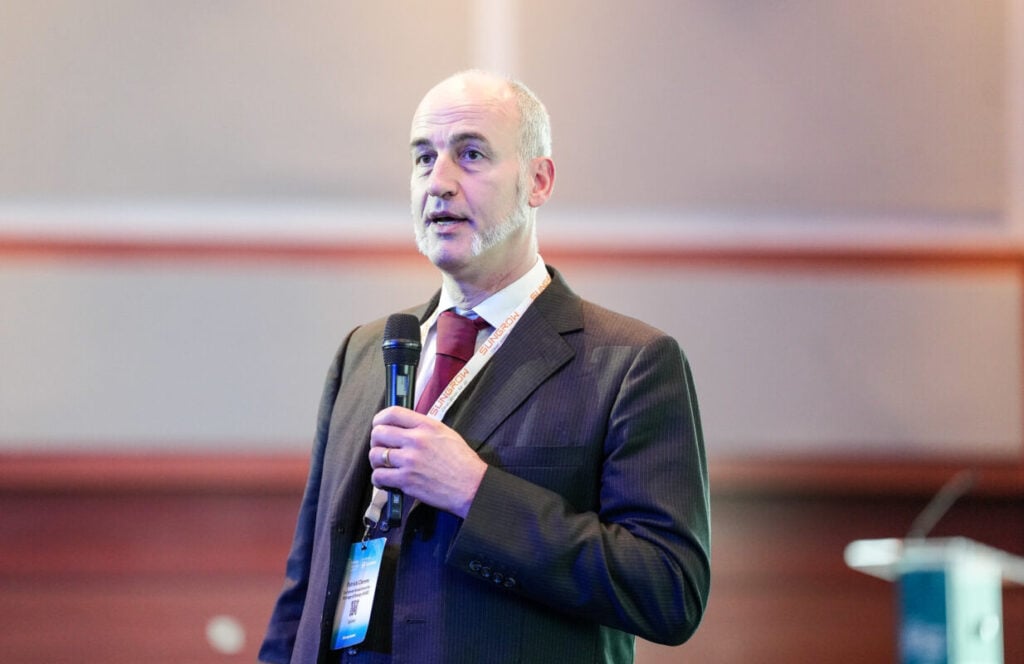
Now called Energy Storage Europe Association, the change marks “a new chapter for our organisation and the entire sector,” said Patrick Clerens, the group’s secretary general, whose consulting group was tasked with launching EASE back in 2011.
“Europe’s energy future depends on energy storage. Our new identity will amplify this message to ensure we are at the heart of policy debates,” Clerens said.
Its activities include advocacy in the decision-making processes of European policymakers and regulators; direct participation in European Union (EU) research projects; providing market intelligence, including the European Market Monitor on Energy Storage (EMMES) reports; and networking and media engagement.
Try Premium for just $1
- Full premium access for the first month at only $1
- Converts to an annual rate after 30 days unless cancelled
- Cancel anytime during the trial period
Premium Benefits
- Expert industry analysis and interviews
- Digital access to PV Tech Power journal
- Exclusive event discounts
Or get the full Premium subscription right away
Or continue reading this article for free
EMMES is published annually by the trade association and research consultancy LCP Delta. The most recent edition, EMMES 9.0, found that 11.9GW/21.1GWh of energy storage was deployed across Europe in 2024, including 4.9GW/12.1GWh of front-of-the-meter storage.
Meanwhile, the organisation’s advocacy and education efforts include a recent call for common safety standards across European markets and a best practice guide to fire safety for outdoor utility-scale lithium-ion battery energy storage system (BESS) installations.
“In 2025, Europe added new energy storage power capacity at a scale 15 times greater than just five years ago. With this unprecedented growth, a more visible identity was essential to the Association,” Energy Storage Europe Association president David Post said.
“We will continue to represent the entire value chain and all storage technologies, advocating for policies that enable the needed flexibility and strongest deployment across Europe,” said Post, who is also Enel X head of energy storage solutions.
Energy Storage Association Europe’s rebrand this week reflects a broader push for increased visibility and stronger representation among industry bodies of late.
The energy storage association is itself part of Europe’s Energy Storage Coalition, formed alongside counterparts in the wind and solar PV industry to advocate for a Europe-wide policy action plan on storage.
SolarPower Europe, while a member of the coalition alongside EASE, WindEurope and Bill Gates’s VC group Breakthrough Energy, also founded the Battery Storage Europe Platform earlier this year.
That said, Battery Storage Europe Platform is less of a trade association and more of a direct initiative to engage policymakers and regulators, SolarPower Europe said at the July launch.
In the US, the country’s only national Energy Storage Association (ESA) merged with a wind industry group in 2021, becoming part of the American Clean Power Association (ACP).
However, ACP then launched its own separate energy storage effort a few weeks ago, called, confusingly enough, the US Energy Storage Coalition.