European energy storage trade association EASE has recommended the harmonisation of international standards for battery storage safety.
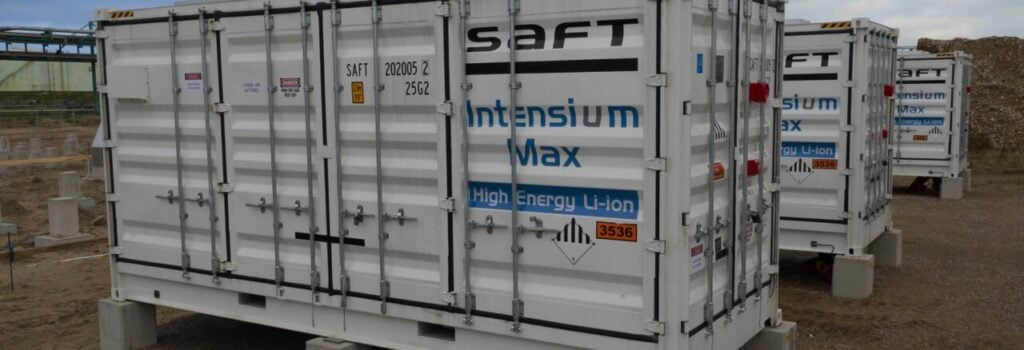
EASE, or the European Association for Storage of Energy, published a guide to fire safety for outdoor utility-scale lithium-ion (Li-ion) battery energy storage systems (BESS), coinciding with the Intersolar Europe / electrical energy storage Europe trade events taking place in Munich, Germany.
According to an EASE spokesperson, its guidelines “serve as a blueprint for the safe deployment of BESS across Europe,” consolidating best practices and providing practical recommendations to stakeholders.
BESS safety incidents are rare—according to an often-quoted study by the US Electric Power Research Institute (EPRI), one fire occurs for every 35GW of systems in the field, while failure rates dropped 97% between 2018 and 2023—and most often occur during the early lifecycle of projects.
Try Premium for just $1
- Full premium access for the first month at only $1
- Converts to an annual rate after 30 days unless cancelled
- Cancel anytime during the trial period
Premium Benefits
- Expert industry analysis and interviews
- Digital access to PV Tech Power journal
- Exclusive event discounts
Or get the full Premium subscription right away
Or continue reading this article for free
However, with deployments rapidly expanding in Europe and elsewhere, the need to ensure safety and offer reassurance to the public and other stakeholders is paramount.
Safety standards should be applied from design through development, installation and maintenance, EASE said, and safety measures can be implemented in terms of preventive, containment and mitigation of hazards.
Within European Union (EU) countries, stationary BESS must comply with the EU regulation 2023/1542, which requires evidence that minimum safety requirements have been fulfilled.
A risk assessment and hazard mitigation strategy are also needed for compliance, but the trade association notes that there are no harmonised standards for demonstrating systems meet requirements, with the onus placed on the manufacturer to select testing procedures and make relevant declarations.
While the US BESS industry has adopted UL standards for safety including UL1973 to evaluate overall safety and operation and UL9540 for components and system integration, EASE’s study found the European IEC standards to be less comprehensive and less uniformly adopted.
This leads to big differences in test procedures and parameters measured including temperature, state of charge (SoC) and discrepancies in the stringency of pass/fail criteria, EASE said. Standards in place today should be considered minimum criteria rather than comprehensive signposts for best practice.
The trade association said its guide was created in collaboration with experts from its member organisations, including Fluence, Jinkosolar, EDF, Engie, Saft and others.
Input was also gathered from national energy storage associations, while the guide was reviewed to ensure alignment with up-to-date regulatory and technical standards by the EU Joint Research Centre, EPRI, and the European Committee for Electrotechnical Standardisation (CENELEC).
The trade association said the guidelines are intended as a “living document” and will be updated regularly. They can be downloaded from EASE’s website.