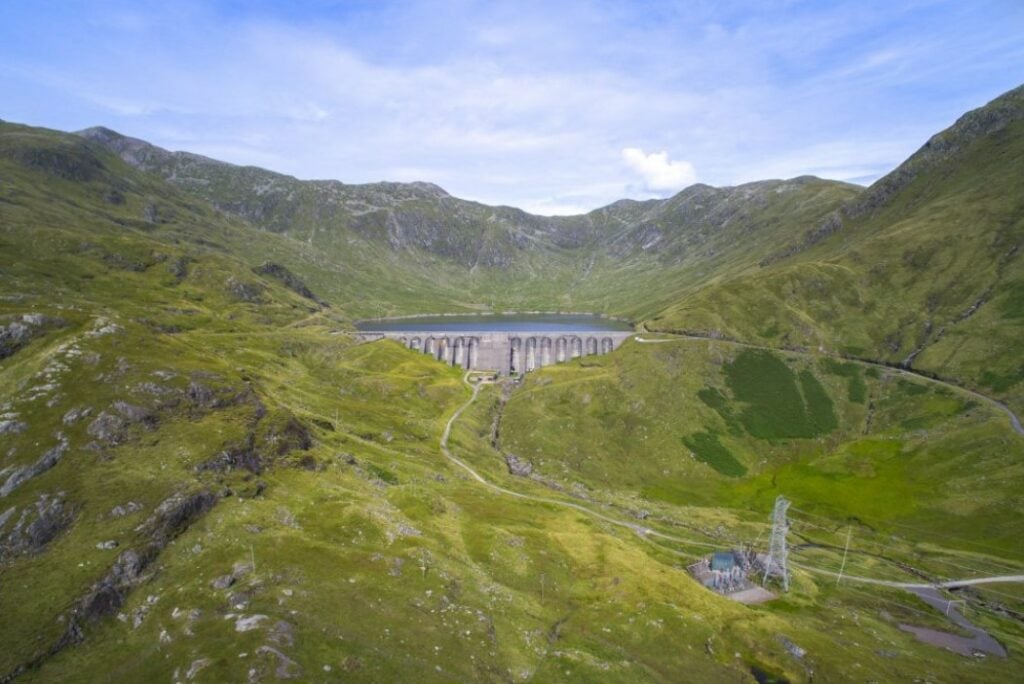
UK power generation firm Drax will not bid its Cruachan II pumped hydro energy storage (PHES) project into the LDES cap and floor scheme, saying that costs have risen while ‘recoverability of capital’ is unclear.
The UK government recently launched the first window of its long-duration energy storage (LDES) cap and floor scheme to underwrite revenues and reduce investor risk for projects deliverable between 2030 and 2033, with applications due by 9 June, 2025.
Drax however today (1 May) said it would not participate in this first phase of the cap and floor scheme with the 600MW Cruachan II project, an extension of the existing 440MW Cruachan pumped storage plant. The firm completed initial design and engineering work on an option to extend it last year.
‘The projected cost of Cruachan II has risen over the past two years, whilst at the same time, the recoverability of all capital invested in the project remains unclear. Therefore, Drax will not participate in this first phase of the cap and floor scheme but will retain the option for potential future development, subject to an appropriate balance of risk and return,’ it said in a trading update.
Try Premium for just $1
- Full premium access for the first month at only $1
- Converts to an annual rate after 30 days unless cancelled
- Cancel anytime during the trial period
Premium Benefits
- Expert industry analysis and interviews
- Digital access to PV Tech Power journal
- Exclusive event discounts
Or get the full Premium subscription right away
Or continue reading this article for free
The company believes the project is aligned with the long-term system need in the UK for flexible generation and energy storage and its location in Scotland is ideal given the cross-border constraints, with lots of wind generation in and around Scotland but big demand centres being south of the border. The firm first applied to expand Cruachan in 2022.
The decision to pulled Cruachan from the scheme is interesting considering that a collection of the UK’s short-duration battery energy storage system (BESS) owner-operators have recently signalled their opposition to the LDES cap and floor in an open letter, saying it is biased towards pumped storage. Cruachan II has been one of the most high-profile pumped storage projects expected to bid in.
We published an interview with one of the signatories, James Basden, founder of Zenobē, yesterday (Premium access), in which he argued the LDES cap and floor is the wrong approach to securing resiliency for the grid of the future.