Sodium-ion’s position has strengthened substantially in the past 12 months but its adoption in Europe depends on several key factors including data centres and their use case, an analyst said.
Edward Rackley, head of energy storage at commodities intelligence firm CRU Group, was speaking to Energy-Storage.news ahead of the PV ModuleTech Europe 2026 event in Malaga, Spain, next week on 3-4 November.
Rackley will be giving a presentation during the ‘Battery Technology Landscape – LFP Dominance & Alternatives’ session on Day One.
Rackley says that the supplier offering in the space has increased substantially in the past year but challenges remain on the developer and integrator side. Bankability ‘isn’t a complete stumbling block’ anymore considering the amount of projects coming online, but system-level capex is.
Try Premium for just $1
- Full premium access for the first month at only $1
- Converts to an annual rate after 30 days unless cancelled
- Cancel anytime during the trial period
Premium Benefits
- Expert industry analysis and interviews
- Digital access to PV Tech Power journal
- Exclusive event discounts
Or get the full Premium subscription right away
Or continue reading this article for free
CRU is only forecasting parity between sodium-ion and LFP (lithium iron phosphate) cells in 2028, but even then you have battery energy storage system (BESS) level costs and project-level costs. Sodium-ion’s significantly lower energy density may pose a challenge for the latter, particularly in the space-constrained European market.
The other major factor determining sodium-ion’s adoption in Europe will be use cases, particularly around data centres, Rackley said.
“The major game-changer we’ve seen in the market over roughly the last six months has been sodium-ion being used in China predominantly on the data centre side,” he said.
“AI data centres doing training have short, sharp high-power demands, and we’ve seen sodium-ion projects being used because it is very robust under that use case. You can discharge the battery quickly down to zero, whereas LFP’s warranties actually only really allow 80% of the battery’s capacity, to preserve its health.”
“That’s been a key niche sodium can draw into, and it’s advancing its claims faster than we would have expected 24 months ago.”
CRU is forecasting that 10-15% of BESS installations in Europe by 2030 will be linked to data centres, which is significant but much less than the US’ 50%.
However, when looking at inference AI data centres, those running the actual provision of AI services, that opens up opportunities for energy storage beyond BESS entirely.
“Inference is where a lot more of the energy capacity and demand will come from, given the sheer number of people using AI, and that’s where we’re seeing much more interest in long-duration energy storage (LDES) technologies,” Rackley said.
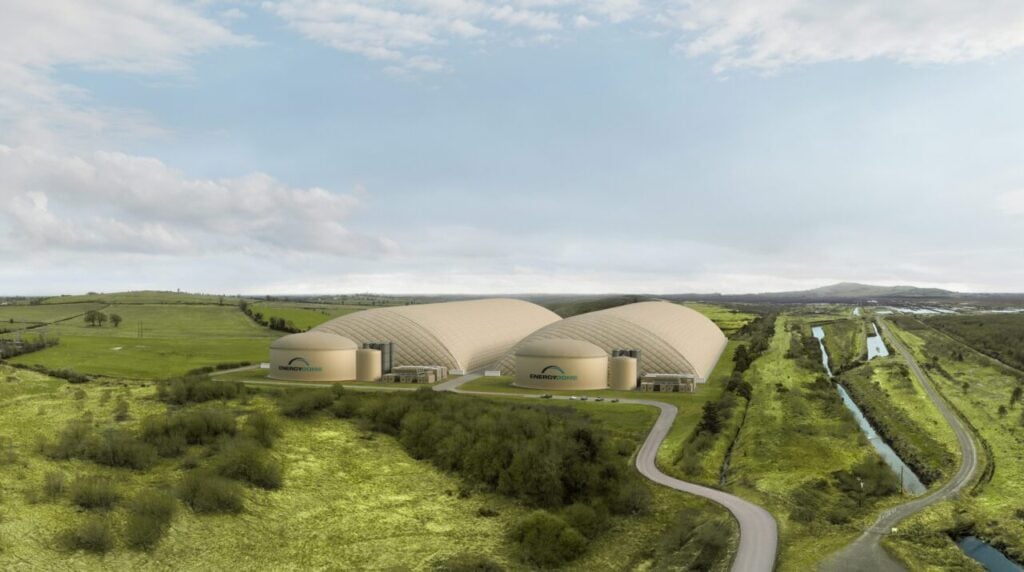
Rackley points to Invinity’s potential 2.1GWh flow battery at a data centre in Switzerland and Energy Dome’s CO2 Battery project with Google in Ireland as examples.
“The reason LDES and long-duration technologies are entering this space is that inference involves power and energy draw across multiple days. LFP could do 16 hours of discharge, but you’re not using the chemistry to its strengths — it prefers daily charge and discharge cycles. Long-duration, seasonal-type storage has an advantage in that part of the space.”
“The other interesting thing about data centres is that it’s a very different picture from classic developers running normal grid-scale projects. For data centre owners, the battery storage system is probably only 5-10% of overall capex — it’s not the main cost driver. That makes them much less cost-sensitive than a renewables developer trying to get a solar-storage project into the ground in, say, Spain.”
“That means more opportunistic AI data centre developers are willing to try other technologies — including long-duration technologies that haven’t necessarily been bankable before — because they’ll have available capacity.”