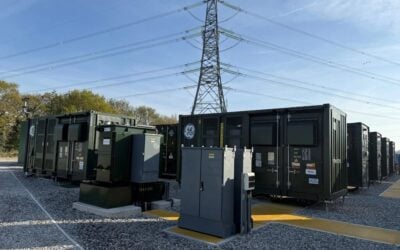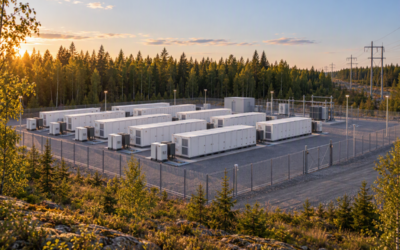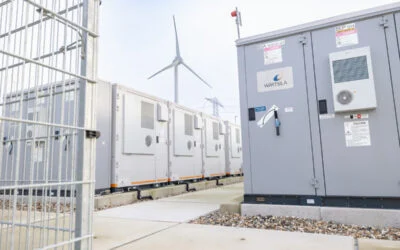
The UK’s energy regulator Ofgem has launched a new cap and floor investment support scheme in an effort to unlock billions in funding for new Long Duration Electricity Storage (LDES) projects.
The launch of the scheme is the end of a collaborative process between the Department for Energy Security and Net Zero (DESNZ), the National Energy System Operator (NESO) and Ofgem, which began in October with the confirmation that a scheme discussed for the past couple of years would be introduced to regulate the minimum and maximum profits that LDES developers could face for projects, in a similar manner to the scheme already in place for interconnector projects (Editor’s note: although ‘LDES’ usually denotes ‘long-duration energy storage’, the Ofgem scheme specifically targets electricity-storing resources).
A call for input into the scheme ran between December 2024 and January of this year, and a Technical Decision Document on the scheme was published last month.
Developers able to deliver LDES projects by 2030 and 2033 to meet the government’s Clean Power 2030 target are now being invited to apply to the scheme, with applications closing on 9 June 2025. The first projects are expected to be approved by Q2 of 2026.
Try Premium for just $1
- Full premium access for the first month at only $1
- Converts to an annual rate after 30 days unless cancelled
- Cancel anytime during the trial period
Premium Benefits
- Expert industry analysis and interviews
- Digital access to PV Tech Power journal
- Exclusive event discounts
Or get the full Premium subscription right away
Or continue reading this article for free
The aim of the cap and floor regime is to encourage developers to build LDES projects in order to support the growing need for energy storage to balance a grid powered more prominently by variable sources of renewable energy.
Although DESNZ and NESO have called the expansion of LDES “crucial” to the future of the UK’s net zero ambitions, no new LDES infrastructure has been built in the last four decades owing to numerous barriers, including high upfront costs.
The cap and floor regime solves this by setting minimum and maximum revenues that can be gained from LDES projects. The minimum revenue floor is expected to increase investor confidence and thus encourage private investment into LDES projects by providing minimum revenue for LDES operators to help manage start-up costs and long build times.
Meanwhile, the scheme ensures value for money for UK energy consumers by only allowing efficient projects with a storage duration of over eight hours to take part and sets a maximum cap on profits, with any excess revenue fed back to customers via their bills.
Government analysis has found that with 20GW of LDES, the target set for 2050, the UK electricity system could save as much as £24 billion (US$31.24 billion) between 2030 and 2050. Meanwhile, NESO’s Future Energy Scenarios report advised the government to add between 2.7GW to 7.7GW of stored power by 2035, around double Britain’s current strategic reserve spread across four pumped hydro storage schemes in Scotland and Wales.
To read the full version of this story, visit Solar Power Portal.