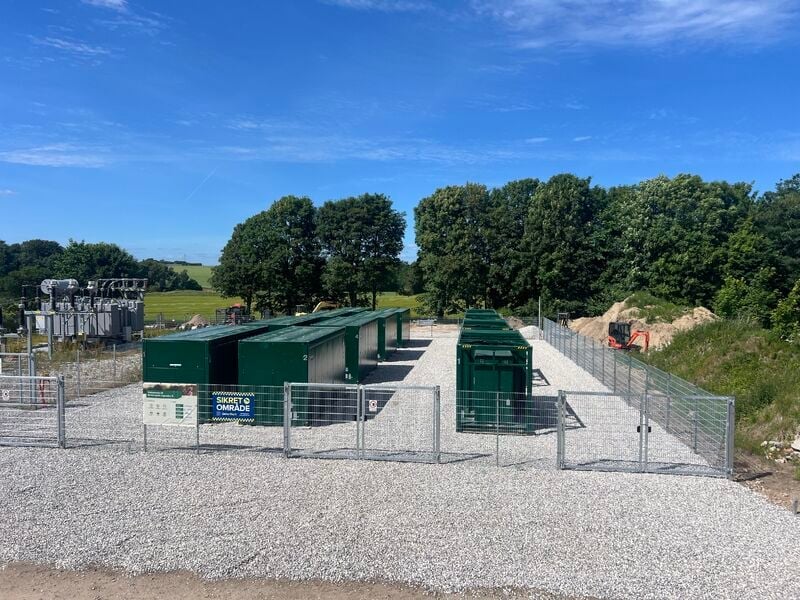
Danske Commodities will optimise a BESS project that developer-operator BeGreen has added to a solar PV plant in Denmark, which the trading house already operates for BeGreen.
The companies are extending their partnership for the Ingerslev Å solar-plus-storage project in Denmark’s Norddjurs Municipality in the DK1 price area, they said last week (12 August).
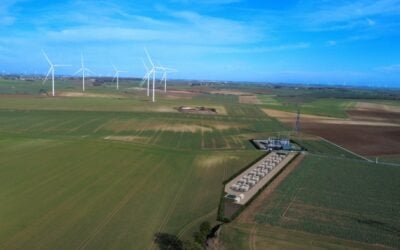
A 20MW/40MWh battery energy storage system (BESS) has been added to the 48MW solar PV plant, operational since June 2025, and Danske will be the operator for the whole plant.
Technically speaking, it is the balancing responsible party (BRP) for the solar PV and balancing service provider (BSP) for the BESS.
Try Premium for just $1
- Full premium access for the first month at only $1
- Converts to an annual rate after 30 days unless cancelled
- Cancel anytime during the trial period
Premium Benefits
- Expert industry analysis and interviews
- Digital access to PV Tech Power journal
- Exclusive event discounts
Or get the full Premium subscription right away
Or continue reading this article for free
BeGreen didn’t explicitly say that the hybrid project is fully operational in the announcement. But a month ago it said that ‘hot’ commissioning was underway before final release and that it was approaching inauguration of the BESS, so it must be close to full operations if not already.
Danske Commodities said that the BESS will improve the utilisation and value of the solar energy produced by the Ingerslev Å plant.
The trading house is already the optimiser for Denmark’s largest BESS, the 200MWh Kvosted project, for owner IPP European Energy since 2025. Last month, European Energy completed two other co-located BESS projects, totalling 152MWh.
Danske’s UK-based principal originator Rimshah Javed discussed the evolution of offtake structures in the European market while at the Energy Storage Summit 2026 earlier this year (ESN Premium access).
In that discussion, Javed explained that standalone BESS projects in Denmark are treated as consumers and so pay additional grid tariffs. Those co-located with solar do not, which explains why most large-scale projects are deployed alongside solar there.
Like the UK, Denmark has significantly more wind than solar PV generation, making it the main driver for the flexibility that storage can provide.