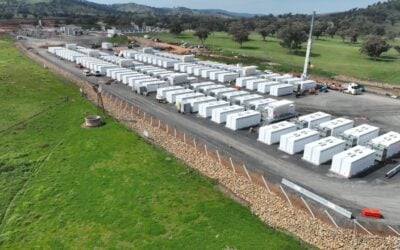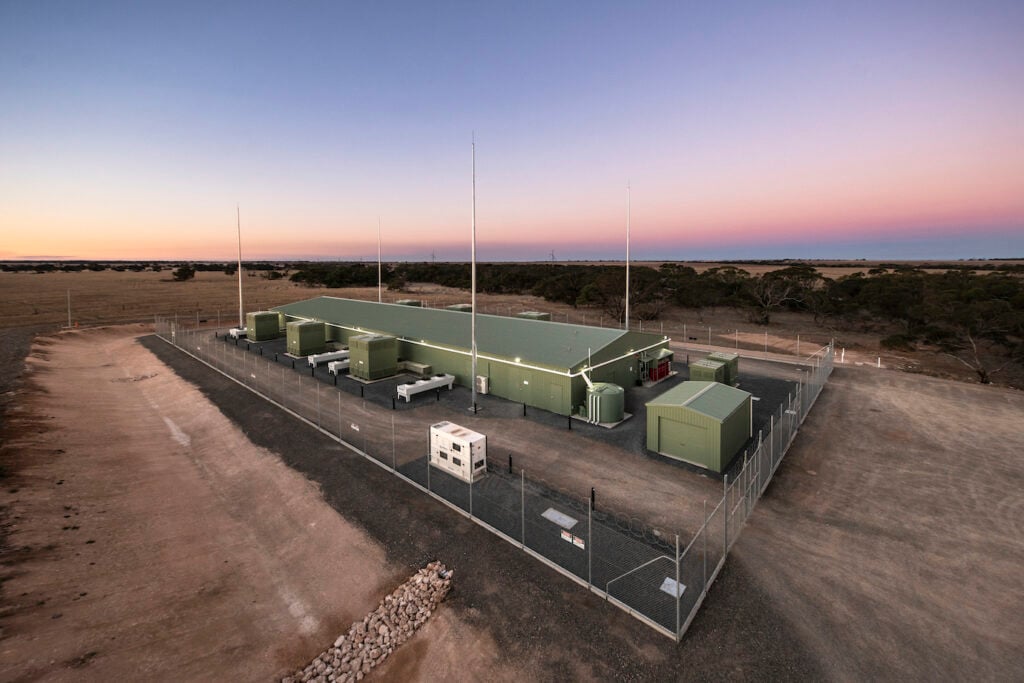
Work is progressing on a large-scale battery storage project which will deliver nearly AU$10 million (US$6.7 million) in annual electricity system cost savings in Australia’s Northern Territory (NT).
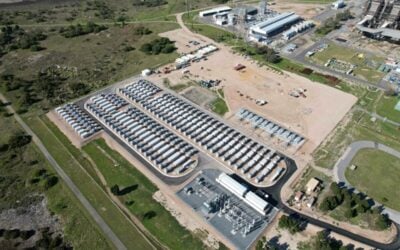
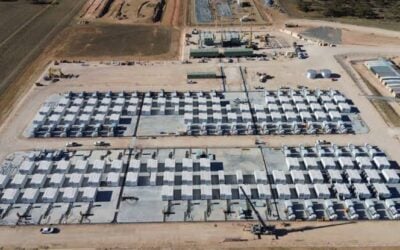
The state’s government announced yesterday that civil and building works have now been completed at the Darwin-Katherine Battery Energy Storage System (DK BESS), describing it as a “construction milestone” for the project.
Hitachi Energy, selected as the BESS technology provider through a competitive tender process in late 2021, is now onsite at Channel Island Power Station. The power station site is owned by Territory Generation, the NT’s main electricity producer, which is itself state government owned.
While the total cost of the 35MW BESS project is around AU$45 million, it is projected to help reduce the costs of running and balancing the electricity grid by about AU$9.8 million every year of operation, meaning payback will be achieved in under five years.
Try Premium for just $1
- Full premium access for the first month at only $1
- Converts to an annual rate after 30 days unless cancelled
- Cancel anytime during the trial period
Premium Benefits
- Expert industry analysis and interviews
- Digital access to PV Tech Power journal
- Exclusive event discounts
Or get the full Premium subscription right away
Or continue reading this article for free
It will provide grid-balancing services for the Darwin-Katherine electricity network that serves 150,000 people in the NT.
The system will help smooth the integration of locally generated solar power from homes and businesses. With Australia one of the world’s rooftop solar PV capitals, the Northern Territory government found that in its state, PV installations have grown by 45% each year since 2010.
To help maintain reliability of the grid as that variable generation comes onto the network, the grid needs to respond quickly to mitigate cloud cover. That role is currently being played by natural gas spinning reserve units, which have fuel and maintenance costs associated with them, as well as emissions and air pollution.
Battery storage can reduce the need for those balancing fossil fuel assets and in addition to rooftop solar, could play a role in enabling more large-scale solar PV plants to be built in the region.
A growing number of battery storage projects in Australia are using advanced inverter technology to deliver a synthetic version of the synchronous inertia provided by the large rotating mass of thermal power plants.
By responding to grid signals to adjust the supply and demand of power through charging and discharging electrons rather than adjusting the voltage mechanically, this technology is often called virtual inertia.
BESS that delivers this role is often described as “grid-forming”. Hitachi Energy was the first provider to do this application at a large-scale BESS in Australia, with its ESCRI project in Dalrymple, South Australia, a few years ago.
As with the Dalrymple project, Hitachi Energy’s grid-forming Virtual Synchronous Machine technology including advanced inverters will be used in the NT at the DK BESS.
The BESS will also be used to trial the provision of a number of other different grid-balancing services to the network, for Territory Generation and the NT government to assess the roles batteries can play.
Northern Territory chief minister Natasha Fyles and minister for renewables and energy Selina Uibo said yesterday that works have started on a new 132/11.5kV power transformer at the DK BESS site, and the first tranche of inverter enclosures installed. Early construction works had begun in late August.
“Construction of the Darwin-Katherine BESS is a huge step forward in our plan for 50% renewables by 2030. Our electricity will be more reliable and stable, whilst maintaining affordability for Territorians which is what they expect and deserve,” Uibo said.
Other large-scale battery storage systems currently under construction in Australia include the Capital Battery 100MW/200MWh project in the Australian Capital Territory and the 150MW/150MWh Hazelwood BESS in Victoria.