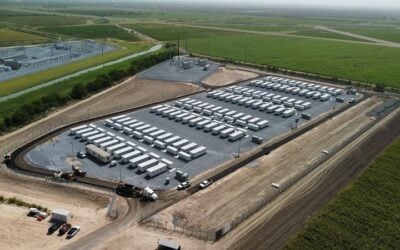
Utility Pacific Gas and Electric (PG&E) has announced intent to award up to US$43 million in grant funding for nine new community-driven microgrids in California, US.
The funding comes through the Microgrid Incentive Program (MIP). MIP was created through 2018’s Senate Bill 1339 (SB 1339).
SB 1339 tasked the California Public Utilities Commission (CPUC), in collaboration with the California Energy Commission (CEC) and California Independent System Operator (CAISO), to create policies regarding microgrids across the state.
In April 2023, the CPUC approved a US$200 million MIP funded by PG&E and its two fellow investor-owned utilities (IOUs) in the state, San Diego Gas & Electric (SDG&E), and Southern California Edison (SCE).
Try Premium for just $1
- Full premium access for the first month at only $1
- Converts to an annual rate after 30 days unless cancelled
- Cancel anytime during the trial period
Premium Benefits
- Expert industry analysis and interviews
- Digital access to PV Tech Power journal
- Exclusive event discounts
Or get the full Premium subscription right away
Or continue reading this article for free
The MIP is intended to support the most vulnerable members of California’s population who would most likely be impacted by outages.
PG&E says it received approximately 50 project inquiries after launching the MIP. 22 out of these 50 have received a grant of US$25,000, which PG&E says is meant to offset community investments in developing the project applications.
From there, nine projects were selected along a criterion used to determine the highest benefit-to-cost ratio.
Now, prior to accepting the awards, the nine MIP projects will perform due diligence to reconfirm project assumptions, make any changes to development costs and reassess possible risks associated with other funding sources.
Up to US$43 million will be awarded to the projects. US$34 million will be used to pay solar, batteries, engineering and project management costs and property purchase or lease costs.
Additionally, PG&E will provide up to US$1 million to cover interconnection costs for the distributed energy resources (DERs) that will power the microgrids.
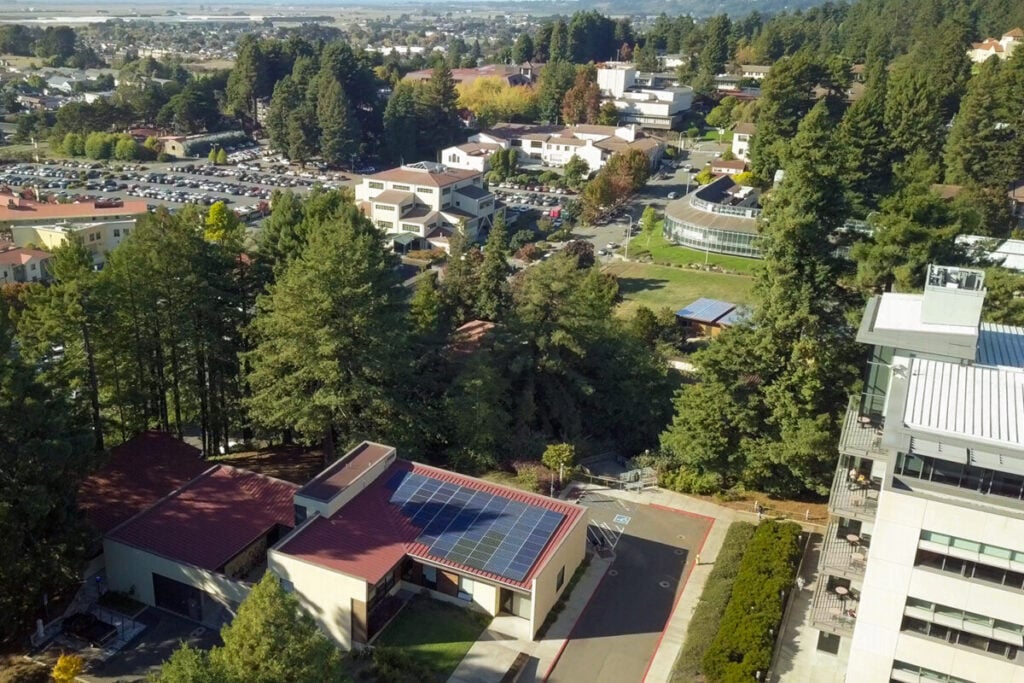
Four projects are located in Humboldt County, California, three are in Lake County, California and two are located in Marin County, California.
The utility says that generation resource types for selected MIP projects include a variety of solutions, such as solar, battery energy storage, pumped hydroelectric storage, small hydroelectric and biomass.
PG&E has previously deployed microgrids funded by MIP and the Community Microgrid Enablement Program (CMEP).
The Redwood Coast Airport Microgrid was California’s first 100% renewable energy, front-of-meter customer microgrid located in Humboldt County, California.
It provides energy for the California Redwood Coast-Humboldt County Airport and U.S. Coast Guard Air Station and was developed with PG&E, the Redwood Coast Energy Authority, the Schatz Energy Research Center at Cal Poly Humboldt, Schweitzer Engineering Labs, the County of Humboldt, The Energy Authority and TRC
The Redwood Coast Airport Microgrid consists of a 2.2MW photovoltaic (PV) array DC-coupled with a 2.3MW/8.9MWh battery. The project officially reached commercial operation in June 2022.
In December of the same year, a 6.4 magnitude earthquake brought about power outages in Humboldt County. The microgrid disconnected from the grid and multiple times during the outages, for sometimes hours at a time, provided power to the airport and Coast Guard Air Station.
Speaking with Sacramento, California non-profit CivicWell, Peter Lehman, Founding Director of the Schatz Energy Research Center said of the event:
“Operating through a worst case of difficult conditions—the winter solstice, rainy weather, a partially discharged battery—the microgrid seamlessly provided power to the airport and the Coast Guard Air Station, keeping one of the County’s lifelines up and running for nearly 15 hours during a widespread grid outage.”