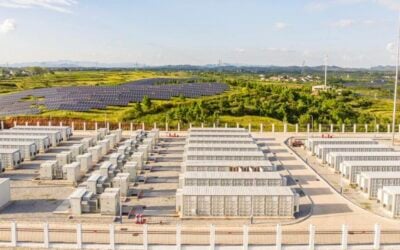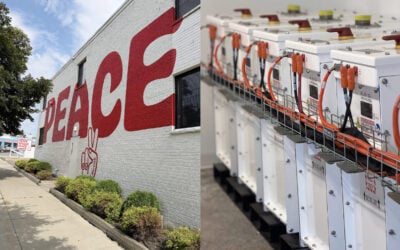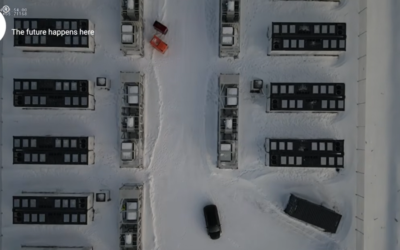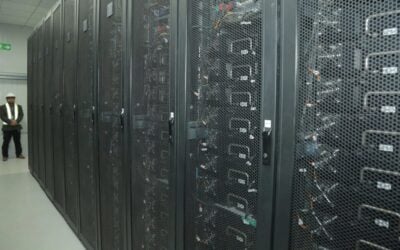
Installed battery storage capacity in California, US has grown from 771MW in 2019 to more than 15,500MW as of 31 January, 2025.
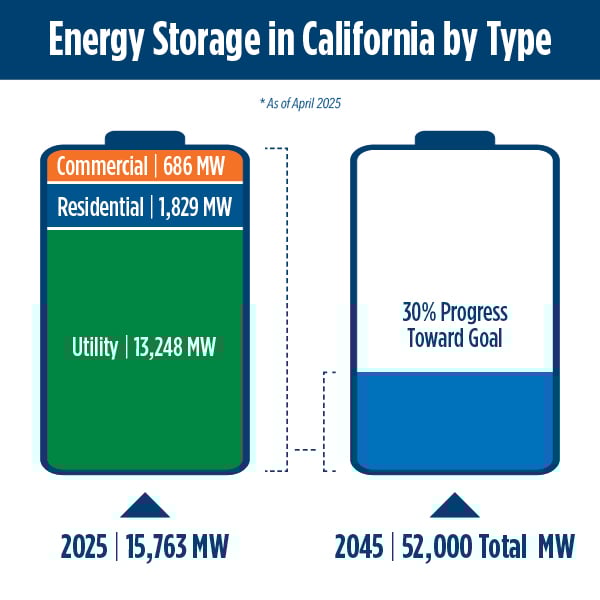
According to the new California Energy Storage System Survey from the California Energy Commission (CEC), the state’s battery storage capacity totals 15,763MW.
Of this amount, 686MW is commercial installations, 1,829MW is residential installations, and 13,248MW is utility-scale installations.
The 15,763MW figure also represents a 2,300MW growth from September 2024, when the CEC last published its Energy Storage Survey.
Try Premium for just $1
- Full premium access for the first month at only $1
- Converts to an annual rate after 30 days unless cancelled
- Cancel anytime during the trial period
Premium Benefits
- Expert industry analysis and interviews
- Digital access to PV Tech Power journal
- Exclusive event discounts
Or get the full Premium subscription right away
Or continue reading this article for free
California governor Gavin Newsom’s office issued a statement on the survey, saying that since the start of his administration, energy storage installations in the state have increased 1,944%.
Newsom said:
“California is adding battery storage at a pace never seen before as we continue our work to build the grid of the future. The key to a cleaner, more reliable power grid is batteries, and no other jurisdiction on the planet, save China, comes even close to our rapid deployment.”
The governor’s office also said that California has reduced its greenhouse gas emissions by 20% since 2000, despite a 78% increase in the state’s GDP during the same period.
California aims to deploy 52,000MW of energy storage by 2045. The state projects that more than 48,000 MW of battery storage and 4,000 MW of long-duration energy storage (LDES) will be needed in total to meet this goal.
The CEC’s survey includes a dashboard breaking down the state’s installations by type and county.
There are 249,340 residential installations with an average capacity of 7kW, 3,335 commercial installations with an average capacity of 206kW and 214 utility installations with an average capacity of 61,907kW.
In total, this is 252,889 energy storage installations with an average capacity of 62kW.
Notably, Kern County, California, is leading in total installed capacity with 1,501,030kW, or approximately 1,501.03MW.
This figure could more than double with Avantus planning the Buttonbush facility, which will be capable of generating up to 2GW of solar power co-located with up to 2GW of energy storage, in Kern County.
In terms of installations, however, an area code in San Bernardino County is leading with 1,363 residential energy storage system installations.
The CEC notes that there is 8,600MW of energy storage planned to come online by the end of 2027.
It will be interesting to see how the state continues its installations with changes such as the California Public Utilities Commission (CPUC) establishing new standards for maintaining and operating battery energy storage facilities.
Additionally, in 2024, the Federal Energy Regulatory Commission (FERC) approved changes to the CAISO interconnection process, several of which were controversial.
In other news from California, community choice aggregator (CCA) Clean Power Alliance of Southern California (CPA), has announced a request for offers (RFO) for renewable energy and energy storage projects.
More information about the process can be found on the CPA RFO website.