The battery storage industry can learn lessons on how to approach fire safety from more established sectors as it works to develop standards.
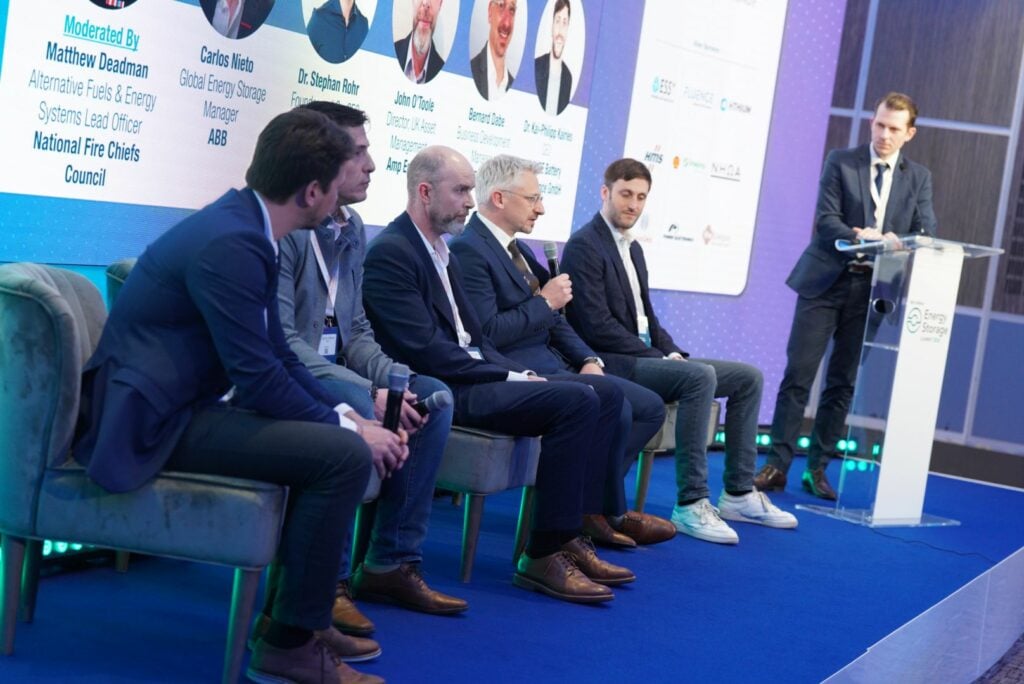
That was the view of Carlos Nieto, global energy storage division manager at engineering company ABB, speaking at the Energy Storage Summit EU in February.
Speaking on a panel on how technology plays its part in ensuring fire safety for battery energy storage system (BESS) projects, Nieto and fellow panellists were asked by moderator Matthew Deadman, energy systems lead officer at the UK’s National Fire Chiefs Council, how safety in the industry is evolving and what sort of lessons it needs to learn.
“We have to learn from other industries… when there is an airplane crash, there is a commission, there is a study, and the whole industry improves,” Nieto said.
Try Premium for just $1
- Full premium access for the first month at only $1
- Converts to an annual rate after 30 days unless cancelled
- Cancel anytime during the trial period
Premium Benefits
- Expert industry analysis and interviews
- Digital access to PV Tech Power journal
- Exclusive event discounts
Or get the full Premium subscription right away
Or continue reading this article for free
“We need to have more information sharing, more commitment to how we can improve safety.”
Kai-Philip Kairies, CEO of battery analytics company ACCURE Battery Intelligence, said that the BESS industry is similar to where solar PV was in its own infancy, around a decade or even 20 years ago. The technology became bankable as costs fell and there was “all of a sudden” more demand than supply.
That means customers are having to diversify their supply chains to perhaps include Tier 2 and Tier 3 battery suppliers that they may not previously have considered using, which presents its own challenges.
Another comparable factor is that almost all, if not all, commercial or utility-scale PV systems today are managed using digital assets, which offer visibility and a high level of control and monitoring remotely.
“I think we’re seeing this transition in batteries right now,” Kairies said, with cloud-based battery analytics offered by ACCURE and various other providers on the market. Using those layers of digital protection is a “no-brainer,” the CEO said, but the industry is still young.
Stefan Rohr, CEO of another battery analytics company, TWAICE, also appeared on the panel and agreed with his rival CEO’s assessment. With any new technology comes risks, particularly where energy is involved, Rohr said.
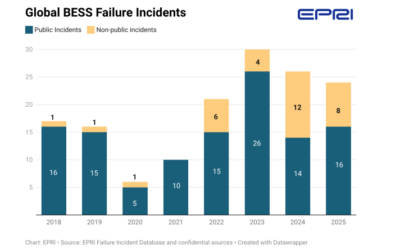
That means physical layers of protection as well as digital ones, and as ABB’s Nieto alluded to, a set of processes to go through to learn lessons from any failures or incidents. Stefan Rohr noted however that the highest incidence of safety issues occurs during the first year of a system’s operation, and then much later after several years of use, which again, a digital analytics-led approach can help to accurately predict.
Fire chief Deadman said that in some cases, it isn’t easy to get transparent information on projects and safety learnings in a timely fashion due to commercial sensitivities. He later added that an “integrated approach is where we need to be,” from prevention of safety incidents all the way to worst-case scenarios and their aftermath.
From a UK perspective, the biggest challenge on safety is that there are no real applicable standards, John O’Toole, director of UK asset management at developer Amp Energy, said.
Investors are having to go international to see what standards are applied abroad and try to apply them in the UK. That’s a “pretty good idea” from an engineering standpoint, O’Toole said, but the rapidly-growing market will benefit from developing its own standards.
The good news being, that aspect is being worked on. Having formerly worked at UK developer-investor Gresham House Energy Storage Fund, O’Toole said that sites being developed today are more sophisticated than the earliest he worked on, between five and seven years ago.
Nonetheless, he said, there are a lot of different voices and opinions when it comes to fire safety for BESS, and “no two sites are the same”.
Energy-Storage.news will be hosting a webinar this week with IHI Terrasun, ‘What experts think you should know about UL9540 codes and standards for battery storage,’ taking place 9 March. Learn more and register to attend free, here.