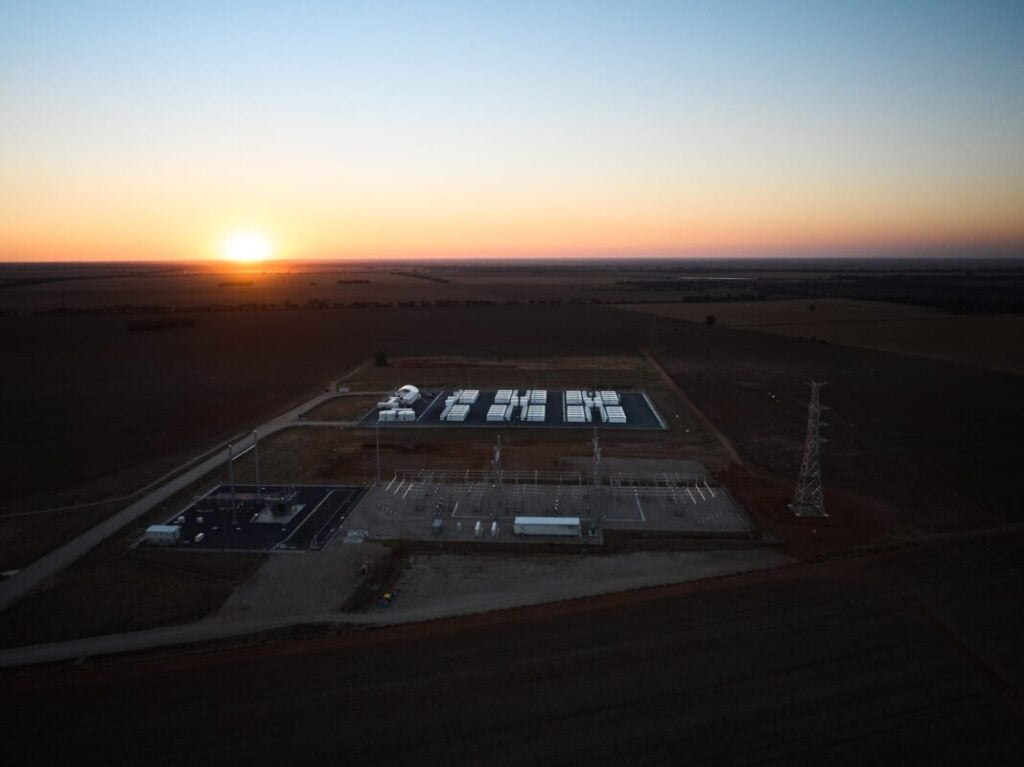
The University of New South Wales (UNSW) has been awarded a AU$6.52 million (US$4.24 million) grant from the Australian Renewable Energy Agency (ARENA) to study how inverter-based resources such as solar, wind and battery storage interact with protection systems in Australia’s National Electricity Market (NEM).
The three-and-a-half-year project, named ‘Protection & Relay Operation for Inverter-based Low-inertia Electricity Systems’ (PROFILES), will be led by the UNSW School of Electrical Engineering and Telecommunications and its Real Time Simulations Laboratory.
Associate Professor Georgios Konstantinou, who leads the research, said the way power is supplied from renewables differs fundamentally from traditional coal-fired generation, and that the project aims to help the grid remain safe and reliable as the balance of technologies connected to it continues to shift.
“It will be a continuous process of informing both industry and the research community about problems and solutions with inverter-based resources, their fault current contributions and power system protection,” Konstantinou said.
Try Premium for just $1
- Full premium access for the first month at only $1
- Converts to an annual rate after 30 days unless cancelled
- Cancel anytime during the trial period
Premium Benefits
- Expert industry analysis and interviews
- Digital access to PV Tech Power journal
- Exclusive event discounts
Or get the full Premium subscription right away
Or continue reading this article for free
System strength and grid-forming battery storage systems under scrutiny
ARENA said the project responds directly to a gap identified in AEMO’s Transition Plan for System Security, which flags minimum system strength provision from grid-forming battery storage as an area requiring further evidence.
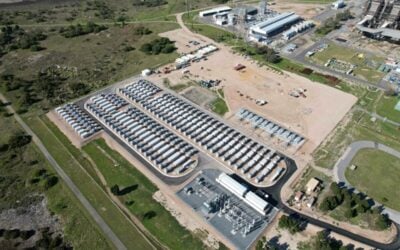
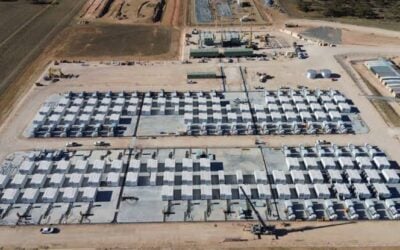
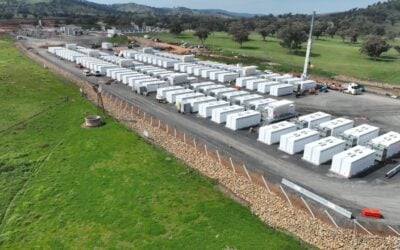
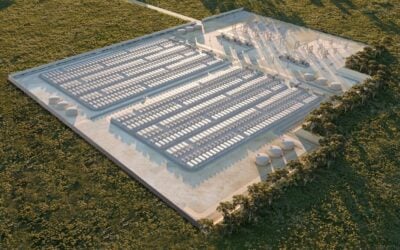
The research will examine how grid-forming battery energy storage systems (BESS) interact with protection systems when providing fault current, a technical question ARENA said must be better understood before these systems can be relied on more widely for system strength services.
That gap has already been formally acknowledged by AEMO. Its 2026 General Power System Risk Review, released in July, confirmed that grid-forming BESS has not yet been shown to deliver protection-quality fault current at the standard required to meet minimum system strength levels under the National Electricity Rules, even though the technology has demonstrated it can support voltage waveform stability.
AEMO has separately proposed procuring Type 2 Transitional Services to trial whether grid-forming inverters can meet that higher bar under real-world grid conditions, a question sharpened by a 38% cost blowout in synchronous condenser projects, which has prompted some transmission businesses to consider substituting battery storage for planned condenser installations.
The scale of the pipeline riding on that question is considerable. Grid-forming inverters now feature in 74% of Australia’s 33.2GW NEM battery storage pipeline, showcasing both the commercial incentive developers have to secure system strength contracts and the growing base of commissioned assets from which AEMO can draw real-world fault current data.
The PROFILES project’s hardware-in-the-loop testing is intended to complement that field data with controlled, repeatable experimental results.
ARENA pointed to UNSW’s hardware-in-the-loop testing capability and its status as an independent research organisation as reasons the university is well placed to lead the work.
The project team, which includes Dr Felipe Arrano-Vargas and Dr Shan Jiang alongside Konstantinou, will be supported by the UNSW Energy Institute and run until November 2030. Industry partners include Transgrid, AEMO, South Australian transmission operator ElectraNet, and equipment manufacturers Power Electronics, SMA, Tesla, and Siemens.
UNSW deputy vice-chancellor research & enterprise, Professor Bronwyn Fox, said the funding would support testing and modelling needed to ensure the future safety of Australia’s electricity networks as the transition continues.
The question of inverter reliability and security is not confined to Australia. In the United States, the FCC’s Public Safety and Homeland Security Bureau has added foreign-produced power inverters to its list of national security threats, citing supply chain vulnerabilities and cybersecurity risks tied to inverters’ remote connectivity.
Europe, meanwhile, has taken a different approach, building more than 100GWac of domestic solar and storage inverter manufacturing capacity since 2024, with over 90% of that capacity now controlled by European-headquartered companies as the region pursues supply chain resilience through industrial policy rather than restrictions alone.
The PROFILES grant adds to a broader body of renewable energy research underway at UNSW. The university’s Professor Yansong Shen has separately warned that the solar industry could exhaust global silver reserves within five years without commercial-scale module recycling infrastructure, underscoring the range of technical challenges UNSW researchers are working through as solar and storage deployment scales.
UNSW researchers have also examined degradation risks in next-generation solar modules and identified atomic-scale self-repair mechanisms in silicon solar cells, research that, alongside the PROFILES project, reflects the university’s position as a recurring contributor to Australia’s solar and grid engineering research base.
As more inverter-based resources connect to the NEM, ARENA said maintaining system security requires a clearer understanding of how these technologies can contribute to grid strength, a requirement the PROFILES project is intended to help address through testing rather than modelling alone.
Never miss an Australian energy storage story. Sign up for our Australia newsletter and get the latest project announcements, policy updates and market analysis delivered directly to you.
Solar Media (part of Informa Group) will host the Battery Asset Management Summit Australia 2026 on 25-26 August at the Amora Hotel Jamison in Sydney, bringing together asset owners, operators, trading teams and optimisers to address revenue strategy, lifecycle management and operational performance across Australia’s fast-growing battery storage fleet.
Readers of Energy-Storage.news can get 20% off their tickets using the code ESN20 at checkout. Find out more about the Summit on the official website.