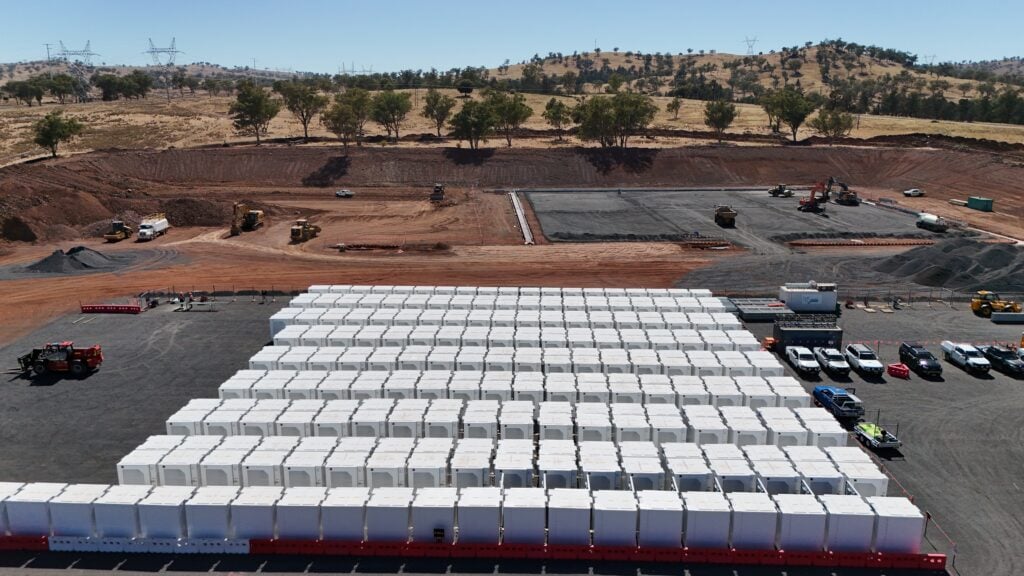
The Australian government has introduced a dedicated First Nations Set Aside pilot into both Capacity Investment Scheme (CIS) Tenders 9 and 10, reserving a portion of each tender’s capacity target for projects that commit to First Nations equity participation or revenue-sharing arrangements.
In CIS Tender 9, which is seeking 5GW of renewable energy generation across the National Electricity Market (NEM), 500MW has been set aside for projects that qualify under the First Nations criteria.
Meanwhile, in CIS Tender 10, which is seeking 4GW of 4-hour equivalent dispatchable power output or 16GWh of battery storage capacity and is likely to be the final NEM dispatchable tender under the CIS, a separate 500MW of 4-hour equivalent or 2GWh has been reserved under the same framework.
Together, the two Set Asides represent the first time a dedicated First Nations capacity allocation has been embedded in both a generation and a dispatchable storage tender simultaneously.
Try Premium for just $1
- Full premium access for the first month at only $1
- Converts to an annual rate after 30 days unless cancelled
- Cancel anytime during the trial period
Premium Benefits
- Expert industry analysis and interviews
- Digital access to PV Tech Power journal
- Exclusive event discounts
Or get the full Premium subscription right away
Or continue reading this article for free
To qualify for the Set Aside in either tender, proponents must demonstrate a commitment to First Nations partners to at least 5% equity participation and/or revenue sharing in the project.
Participation in the Set Aside is optional, and projects that do not elect to participate or do not meet the qualification requirements remain eligible for assessment under the standard tender process.
All bids are assessed against the same eligibility and merit criteria regardless of whether they participate in the Set Aside.
The pilot will be reviewed following the conclusion of Tenders 9 and 10, with improvements potentially considered for future tender rounds.
The federal government described the initiative as a response to the scale and pace of renewable energy and storage development occurring on First Nations Country, and the need for communities to share in the economic benefits of that development rather than simply hosting infrastructure on their land.
A progression from merit criteria to dedicated allocation
First Nations considerations have been built into the CIS framework since its first tenders, but historically through merit criteria rather than a dedicated capacity allocation.
The scheme has now awarded contracts across eight NEM rounds and two Western Australian rounds, with the cumulative scale of procurement having grown considerably since early tenders.
As previously reported, the third NEM dispatchable round attracted 135GWh of bids for a 16GWh target, demonstrating the depth of the developer pipeline relative to available contract volume.
That competitive dynamic has given successive governments scope to strengthen social and economic requirements without deterring participation.
In CIS Tender 4, which awarded 11.4GWh of solar-plus-storage contracts, three of the 20 successful projects committed to revenue sharing with First Nations communities, while others committed to subcontracting, training and workforce development.
In Tender 7, the round secured 7.8GW of renewable energy generation and 7.9GWh of battery energy storage across 19 projects, with community benefit commitments including First Nations outcomes totalling close to AU$1.2 billion (US$830 million).
The shift from scoring First Nations outcomes as a merit criterion to reserving dedicated capacity for qualifying projects represents a structural change in how the government is using the procurement framework to drive outcomes rather than simply rewarding them when they appear.
The Set Aside design responds to a recognised pattern in which community benefit commitments in competitive tenders can be treated as supplementary rather than central to project development.
By reserving capacity specifically for projects with committed First Nations equity or revenue arrangements, the government is creating a separate competitive pool in which the financial structure of the arrangement serves as a qualification threshold rather than a scoring factor.
Battery storage projects under the Set Aside will need to meet the same technical and financial eligibility criteria as all other Tender 10 participants, including a credible pathway to commercial operations. Registrations for Tender 10 close on 4 August 2026, with a Q&A process running through to 11 August 2026.
Our publisher, Solar Media (part of Informa Group), will host the Battery Asset Management Summit Australia 2026 on 25-26 August at Amora Hotel Jamison in Sydney. You can find out more about the Summit on the official website.