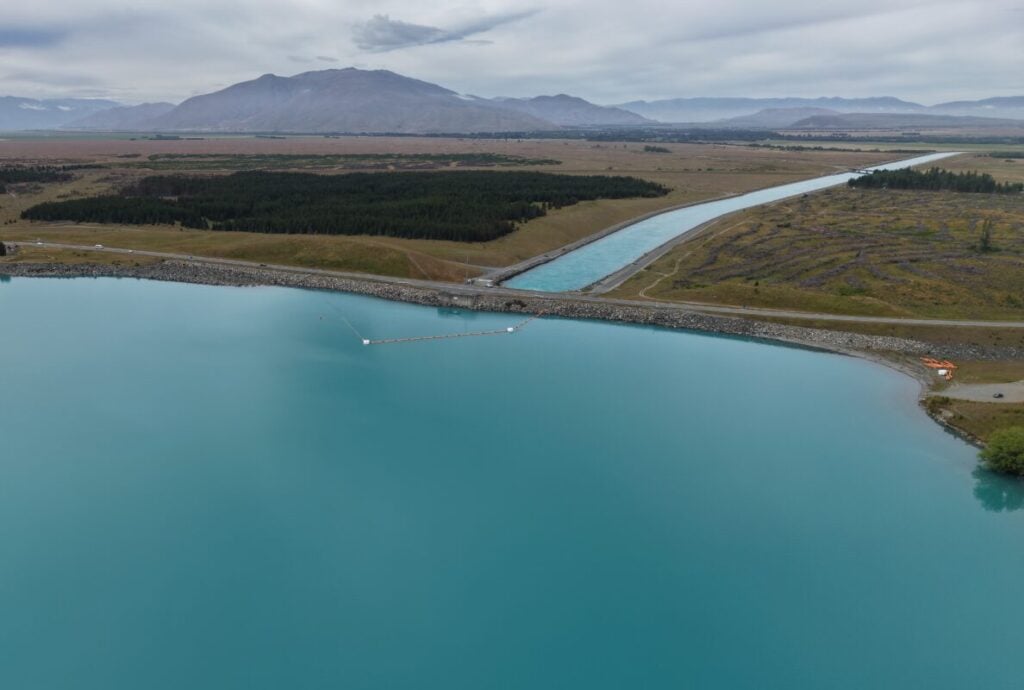
New Zealand state-owned energy company Meridian Energy has received final approval from a Fast-track Approvals Panel to access contingent hydro storage at Lake Pūkaki in New Zealand’s South Island.
In doing so, this clears the last regulatory hurdle on a consent that allows the country’s largest electricity generator to draw on an additional 545GWh of generation capacity for three winters.
The final decision follows a draft approval issued in early June and maintains the core structure of that earlier decision.
The consent allows Meridian to access water stored between 518 and 513 metres above sea level at Lake Pūkaki without requiring Transpower to first issue a security alert, removing the threshold condition that had historically prevented the company from using the storage band proactively during periods of tight supply.
Try Premium for just $1
- Full premium access for the first month at only $1
- Converts to an annual rate after 30 days unless cancelled
- Cancel anytime during the trial period
Premium Benefits
- Expert industry analysis and interviews
- Digital access to PV Tech Power journal
- Exclusive event discounts
Or get the full Premium subscription right away
Or continue reading this article for free
The consent runs for three years, covering the 2026, 2027 and 2028 winter periods.
Meridian CEO Mike Roan welcomed the final approval.
“We are really pleased that the Panel has confirmed its draft decision. This is good news for New Zealand’s electricity system and for consumers,” Roan said.
“Access to contingent storage will lower the price of electricity traded in the wholesale market by increasing the amount of renewable energy and lowering-cost fuel available. This will, in turn, put downward pressure on the fixed rates retailers offer to residential and business customers, which is our number one priority.”
The draft decision was issued despite opposition from Transpower, Genesis Energy and Energy Minister Simeon Brown, with the Electricity Authority supporting the application on the grounds that it provided a pragmatic mechanism to manage potential energy shortfalls.
A cautious approach to implementation
Acknowledging the concerns raised, Meridian said it would voluntarily limit its use of the additional storage in 2026.
The company proposes treating half of the five metres of contingent storage as accessible only when there is a heightened risk to the security of supply for the remainder of this year, with further discussions planned with electricity industry stakeholders on how storage access should be managed over the full three-year period.
The Waitaki Power Scheme, of which Lake Pūkaki is a central component, comprises eight power stations with an installed capacity of 1,761MW, representing approximately 32% of New Zealand’s installed hydro capacity.
Pūkaki itself is a modified natural lake managed as part of the scheme, which plays a critical role in national electricity supply flexibility. The contingent storage consent does not alter the scheme’s physical infrastructure or operational parameters.
Instead, it changes the administrative threshold at which Meridian can access the lower storage band, giving the company greater flexibility to manage inflows and dispatch decisions through the winter period.
The approval arrives as New Zealand’s energy security outlook has deteriorated in official forecasts.
What it means for battery storage, solar and wind
The practical effect of the Pūkaki approval is to reduce New Zealand’s near-term supply risk, but only temporarily and only partially. The three winters it covers are precisely the period during which New Zealand’s energy security outlook has been identified as most precarious.
Transpower’s 2026 Security of Supply Assessment found that the National Winter Energy Margin will drop below the lower security standard by 2031, representing a 698GWh shortfall even if all committed and consented projects proceed on schedule.
Under the Expected Future case, which incorporates a lower gas supply forecast, the breach arrives by 2030. The 545GWh of contingent storage at Pūkaki could cover most of that projected shortfall in a given winter, but only if the lake holds sufficient water to draw on, which is precisely the condition that cannot be guaranteed in a dry year.
What the Pūkaki approval does not do is remove the structural case for new renewable energy generation and battery storage investment in New Zealand.
The supply gap Transpower’s modelling has identified is driven by the retirement of thermal generation and the country’s growing electricity demand as transport and industrial processes electrify.
Unlocking an existing hydro resource for three winters buys time, but it does not add generation capacity to the system, nor does it provide the fast-response firming capability that grid-scale batteries deliver.
The fundamental investment case for new wind farms, utility-scale solar and battery storage in New Zealand remains driven by the need to replace thermal capacity and meet structural demand growth through the 2030s, dynamics that a three-year hydro consent does not alter.
Meridian has been advancing battery storage in parallel with the hydro application, reflecting that dual reality.
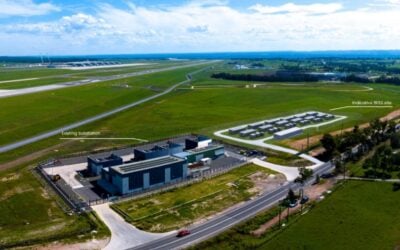
In May 2025, the company brought online New Zealand’s first grid-scale battery storage system at its Ruakākā site near Whangārei, a 100MW/200MWh system using lithium iron phosphate (LFP) chemistry supplied by Saft. The company has since committed to a second 200MW battery storage system.
Those investments are not substitutes for the contingent hydro storage. Instead, they address different needs on different timescales. The Pūkaki consent provides a buffer for the next three winters.
The expansion of battery energy storage, alongside the broader pipeline of wind and solar projects advancing through New Zealand’s fast-track consenting system, addresses what comes after.