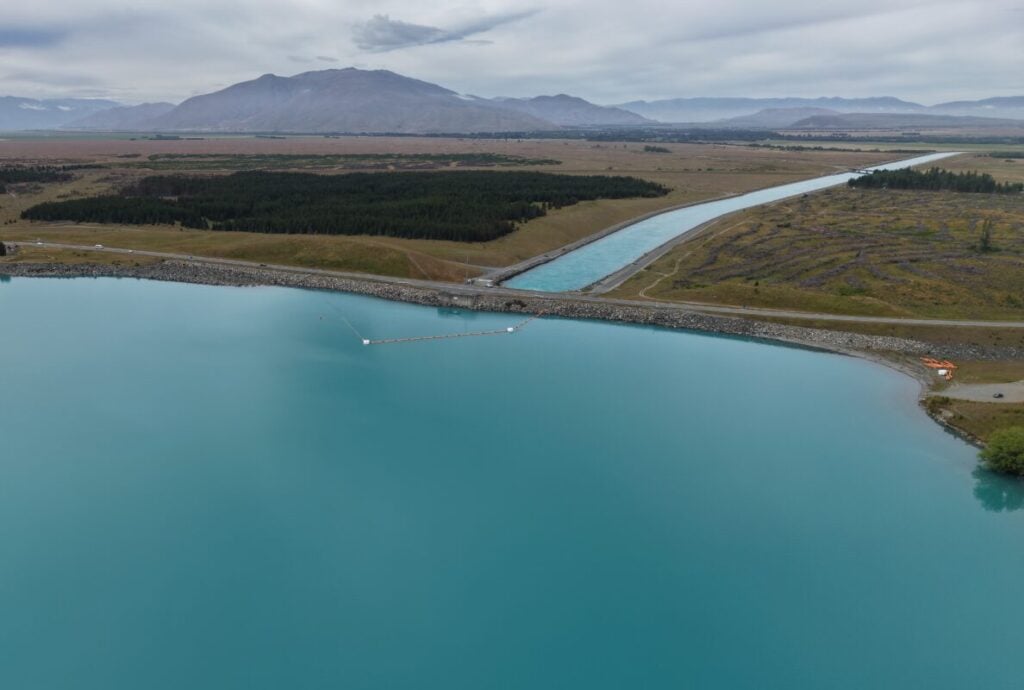
New Zealand state-owned energy company Meridian Energy has received a draft decision proposing to ease access restrictions on contingent hydro storage at Lake Pūkaki in New Zealand’s South Island for a three-year period from winter 2026.
The draft approval covers access to water stored between 518 and 513 metres above sea level, up to the point at which Transpower estimates a 4% risk of an electricity shortage. Lake Pūkaki is the country’s largest electricity reservoir.
That five-metre band represents approximately 545GWh of electricity generation capacity.
Under existing resource consents, Meridian can access the bottom range of the lake, but only once Transpower triggers a security alert level, a threshold that was not reached in winter 2025 despite tight market conditions, meaning the storage went unused despite the pressure on the system.
Try Premium for just $1
- Full premium access for the first month at only $1
- Converts to an annual rate after 30 days unless cancelled
- Cancel anytime during the trial period
Premium Benefits
- Expert industry analysis and interviews
- Digital access to PV Tech Power journal
- Exclusive event discounts
Or get the full Premium subscription right away
Or continue reading this article for free
Meridian CEO Mike Roan said the additional access would directly lower wholesale electricity prices.
“When the pressure’s on like it was in Winter 2024, every extra metre makes a big difference,” Roan said.
“Access to contingent storage will lower the price of electricity traded in the wholesale market by increasing the amount of renewable energy, lower-cost fuel available. This will in turn put downward pressure on the fixed rates retailers offer to residential and business customers, which is our number one priority.”
Modelling in the fast-track referral documents showed the move could release enough energy to power 75,000 homes and reduce wholesale electricity prices by approximately 7%, by removing the uncertainty over when Meridian could access its backup water storage and enabling more efficient generation planning.
The draft decision also grants Meridian permission to permanently install rock armouring at Pūkaki Dam to protect against wave erosion when the lake operates at lower levels, a structural measure required to make the extended storage range operationally viable without compromising dam integrity.
The Expert Panel is required to release its final decision by 3 July 2026.
The application was contested by a range of stakeholders. Transpower argued that easing access to contingent storage would eliminate a critical buffer from the electricity system and increase the risk of severe consequences in a dry year.
Generator-retailer Genesis Energy, which is developing several utility-scale battery storage systems, opposed the application on similar grounds and Energy Minister Simeon Brown wrote to the Panel at a late stage to express reservations, signalling that the government did not endorse the proposal.
The Electricity Authority, by contrast, backed Meridian’s application, viewing it as a pragmatic mechanism to manage potential energy shortfalls. Mackenzie District Mayor Scott Aronsen also raised concerns about how long it would take the lake to recover if drawn down in a dry year.
A cautious approach to implementation
Acknowledging the concerns raised, Meridian said it would voluntarily limit its use of the additional storage in 2026.
If the draft decision is confirmed, the company proposes to treat half of the five metres of contingent storage as accessible only when there is a heightened risk to security of supply for the remainder of this year, with further discussions planned with electricity industry stakeholders on how storage access should be managed over the three-year period.
The Waitaki Power Scheme, of which Lake Pūkaki is a central component, comprises eight power stations with an installed capacity of 1,761MW, representing approximately 32% of New Zealand’s installed hydro capacity.
Pūkaki itself is a modified natural lake managed as part of the scheme, which plays a critical role in national electricity supply flexibility.
The approval arrives as New Zealand’s energy security outlook has deteriorated in official forecasts. As Energy-Storage.news reported in April, Transpower’s draft 2026 Security of Supply Assessment found that New Zealand’s National Winter Energy Margin will drop below the lower security standard by 2031, representing a 698GWh shortfall, even if all committed and consented projects proceed on schedule.
Under the “Expected Future” case, which incorporates a lower gas supply forecast, the breach occurs by 2030. The 545GWh of contingent storage at Pūkaki, if accessible without requiring a Transpower security trigger, would cover most of that projected shortfall in a given winter, though only if the lake is at a sufficient level to draw on it.
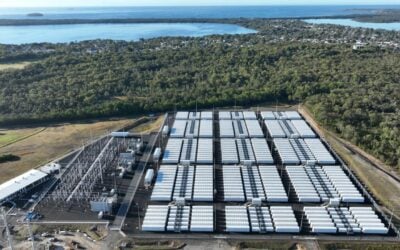
Meridian has been advancing battery storage capacity in parallel with the hydro storage application. In May last year, Meridian brought online New Zealand’s first grid-scale battery storage system at its Ruakākā site near Whangārei, a 100MW/200MWh system supplied by Saft using lithium iron phosphate (LFP) chemistry.