Zen Energy, a South Australian renewable energy company co-founded by economist Ross Garnaut, has appointed voluntary administrators after its retail business failed to secure a viable buyer.
Continued wholesale electricity price volatility has been cited as the primary commercial driver of the collapse.
McGrathNicol Restructuring partners Rob Smith and Jason Preston were appointed joint administrators of Zen Energy and its related entities on 3 July. The administrators have begun an urgent assessment of the business and are engaging with employees, regulators, customers and other stakeholders.
“We are urgently engaging with key stakeholders to determine the most appropriate strategy for the business which will deliver the best possible outcome for all stakeholders,” Smith said in a statement.
Try Premium for just $1
- Full premium access for the first month at only $1
- Converts to an annual rate after 30 days unless cancelled
- Cancel anytime during the trial period
Premium Benefits
- Expert industry analysis and interviews
- Digital access to PV Tech Power journal
- Exclusive event discounts
Or get the full Premium subscription right away
Or continue reading this article for free
Zen Energy’s statement attributed the administration to the retail division’s inability to withstand sustained wholesale market pressure.
“The retail business has continued to be impacted by continued wholesale electricity volatility, that has undermined the viability of a going concern sale, despite significant support from a range of stakeholders, including the South Australia (SA) government, SA Power Networks and various regulators,” the company said.
The administration follows a winding-up application filed by SA Power Networks on 26 June 2026, recorded by the Australian Securities and Investments Commission (ASIC) as a notice of application for a winding-up order against Zen Energy Retail Pty Ltd (ACN 615 751 052).
That application is scheduled to be heard at the South Australian Federal Court on 5 August 2026. Separately, the Australian Energy Regulator (AER) announced on 3 July 2026 conditional approval for Zen Energy Retail to transfer its electricity retail authorisation to Zen Energy Retail Holdings, a transfer that SA Power Networks had opposed.
Zen Energy had held an Across Government Electricity Retail Agreement with the South Australian government to supply 100% renewable energy to government operations until 2035, a contract estimated to be worth AU$1.53 billion (US$1.06 billion).
The South Australian government has confirmed that electricity supply to public authorities previously sourced from Zen Energy has now transitioned to AGL, which serves as the default electricity retailer of last resort under established regulatory arrangements.
The company’s financial position had been deteriorating for several years.
Zen Energy recorded a loss of AU$51.9 million in FY2023-24 and a loss of AU$133.6 million in FY2025. Co-founder Garnaut resigned as chair in February 2026 and was replaced by Mark Butcher in May 2026.
Unbuilt generation and storage commitments
Under the terms of its government electricity supply agreement, Zen Energy had committed to facilitate the construction, commissioning and operation of two new generation and storage assets: a 280MW solar PV power plant near Whyalla and a 100MW utility-scale battery storage system near Port Augusta.
Both projects failed to proceed due to difficulties with third-party financing, according to media outlet InDaily, leaving the commitments unfulfilled at the time of the company’s collapse.
The Port Augusta battery storage project was one of a series of grid-scale storage developments in which Zen Energy had been involved across its pipeline.
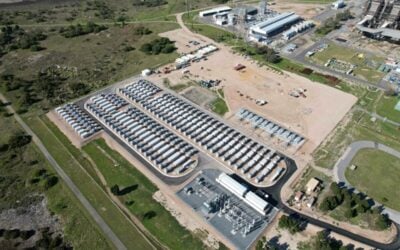
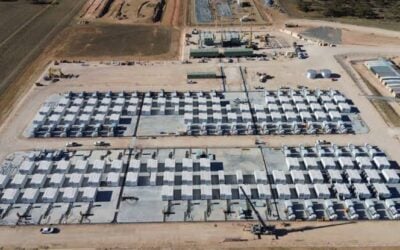
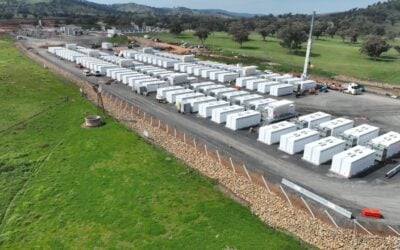
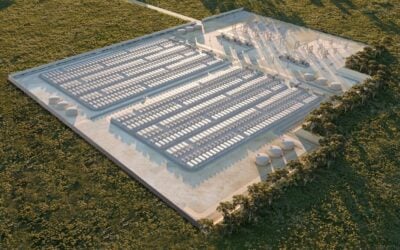
As Energy-Storage.news reported in August 2025, Pacific Green and Zen Energy signed a 1.5GWh virtual tolling agreement covering three battery storage systems across Australia, under which Zen Energy would optimise and trade the output of the battery storage projects in the National Electricity Market (NEM).
The arrangement was structured to give Zen Energy access to large-scale firming capacity without requiring it to own or finance the battery assets outright.
Zen Energy had also been developing its own generation pipeline through joint ventures. A joint venture between HDRE and Zen Energy was targeting 1GW of energy storage capacity in Australia, combining HDRE’s development expertise with Zen Energy’s retail and trading capabilities.
That joint venture also acquired a 210MW solar-plus-storage site in an arrangement that paired generation development with Zen Energy’s government offtake agreement.
Our publisher, Solar Media (part of Informa Group), will host the Battery Asset Management Summit Australia 2026 on 25-26 August at Amora Hotel Jamison in Sydney. You can find out more about the Summit on the official website.