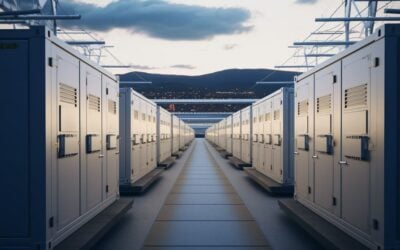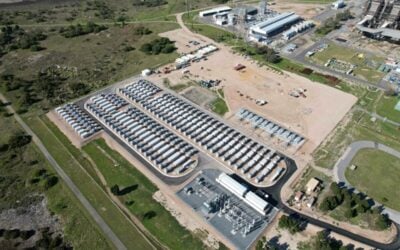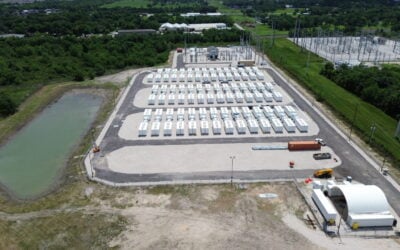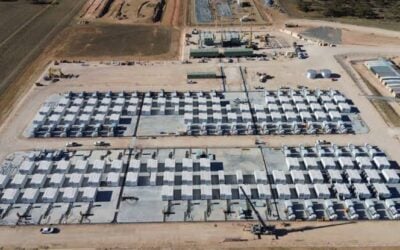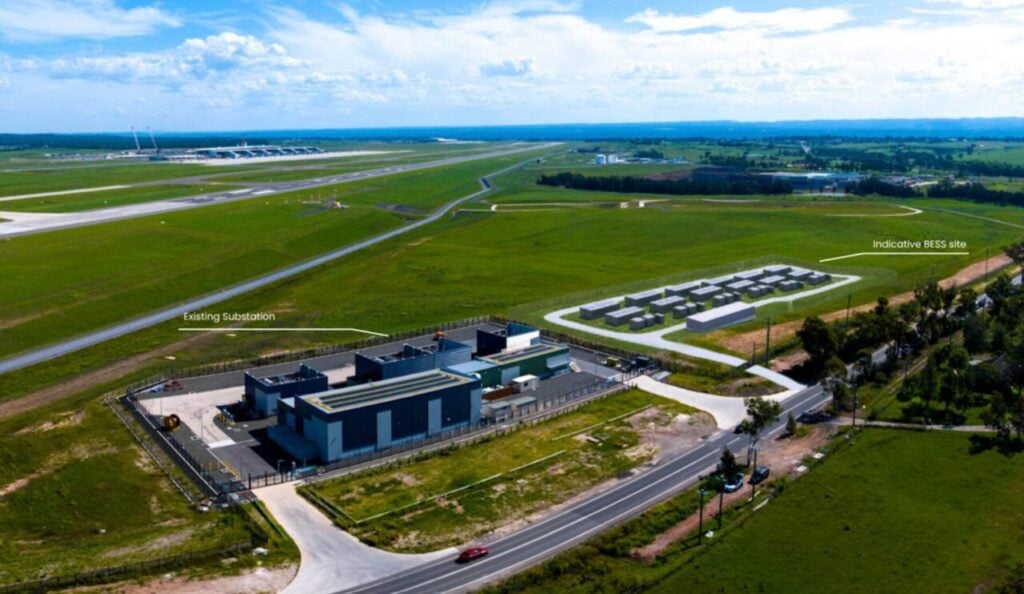
Renewables company CleanPeak Energy has inked a 15-year agreement to supply Western Sydney International (WSI) Airport with 100% renewable energy, with 30MW/120MWh of battery energy storage on-site as part of the commercial arrangement.
The airport, located at Badgerys Creek approximately 50km west of the Sydney CBD, is scheduled to open in late 2026 and will become Australia’s second major international gateway serving Sydney.
Under the agreement, CleanPeak will supply electricity sourced from a portfolio of renewable energy generators and will own, operate and maintain the on-site battery energy storage system (BESS).
The BESS will provide peak demand management, reduce the airport’s exposure to wholesale electricity price volatility, and support grid stability services in the local network.
Try Premium for just $1
- Full premium access for the first month at only $1
- Converts to an annual rate after 30 days unless cancelled
- Cancel anytime during the trial period
Premium Benefits
- Expert industry analysis and interviews
- Digital access to PV Tech Power journal
- Exclusive event discounts
Or get the full Premium subscription right away
Or continue reading this article for free
CleanPeak CEO Chris Coyne said the partnership reflects the airport’s commitment to sustainability from its first day of operation.
“WSI Airport is not just building an airport, they’re building a blueprint for sustainable aviation infrastructure. We’re honoured to deliver a solution that meets 100% of their electricity needs from renewables, backed by on-site battery storage to ensure reliability and cost certainty from day one,” Coyne said.
WSI Airport CEO Simon Hickey said the energy partnership was central to the airport’s long-term operating model.
“CleanPeak’s solution gives us the certainty we need on both cost and sustainability. Having 100% renewable energy and on-site battery storage from the moment we open sets a new benchmark for airport infrastructure in Australia,” Hickey said.
The 15-year contract term provides both parties with long-term revenue and supply certainty, with CleanPeak assuming the capital costs and operational responsibility for the battery storage infrastructure in exchange for a long-term energy services agreement.
CleanPeak retains ownership of the storage asset, which allows WSI Airport to access the energy output.
This arrangement enables the airport to experience the commercial and operational benefits of battery storage without incurring capital costs for energy infrastructure. It also supports the current demands of constructing a greenfield international airport.
Battery storage at major infrastructure facilities
The WSI Airport deployment joins a small but growing cohort of major transport and infrastructure facilities that have added battery storage to their energy mix.
Greece’s Athens International Airport commissioned a 123.8MWh battery energy storage system supplied by JinkoESS in September last year, in a project designed to improve energy resilience and reduce dependence on the grid during peak demand periods.
The WSI Airport system at 120MWh sits within the same scale range as the Athens installation, indicating convergence around the 100-150MWh capacity bracket for major airport battery storage deployments.
Port and logistics infrastructure have also followed a similar trajectory. As discussed at the Energy Storage Summit Australia 2026, a 750kW/1.5MWh battery storage system was being deployed at CentrePort Wellington.
Tim Edmonds, head of advisory at Simply Energy NZ, said that large infrastructure operators are increasingly using battery storage to manage demand charges, reduce peak grid exposure and demonstrate sustainability credentials to commercial counterparts, with the economics of storage at high-consumption industrial sites improving as battery costs have fallen and electricity price volatility has increased.
The airport sector has also seen deployments in Asia. EVE Energy confirmed it would deploy its 628Ah battery cells in a solar-plus-storage system at Kuala Lumpur International Airport, combining generation and storage at one of Southeast Asia’s busiest aviation hubs.
A new airport supplied by renewable energy from Day One
The WSI Airport contract is structured differently from most retrofit battery storage deployments in that the energy and storage system is being designed into the airport’s operational model from its first day of commercial operation, rather than added to an existing facility.
That approach allows CleanPeak to size and position the battery storage system optimally for the airport’s forecast load profile from the outset, rather than working around existing electrical infrastructure.
Western Sydney International Airport is being developed by WSI Airport Pty Ltd, a joint venture between the Australian federal government and the New South Wales state government, with the site located within the Western Sydney Aerotropolis, a planned urban and industrial precinct around the airport.
The airport is expected to handle up to five million passengers annually in its early years of operation, growing to a projected capacity of 82 million passengers per annum at full development over several decades.
CleanPeak Energy is an Australian energy services company that develops, owns and operates distributed energy assets including solar PV, battery storage and gas-fired peaking capacity across commercial and industrial customer sites.
The company’s model of retaining ownership of energy assets while contracting the output to end users under long-term agreements has been applied across healthcare, manufacturing and now aviation infrastructure clients.
The WSI Airport agreement, at 15 years and covering 100% of the airport’s electricity consumption, is the largest commercial arrangement CleanPeak has disclosed to date in terms of contract scope and duration.
Our publisher, Solar Media (part of Informa Group), will host the Battery Asset Management Summit Australia 2026 on 25-26 August at Amora Hotel Jamison in Sydney. You can find out more about the Summit on the official website.