More than 3.8GWh of combined energy storage capacity has either cleared or entered federal environmental assessment under Australia’s Environment Protection and Biodiversity Conservation (EPBC) Act, with one project winning approval and two opening for public comment.
The approved project is developer Spark Renewables’ Dinawan Solar Farm in south-west New South Wales, a 1,000MW solar facility co-located with a 300MW/1,200MWh battery energy storage system (BESS) in the South-West Renewable Energy Zone (REZ) between Coleambally and Jerilderie.
The two projects entering the EPBC queue are both located in Victoria. The Mologa Solar Hybrid project, being pursued by Potentia Energy, proposes a 250MW solar PV facility paired with a 250MW/1,000MWh 4-hour duration battery storage system, approximately 65km north of Bendigo in the Loddon Shire.
The second is the Winton Renewable Energy Stability and Storage Terminal, known as WRESST, a 400MW/1,600MWh standalone battery storage system on a 27-hectare site near Glenrowan, directly adjacent to existing solar PV power plants and connecting underground to Glenrowan Terminal Station.
Try Premium for just $1
- Full premium access for the first month at only $1
- Converts to an annual rate after 30 days unless cancelled
- Cancel anytime during the trial period
Premium Benefits
- Expert industry analysis and interviews
- Digital access to PV Tech Power journal
- Exclusive event discounts
Or get the full Premium subscription right away
Or continue reading this article for free
Dinawan Solar Farm: 1GW/1.2GWh approved in the South-West REZ
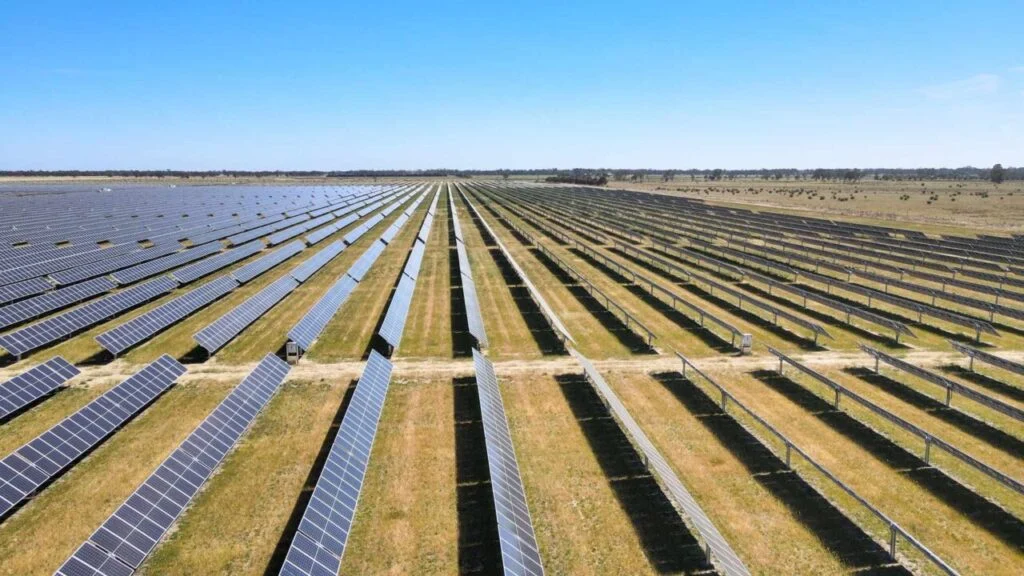
Spark Renewables has received an approval decision under the EPBC Act for the Dinawan Solar Farm, a 1,200MWh solar-plus-storage site in New South Wales.
The project covers a 4,500-hectare project area, with a disturbance footprint of approximately 2,600 hectares.
The solar array will comprise approximately 1.5 million PV modules on single-axis tracking systems, with the BESS sized at up to 300MW and with a duration of up to 4-hours, either AC- or DC-coupled, depending on the final design.
The facility will connect to Transgrid’s network via the proposed Dinawan Substation, which forms part of Project EnergyConnect and sits on land adjacent to the project area.
The EPBC approval clears the final federal environmental hurdle for the project, which had already been assessed under the New South Wales State Significant Development framework.
The project was also cleared by New South Wales Independent Planning Commission (IPC) in April 2026. The application was referred to the IPC for determination after more than 50 public objections were lodged with the Department of Planning, Housing and Infrastructure during its assessment period.
Last year, the project was among those awarded the right to connect to the South West REZ, with a capacity of 1,007MW across solar, wind and battery storage, and was the only project in that round to incorporate solar PV.
Mologa Solar Hybrid: 250MW/1,000MWh submitted in Victoria’s Loddon Mallee region
Potentia Energy has submitted the Mologa Solar Hybrid project for EPBC assessment.
The project is located approximately 65km north of Bendigo and 195km northwest of Melbourne in the Loddon Shire local government area, within the Loddon Mallee region. It proposes a 250MW solar PV facility paired with a 250MW/1,000MWh 4-hour battery storage system, connecting via a new Mologa Terminal Station to the existing 220kV network between Kerang Terminal Station and Bendigo Terminal Station.
The project area covers approximately 592 hectares, with an indicative disturbance footprint of 492 hectares.
The solar array will comprise approximately 500,000 PV modules on single-axis tracking frames, with the BESS comprising approximately 272 containerised battery units and 68 inverters installed on reinforced concrete hardstand pads.
Construction is expected to commence in 2028 and take 18 to 24 months, with operations anticipated from 2030 and a design life of 30 years.
WRESST: 400MW/1,600MWh standalone BESS submitted near Glenrowan in Victoria
Lastly, developer Celero Infrastructure is proposing the 1.6GWh WRESST project in Victoria, which has been submitted for EPBC assessment.
The project proposes a standalone 400MW/1,600MWh battery storage system on a 27-hectare project area at 576 Winton-Glenrowan Road in Winton, Victoria, with a disturbance footprint of approximately 7.2 hectares.
The BESS will connect to the existing Glenrowan Terminal Station via underground transmission cabling, minimising surface impacts across the site.
According to the submission, the project footprint reflects the site’s proximity to existing transmission infrastructure and the absence of a co-located solar generation component.
The construction phase is expected to take 12 to 18 months, with an operational lifespan of 25 years.
WRESST is located directly adjacent to two existing solar PV power plants, positioning it to capture and firm generation from those assets.
The project’s stated purpose is to store energy for the National Electricity Market (NEM), balance intermittent generation sources, including rooftop solar, and provide energy at peak demand periods alongside essential grid services.
Both Victorian projects will now proceed through the EPBC referral decision phase, during which the federal environment department determines whether the projects require a full environmental impact assessment or can be approved without one.
Our publisher, Solar Media (part of Informa Group), will host the Battery Asset Management Summit Australia 2026 on 25-26 August at Amora Hotel Jamison in Sydney. You can find out more about the Summit on the official website.