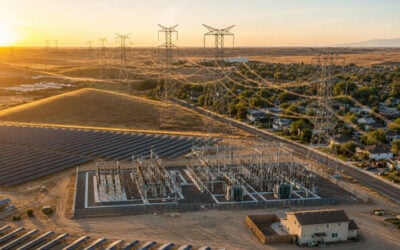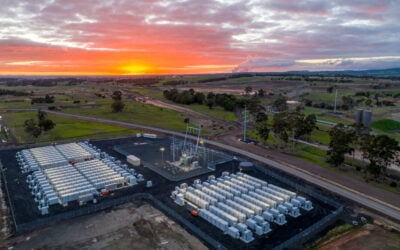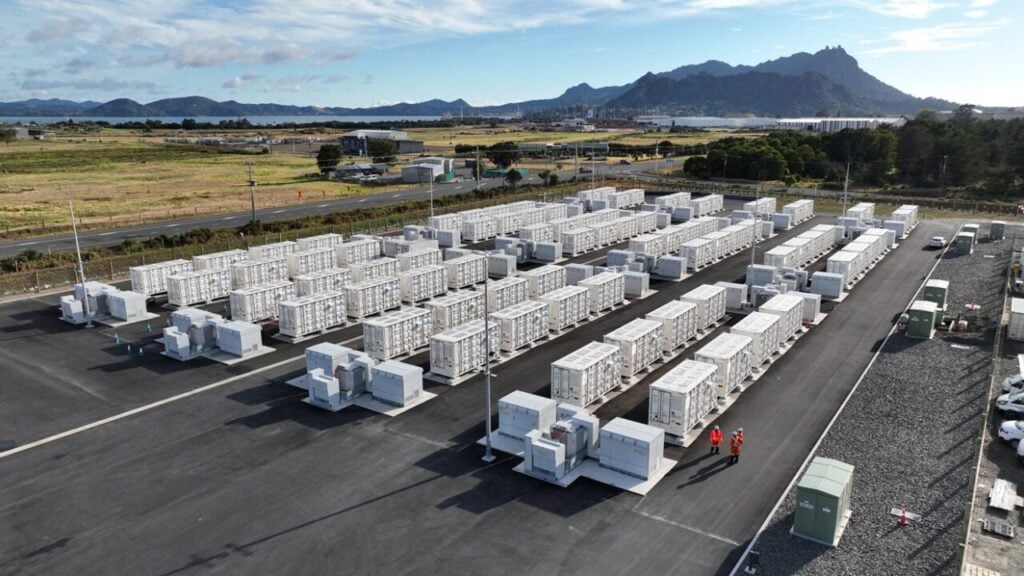
Meridian Energy, a New Zealand state-owned energy company, has completed the development of its 100MW/200MWh 2-hour duration Ruakākā battery energy storage system (BESS), which it claims is the country’s first utility-scale BESS.
Construction of the BESS, located south of Whangārei, the northernmost city of New Zealand, began in early 2023 and was completed within the project’s original budget of NZ$186 million (US$109 million).
It forms stage two of Meridian’s Ruakākā Energy Park development. This will also see the development of a 130MW solar PV power plant featuring 250,000 PV modules. Construction will commence in August 2025.
Meridian chief executive Neal Barclay said the wider Ruakākā Energy Park will benefit the New Zealand energy system and help improve the Northland region’s energy resilience.
Try Premium for just $1
- Full premium access for the first month at only $1
- Converts to an annual rate after 30 days unless cancelled
- Cancel anytime during the trial period
Premium Benefits
- Expert industry analysis and interviews
- Digital access to PV Tech Power journal
- Exclusive event discounts
Or get the full Premium subscription right away
Or continue reading this article for free
Guy Waipara, general manager of development at Meridian, added that the BESS will grant the ability to shift between price periods and smooth out peak periods, but there are still steps required until the BESS is fully operational.
“Although construction and commissioning are now complete, some steps remain before the BESS is fully operational, including approval of final commissioning test results,” Waipara said.
Saft, a subsidiary of TotalEnergies, is delivering this system, and Meridian anticipates that the BESS will generate annual revenues of up to NZ$59.3 million. Transpower, a state-owned transmission company, is noted to have played a key role in planning, construction and commissioning.
In September 2024, Genesis Energy selected Saft to provide a 100MW/200MWh BESS to be installed at the Huntly Power Station on the country’s North Island.
New Zealand’s 2024 ‘energy crisis’ grants solar PV an opportunity
Much of the New Zealand grid is dominated by hydroelectric power plants, most of which are situated on the country’s southern island. This reliance on hydroelectricity, however, caused an energy crisis last year, with a dry year significantly reducing the output of these plants.
As a result, wholesale electricity prices increased as the country became reliant on oil and gas.
Sarah Gillies, chief executive of the Electricity Authority, spoke to our sister site PV Tech about the energy crisis last year, highlighting that more investment is needed to support and stabilise New Zealand’s electricity system, with the next 12-24 months set to “continue to be challenging”.
“We need more investment in generation and to harness opportunities from new technologies and demand response to keep the lights on at an affordable price. Looking ahead, we continue to need a combination of fuels and the supply,” Gillies said.
This prompts an opportunity for both variable renewable energy generation, one of the cheapest forms of electricity, and energy storage to play an integral role in the country’s energy security.