The US national Energy Storage Association (ESA) has adopted a goal for the deployment of 100GW of new energy storage using a range of technologies by 2030, updating a previously set 35GW by 2025 target.
The trade group, which has nearly 200 industry stakeholder members, launched a ‘vision paper’ called ‘100 x 30: Enabling the clean power transformation’, yesterday to coincide with the first day of its week-long annual conference, which this year takes place online.
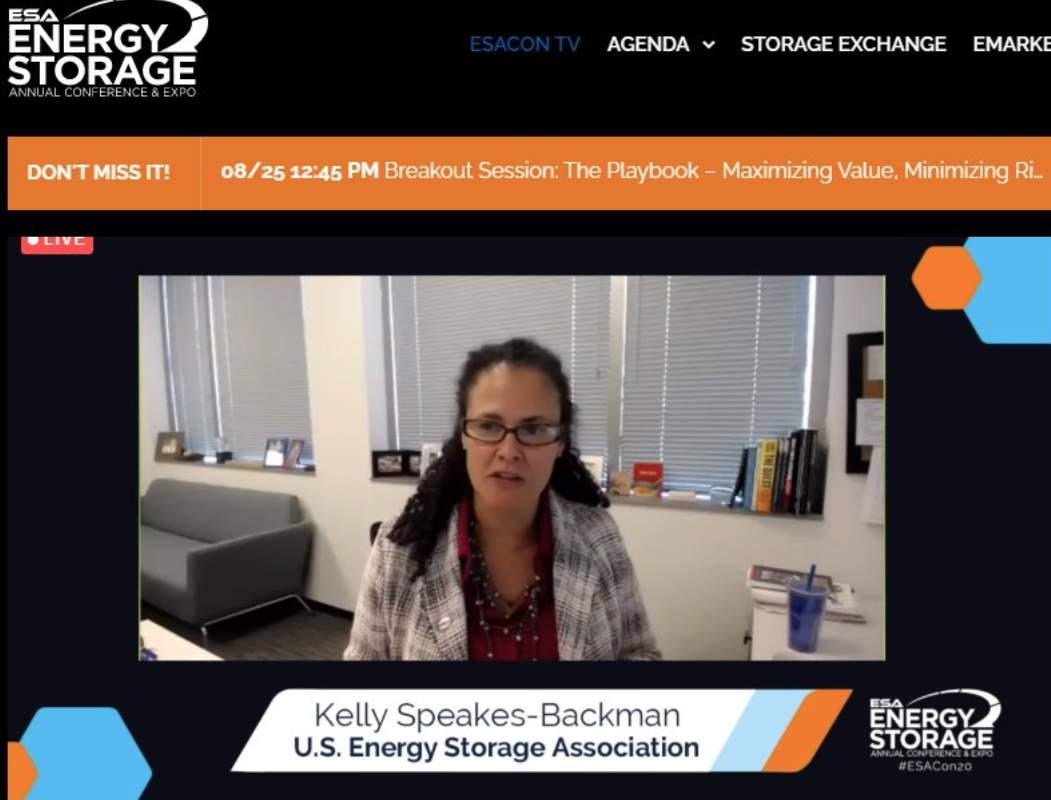
ESA CEO Kelly Speakes-Backman called the 100GW target within a decade “entirely reasonable and attainable,” although it will require the “right policies and regulatory frameworks” to be in place. The vision paper aims to set out how that will be possible, as well as highlighting the impact achieving the target would have on the transition to renewable energy as well as on the wider economy including jobs.
The paper points out that in the decade from 2010 to 2019, the electricity generation sector’s carbon emissions in the US fell by 29%, its coal dropping from 45% of the electricity mix to just 23%. While natural gas’ role increased by about a third, from 24% to 38%, wind and solar went from almost nothing to 7.3% and 1.8% of generation respectively.
Try Premium for just $1
- Full premium access for the first month at only $1
- Converts to an annual rate after 30 days unless cancelled
- Cancel anytime during the trial period
Premium Benefits
- Expert industry analysis and interviews
- Digital access to PV Tech Power journal
- Exclusive event discounts
Or get the full Premium subscription right away
Or continue reading this article for free
The transition away from fossil fuels is now unstoppable and gathering momentum, the ESA argues, regardless of big-picture policy or economic factors and energy storage – not just lithium-ion but a range of different technologies – will play an ever-increasing role.
Vision would support 50% renewables in the US by 2030
Indeed on the first day of the ESA’s conference yesterday, US Department of Energy deputy secretary Mark Menezes said in a keynote address that his department recognised the importance of energy storage, including the cultivation of a homegrown manufacturing industry and that the DoE is committed to supporting energy storage including longer duration storage as shares of renewables on the grid increase.
While storage deployment has slightly lagged behind the original 35GW by 2025 vision crafted by ESA with help from Navigant Research (now known as Guidehouse Insights), with BloombergNEF predicting around 32GW by then and Wood Mackenzie Power & Renewables about 28GW, analysis all points to an accelerating rate of deployment.
Indeed the three analysis and research firms between them predict around 85GW to 95GW by 2030. ESA argues that with policies to further stimulate higher shares of renewables on the grid, the 100GW figure is achievable. 100GW would support an aim of 50% renewables by 2030 across the country – an aim shared by ESA together with other prominent renewable and clean energy trade associations including groups representing the wind, solar and hydropower industries. The latter, incidentally, includes 16GW of new pumped storage in its 2030 vision, which ESA also backs.
ESA pledged to continue working towards helping policymakers and regulators at state and federal level understand the value of energy storage, how it can help create a reliable and cleaner grid cost-effectively through the flexibility services it can offer. In terms of direct policy changes, the ESA said it continues to advocate for the introduction of a standalone investment tax credit (ITC) for energy storage, which in the vision paper the trade group said “would create an investment signal and facilitate a rush of capital into storage development that would match the demand for storage arising from the clean energy transformation and electrification over the coming decade”.
See the vision paper here.