Distributed energy resource (DER)-focused company FranklinWH has recently announced advancements in residential energy storage programmes in Louisiana, Wisconsin and Iowa.
FranklinWH launches Entergy Solutions with Entergy Louisiana
Announced 27 October, FranklinWH launched Entergy Solutions, a residential battery energy storage system (BESS) incentive programme with utility Entergy Louisiana that compensates customers for discharging their BESS during periods of high electricity demand.
Under the virtual power plant (VPP) programme, Louisiana homeowners who install a new FranklinWH system and enrol within one year of purchase will receive US$75-per-kWh of installed BESS, up to US$1,000.
Both new and existing FranklinWH systems enrolled in the program will also earn US$125 per average kilowatt discharged during programme events, up to US$600 per year. Solar panels are not required.
Try Premium for just $1
- Full premium access for the first month at only $1
- Converts to an annual rate after 30 days unless cancelled
- Cancel anytime during the trial period
Premium Benefits
- Expert industry analysis and interviews
- Digital access to PV Tech Power journal
- Exclusive event discounts
Or get the full Premium subscription right away
Or continue reading this article for free
During periods of high electricity demand, Entergy calls on participating systems to discharge stored energy to the grid.
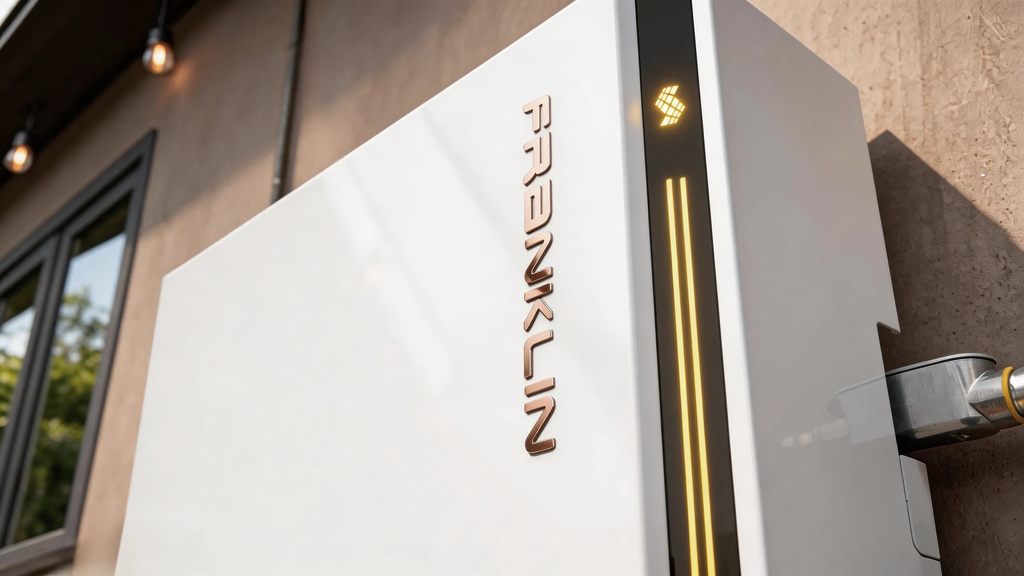
The programme uses FranklinWH’s aPower systems. The aPower 2 residential BESS solution has a 15kWh capacity, uses lithium iron phosphate (LFP) cells, and can be scaled up to 225kWh, or 15 units per aGate.
According to the companies, the system can provide approximately 80% of an enrolled aPower battery’s available stored energy during an event. Dispatches are managed automatically through the FranklinWH App, so homeowners do not need to take any action when their systems are used.
Additionally, Entergy stated that it will not draw customers’ BESS if a severe storm is forecast, so customers have full battery storage for backup power if needed.
Entergy projects that its VPP programmes will provide 155 MW of dispatchable capacity by 2030. The utility says this capacity reduces the need for more costly new utility-scale generation, which in turn lowers bills for all customers.
Alliant Energy allows FranklinWH systems to participate in Iowa VPP
Announced 13 October, FranklinWH is working with utility Alliant Energy in Iowa and Wisconsin to allow customers with FranklinWH systems to participate in the Alliant Energy Smart Hours VPP. The two partnerships were announced by the DERs provider within a week of one another in mid-October.
Through the programme, customers receive a one-time enrollment incentive of US$100-per-kWh of BESS capacity, up to US$1,500 for a FranklinWH System. Participants also earn annual performance payments of US$100 for every average kilowatt their system discharges when called upon to support the grid.
Like with the Louisiana programme, the FranklinWH system automatically dispatches stored energy to the homes of Alliant Energy customers during periods of peak electricity demand.
Customers do not need to take any action when the utility calls on their BESS. They can also customise how much stored energy they make available to maintain the required backup power for their home.
FranklinWH has partnered with energy technology company Derapi to make enrollment easier and help FranklinWH systems connect to Smart Hours.
The companies noted that Iowa gets a larger share of its electricity from wind than any other state, with wind supplying 63% of its electricity generation according to the US Energy Information Administration (EIA).
In Wisconsin, FranklinWH noted in a release that Alliant Energy has over 275MW of large-scale BESS in operation to which the VPP would add capacity.
On 28 October, Alliant Energy closed its massive US$5.1 billion loan from the US Department of Energy’s (DOE’s) Office of Energy Dominance Financing (EDF).
The US$5.1 billion loan package will be used to add over 2.6GW of new or upgraded power generation capacity in Iowa and Wisconsin. It had been one of eight projects conditionally approved to receive a total US$23 billion through the EDF’s predecessor organisation, the Loan Programs Office (LPO) in the final days of the Biden-Harris administration in January 2025. Four of the eight announced conditional approvals explicitly mentioned funding for BESS, although BESS investments may also be included as part of the package for others.