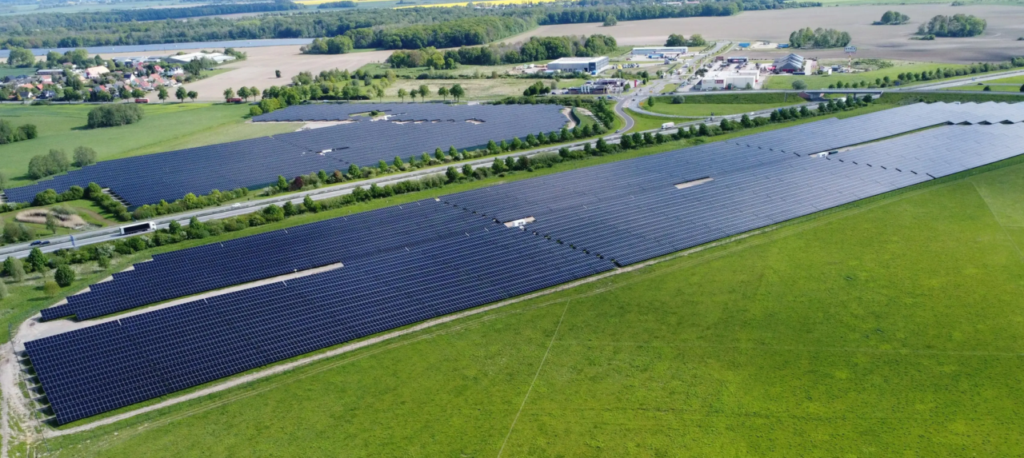
Spanish independent power producer (IPP) Zelestra and German steel manufacturer Salzgitter Flachstahl have signed a power purchase agreement (PPA) for a new solar-plus-storage portfolio, which will be both companies’ first hybrid PPA in Germany.
The portfolio will consist of two new solar PV projects, with a combined capacity of 147MW, to be combined with 79MW/237MWh of battery energy storage systems (BESS). The projects will be built in Thuriginia, in eastern Germany, and Brandenburg, in central Germany, and supply power to the Salzgitter steel facility in the city of the same name.
Zelestra will build, own and operate the solar facilities, while Salzgitter Flachstahl, a subsidiary of Salzgitter AG, will acquire all of the power generated at the projects and manage the batteries.
“The combination of solar energy and battery storage opens up the opportunity for us to procure renewable energy for our industrial processes in line with demand and at competitive conditions,” said Salzgitter Flachstahl head of group energy procurement Marco Huber. “The agreement supports our ambitious decarbonisation of steel production and helps to secure the competitiveness of the Salzgitter site.”
Try Premium for just $1
- Full premium access for the first month at only $1
- Converts to an annual rate after 30 days unless cancelled
- Cancel anytime during the trial period
Premium Benefits
- Expert industry analysis and interviews
- Digital access to PV Tech Power journal
- Exclusive event discounts
Or get the full Premium subscription right away
Or continue reading this article for free
This “ambitious” plan has been dubbed ‘SALCOS’ (Salzgitter Low CO2 Steelmaking), and is a €2.7 billion (US$3.12 billion) initiative from Salzgitter AG to replace coal used in its steelmaking operations with green hydrogen produced by renewable energy. Zelestra CEO Leonardo Moreno added on LinkedIn that the deal, which is the largest solar-plus-storage offtake agreement signed in Germany, will be an “important element” of Salzgitter AG’s decarbonisation plan.
The steelmaker has already invested in green hydrogen production through wind turbine operator Avacon’s installation of a 30MW wind farm at its manufacturing centre, and the Zelestra deal represents its first entry into the solar-plus-storage space.
While the German BESS market endured uncertainty earlier this year when it was speculated that a grid fee exemption for new BESS projects could be withdrawn or altered, these exemptions were confirmed by the Bundesnetzagentur (Federal Network Agency) in May. The exemptions are an important part of the business case for German BESS projects, and Energy-Storage.news heard from Fluence’s Julian Jansen after the announcement that the continuation of this exemption could ensure “billions” in private investment flows into the German BESS sector.
This strengthened confidence is reflected in the advancement of projects since the confirmation, with over 15GWh of large-scale BESS capacity advancing since the May announcement. Zelestra has been involved in these project advancements, agreeing a long-term toll for a 99MW/297MWh BESS in Germany with the trading arm of UK-based power group Centrica last month. The company also started commercial operations at its first solar project in the country, the 27.5MW Klevenow solar plant, in August.
“As the largest hybrid deal in Germany to date, it shows real ambition from both parties, and we expect this segment of the market to grow considerably in the months ahead,” said Zelestra Germany CEO Mathias Künicke, which said that the deal builds on the company’s “hybrid expertise” elsewhere in Europe, which includes the signing of the first solar-plus-storage PPA in Spain last year with Portuguese utility EDP.