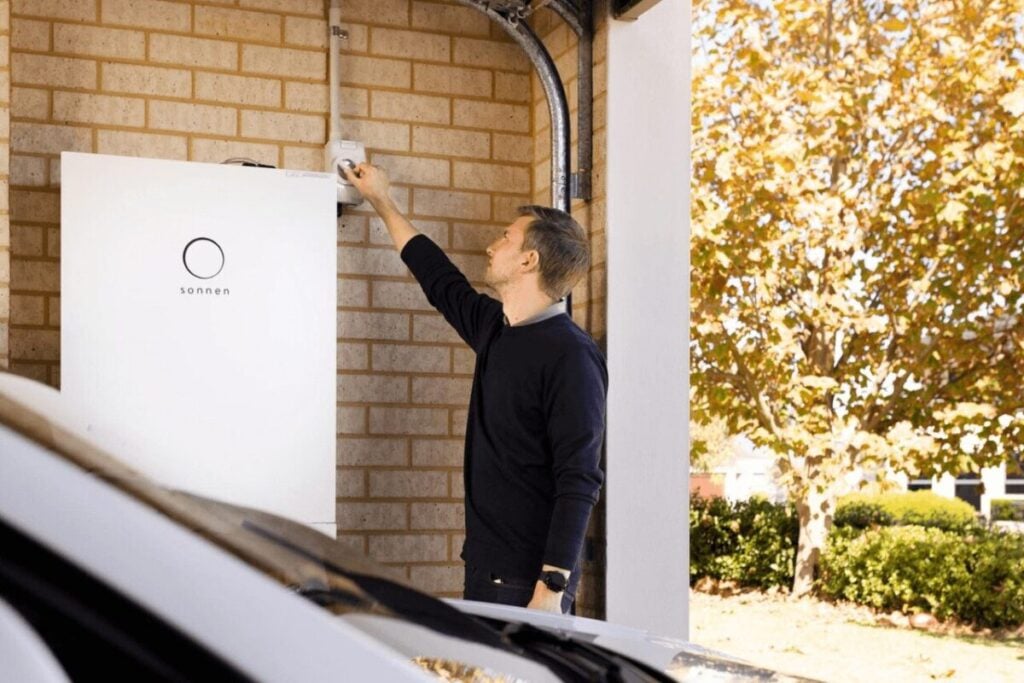
Western Australia has announced an expansion to the state’s first-ever home battery energy storage system (BESS) rebate scheme, which is expected to lower installation costs for around 100,000 households.
Under the Household Battery Rebate Scheme, Synergy customers will be eligible to receive up to AU$5,000 (US$3,231) and Horizon Power customers up to AU$7,500 towards a home BESS.
This scheme will have a budget of AU$337 million.
The government also confirmed that no-interest loans of up to AU$10,000 will be available for households with an income of less than AU$210,000 per annum. This has been developed in collaboration with the Australian government.
Try Premium for just $1
- Full premium access for the first month at only $1
- Converts to an annual rate after 30 days unless cancelled
- Cancel anytime during the trial period
Premium Benefits
- Expert industry analysis and interviews
- Digital access to PV Tech Power journal
- Exclusive event discounts
Or get the full Premium subscription right away
Or continue reading this article for free
It has been confirmed that the loan repayment periods will be up to 10 years. The loan can be used for a home BESS and new or upgraded equipment, such as inverters and solar PV modules, as long as they are installed with the BESS.
The home BESS rebate scheme will be available from 1 July 2025, the same date the federal government’s own AU$2.3 billion Cheaper Home Batteries Program comes into effect.
Australia’s Cheaper Home Batteries Program was a central pledge made by Anthony Albanese, the Labor Party, in the buildup to the federal election, which Labor won in early May 2025.
After this landslide victory, the government quickly confirmed that the programme would be introduced and would help cut the upfront cost of a home BESS by 30%.
The two programmes will complement each other and help support the uptake of home BESS to optimise Australia’s vast rooftop solar PV resources, which surpassed 25GW this year.
Households that sign up for the Western Australia home BESS Scheme will be required to participate in a virtual power plant (VPP) trial.
Western Australia’s premier, Roger Cook, said introducing the new home BESS rebate scheme will deliver on the state government’s election pledge, having won the election earlier this year.
“I’m thrilled to see the Albanese Labor government work with my government to expand the Western Australia Household Battery Rebate so it can now benefit around 100,000 households – ensuring it potentially reaches five times as many families than under the State-only scheme,” Cook said.
The premier added that the scheme could have a side effect on the Western Australian economy, bolstering local battery manufacturing, which he claims is “crucial” to his vision for the state.
Home BESS installed before the commencement of the state government’s scheme will not be eligible for the rebate or loan funding. A list of approved equipment, suppliers and installers for the scheme will also be announced in due course.
Plenti Pty, an Australian consumer lender, will administer the scheme. You can find out more details about the scheme on the official website.
Battery attachment could soon surpass 100%
The home BESS rebate scheme, alongside the federal government’s wider Cheaper Home Batteries Program, aims to increase the percentage of battery attachment, which refers to a home BESS being installed alongside a new solar PV system.
According to recent research by consultancy group SunWiz, the battery attachment rate in Australia is expected to soon exceed 100%, which the company has called a “tipping point moment”.
SunWiz said that the battery attachment rate in 2024 stood at 22.6%. However, the introduction of the federal home BESS subsidy and Western Australia’s new scheme could provide a significant boost to this figure.
However, the consultancy did ease expectations by stating that “we’re not quite there yet”.