Power generation and trading company Vattenfall has signed a seven-year, 55MW multi-project BESS tolling deal in Germany with owner-operator and virtual aggregator Terralayr.
The deal announced yesterday (5 May) was described by Terralayr as an ‘industry-first virtual battery tolling structure’.
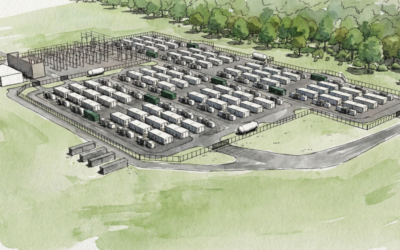
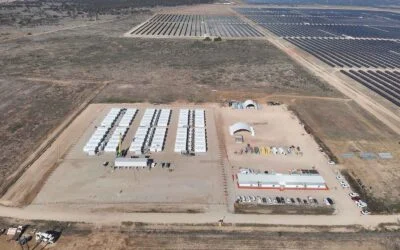
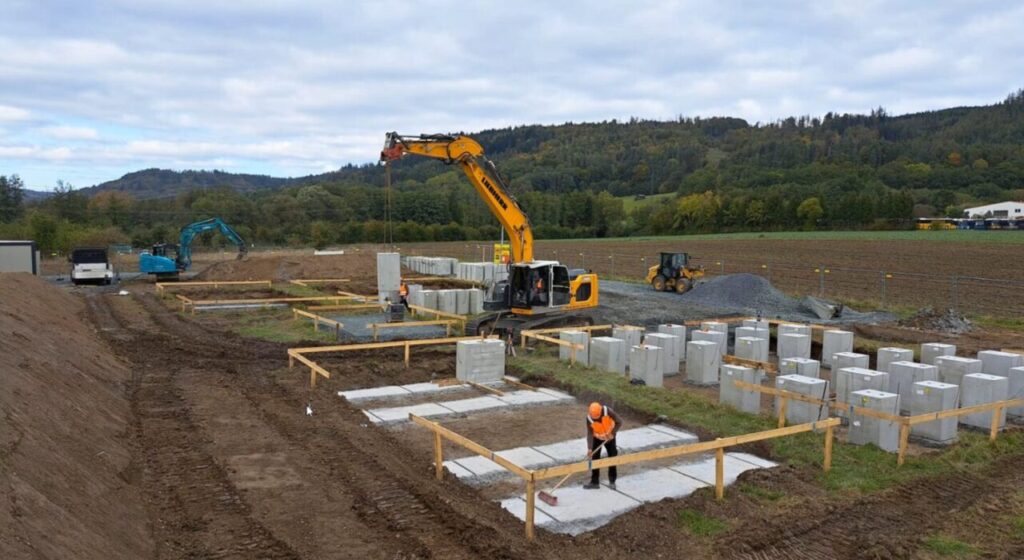
The toll covers eight battery energy storage system (BESS) projects being built, owned and operated throughout Germany by Terralayr, with Vattenfall effectively leasing 55MW of their total (higher) capacity and optimising their activity to make a financial return. The projects will come online by the end of 2025.
The BESS projects are being aggregated by Terralayr through its proprietary cloud software-based flexibility platform. The platform allows those requiring flexible capacity to enter into tolls of different sizes and different lengths.
Try Premium for just $1
- Full premium access for the first month at only $1
- Converts to an annual rate after 30 days unless cancelled
- Cancel anytime during the trial period
Premium Benefits
- Expert industry analysis and interviews
- Digital access to PV Tech Power journal
- Exclusive event discounts
Or get the full Premium subscription right away
Or continue reading this article for free
That is different to most tolls Energy-Storage.news has seen in the industry, where toll-takers will typically procure the capacity from a specific project, though there are numerous exceptions. A high-profile toll last year between UK BESS owner-operator and utility Octopus covered 14 projects totalling 568MW/920MWh of capacity, for example. Though that appeared to cover their whole capacity, unlike this deal.
Terralayr wants other BESS owner-operators to make their capacity available on the platform too, but this deal only covers the company’s own projects, which are typically 2-hour systems in the low tens of megawatts (MW) of capacity.
Its CEO Philipp Man and VP strategy and commercial Mikko Preuss discussed the company’s approach to the BESS industry with Energy-Storage.news in January (Premium access), shortly after it raised €77 million (US$87 million) from investors.
Note that ‘virtual’ tolls or power purchase agreements (PPAs) not tied to a single site are common in the solar PV space.
Terralayr said the aggregation of assets and offtake brings stable revenues and improves financing conditions, contributing to the expansion of BESS in Germany, with its distributed layout helping to offset regional inefficiencies in the power market.
A key technical advantage of the arrangement is that Vattenfall connects to the BESS via a centralised API, enabling efficient management.
Posting on LinkedIn, CEO Man said: “What makes this special? 1. No single point of failure 2. Zero upfront Capex or balance sheet impact for the offtaker 3. Access to all revenue streams 4. Fully scalable and bankable.”
“Instead of relying on a single big battery, we’re enabling flexible capacity exactly where and when it’s needed — with more reliability and lower overhead. Huge respect to the Vattenfall team for being bold early movers.”
A video posted along with the announcement showed that Terralayr has used Trina Storage for at least some of the BESS projects.
Preuss discussed BESS tolls in more detail in a panel discussion at the Energy Storage Summit EU 2025 in London in February (Premium access article).
It is the second major BESS toll deal announced in the past few weeks by Vattenfall, which is owned by the government of Sweden. The firm will optimise 100MW/200MWh BESS project in the Netherlands from investor Return.