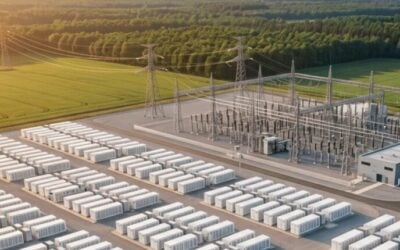
Utility DTE Energy has launched a request for proposals (RFP), seeking approximately 120MW of standalone energy storage projects in its Michigan, US, service area.
Projects must be located within the state and connect to the Midcontinent Independent System Operator (MISO) grid, or to distribution-level transmission, adding to Detroit-headquartered DTE Energy’s portfolio as it targets 2,950MW of energy storage by 2042.
Prospective bidders can register their interest ahead of a virtual pre-RFP conference on 23 May. Bids are due before 2 August this year. DTE expects to have contracts signed by the first quarter of 2025, and projects will be required to come online by 31 March 2027.
The company said the RFP aligns with its long-term integrated resource plan (IRP) for transitioning its generation mix to low-carbon sources, including retiring the last two coal-fired power plants it owns and implementing a roadmap to zero carbon emissions by 2050.
Try Premium for just $1
- Full premium access for the first month at only $1
- Converts to an annual rate after 30 days unless cancelled
- Cancel anytime during the trial period
Premium Benefits
- Expert industry analysis and interviews
- Digital access to PV Tech Power journal
- Exclusive event discounts
Or get the full Premium subscription right away
Or continue reading this article for free
As of last year, that mix included about 45% generation from coal, which is itself a dramatic fall from 75% in 2005. In 2023, 14% of the mix was renewable energy, natural gas and nuclear each took 19%, and energy storage was 3%.
DTE wants to increase the proportion of storage to 6% by 2029 and maintain that percentage through to 2042, while renewables’ share of the mix will grow to 32% by the end of this decade and 62% by 2042. Coal will decline to 15% of the mix by 2029 and be off the system entirely by 2033.
To date, DTE Energy has one 1,875MW pumped hydro energy storage (PHES) facility on Lake Michigan, which it co-owns with fellow utility Consumers Energy and accounts for nearly all its installed base of energy storage, along with two battery energy storage system (BESS) assets at solar PV sites.
The utility is currently building Slocum, a 14MW pilot BESS project and in March received approval from the Michigan Public Service Commission for a 220MW/800MWh lithium-ion (Li-ion) BESS at the site of Trenton Channel, an already-retired coal plant.
Midwest trailblazer Michigan set storage target last year
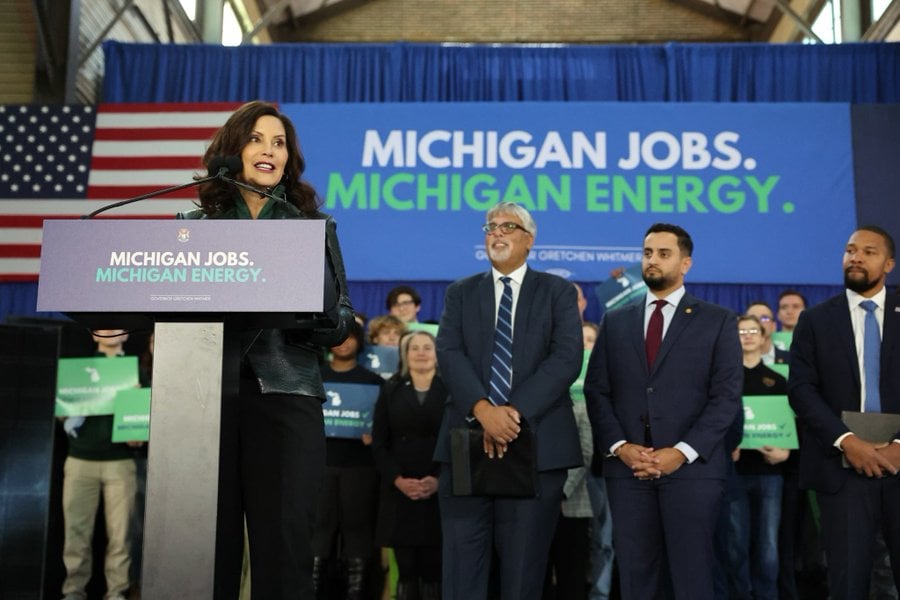
Late last year, Michigan became the 12th US state to establish an energy storage policy target. State governor Gretchen Whitmer signed climate and energy legislation committing Michigan to a 100% clean energy standard by 2040 and targeting 2,500MW of energy storage by 2030.
At the time, Jeff Bishop, then-CEO of BESS developer Key Capture Energy told Energy-Storage.news the legislation made Michigan a clean energy trailblazer among Midwest US states. Bishop said it was likely others in the region would follow its lead.
Further to this, Bishop and other industry sources have commented that the case for energy storage in the wider MISO grid and wholesale electricity market territory is underpinned by strong fundamental drivers, most prominently the need to eliminate reliance on burning coal for electricity.