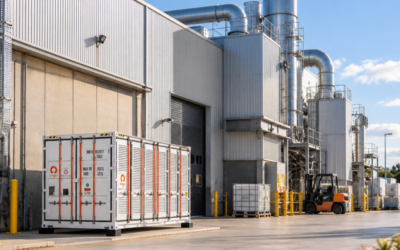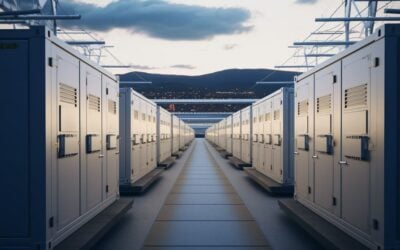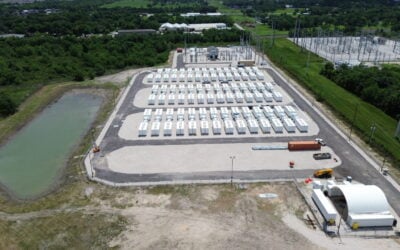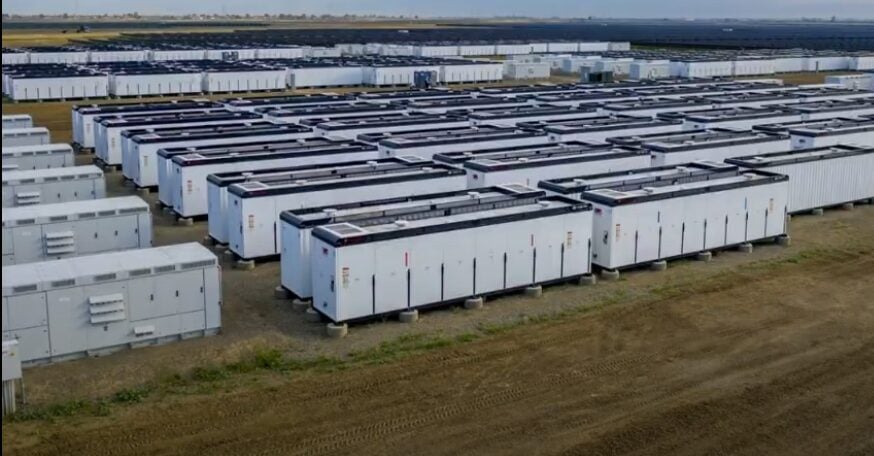
Utility Appalachian Power (APCo) is seeking up to 800MW total of energy storage resources via two new requests for proposals (RFPs) in Virginia, US.
Issued 17 August, the first RFP is for up to 500MW of battery energy storage system (BESS) capacity via one or more purchase and sale agreements (PSAs) “for purchase of 100% equity interest in a project company.”
The second RFP is for up to 300MW of BESS capacity via one or more capacity purchase agreements (CPAs), to be issued simultaneously.
The Virginia Clean Economy Act (VCEA) requires APCo to seek approval from the State Corporation Commission (SCC) to acquire 780MW of short-duration energy storage by 2040.
Try Premium for just $1
- Full premium access for the first month at only $1
- Converts to an annual rate after 30 days unless cancelled
- Cancel anytime during the trial period
Premium Benefits
- Expert industry analysis and interviews
- Digital access to PV Tech Power journal
- Exclusive event discounts
Or get the full Premium subscription right away
Or continue reading this article for free
Under the 2020 VCEA, APCo and utility Dominion Energy had a combined target of adding 3,100MW of BESS capacity by the end of 2035.
New legislation proposed first in 2025, again in 2026, and signed in April, has APCo adding 780MW of short-duration energy storage capacity by 2040 and 520MW of long-duration energy storage (LDES) capacity by 2045.
Dominion Energy, meanwhile, will add 16,000MW of short-duration energy storage capacity and 3,480MW of LDES capacity by 2045.
According to the RFP, APCo is seeking projects that are physically located in the Commonwealth of Virginia.
It continues that each development stage project bid into the RFP must have “100% Site Control (including easements), land title defects cured, an executed APCo or PJM generation interconnection and construction services agreements (as applicable), must have completed preliminary engineering (10%), permitting plan, and a phase I environmental site assessment report.”
Each build-transfer project must be a complete, commercially operable, BESS facility that is necessary to generate and deliver energy into PJM or the APCo distribution system by the expected commercial operation date (COD) of 15 December 2030, though projects with later CODs will be considered.
Each operating project must be a complete, commercially operable, integrated BESS-powered electric generating plant.
Additionally, APCo stated it is seeking project that will qualify for the full federal production tax credit (PTC) or the full investment tax credit (ITC).
Any projects that move forward as a result of the RFP will also be subject to APCo’s receipt of the necessary regulatory approvals. “If the Project is domiciled in Virginia, APCo can seek a prudency determination at the Virginia State Corporation Commission (VA SCC) and will subsequently seek a certificate to own and operate the facility from the VA SCC and, depending on the project, from the West Virginia Public Service Commission (WV PSC).”
Projects must have a minimum capacity of 5MW/20MWh. Proposals are due 30 September 2026.
Virginia operates within PJM’s service territory on the US electrical grid. The state is experiencing increasing energy demand, driven primarily by expanding data centre developments.
PJM
In January, the Trump administration, with a bipartisan group of governors, urged PJM to “temporarily overhaul its market rules to strengthen grid reliability and reduce electricity costs for American families and businesses by building more than US$15 billion of reliable baseload power generation.”
On 6 May, PJM released its whitepaper, “Powering Reliability Through Market Design,” laying out three pathways for reform, each with different implications for how the nation’s largest wholesale electricity market would procure resources, manage costs, and integrate new technologies like BESS.
PJM did not commit to deciding on a path by a specific date, but it did note in the whitepaper, “The urgency is real. The supply-demand gap the region faces is substantial – it is visible in current interconnection queues, retirement notices and reserve margin forecasts. The time available to make these decisions deliberately, before operational conditions force them by default, is measured in years, not decades. PJM’s commitment is to ensure that the region uses that time well.”
Energy-Storage.news Premium spoke with wholesale electricity policy expert Andrew Levitt, and Dr Long Lam, managing energy associate at the Brattle Group about the whitepaper and PJM’s potential paths forward.
Levitt noted of the potential for BESS, “I actually think it’s a great opportunity for batteries, independent of this paper and independent of the energy market, just because getting into the resource adequacy procurement that has to happen beyond the capacity market is going to be super-valuable and important.”
3CE launches RFP in California
California community choice aggregator (CCA) Central Coast Community Energy (3CE) has issued an RFP seeking new or existing renewable energy generating facilities which may be paired with BESS, and standalone BESS.
Announced 17 August, 3CE’s RFP is seeking offers with a capacity of at least 20MW from five product categories.
| Category | 3CE description |
| Renewable Generation Only Contracts | Renewable Portfolio Standard (RPS)-eligible generation from solar, wind, geothermal, or any other Portfolio Content Category 1 (PCC1) generating resource. |
| Renewable Generation Plus Storage Contracts | RPS-eligible generation paired with storage projects. The storage duration must be at least 4 hours, and the storage contract capacity cannot exceed 120% of the guaranteed generating capacity. 3CE is interested in all storage technologies, including alternative technologies that support 3CE’s innovation goals. |
| Standalone Storage Contracts | Standalone storage projects with a duration of at least 4 hours. 3CE is interested in all storage technologies, including alternative technologies that support 3CE’s innovation goals. Standalone storage offers may be for a physical or financial settlement. |
| RA Only Contracts | Resource Adequacy (RA) Only projects from storage, thermals, or other qualifying resources. Resources supplying RA must be certified with the CAISO as Resource Adequacy Resources. |
| Carbon-Free or Low-Carbon Generation Contracts | Carbon-free or low-carbon eligible projects, such as large hydroelectric, hydrogen, carbon capture systems, thermal plus storage, or any other eligible projects, that produce zero or reduced greenhouse gas emissions. |
RA Only Contracts includes a subcategory of Import RA Contracts. 3CE is also accepting offers for imported RA, with the respondent required to be the importer of record.
Power purchase agreement (PPA) start dates must be no later than 31 December 2032, with a preference for projects with a COD prior to 2030. The deadline to submit proposals is 25 September 2026.
3CE launched an RFP in March 2025, seeking offers with a BESS capacity of at least 20MW.
Both the previous RFP and this newly announced RFFP are designed to support California CCAs in meeting the state’s Renewables Portfolio Standard (RPS). This standard requires CCAs to procure 60% of their retail electricity from renewable sources by 2030 and achieve 100% carbon-free energy by 2045.
Battery Asset Management Summit USA 2026 will be held 15-16 September in Garden Grove, California, hosted by Energy-Storage.news publisher Solar Media (part of the Informa Group). The agenda emphasises addressing the roles of AI, cybersecurity, and second-life applications, broken down into two tracks: Technical Asset Management and Commercial Asset Management. This year, the conference is also co-located with Solar & Storage Finance Summit USA. Visit the official site for more details.