Interest rate rises and longer development timelines have driven a fall in the value of early-stage projects in the US clean energy and energy storage market and a flurry of sell-offs, developer-operator Agilitas Energy told Energy-Storage.news.
“Renewables as an asset class is definitely going through a rejig as interest rates increase the need for projects to have a really strong economic case,” Agilitas CEO Barrett Bilotta said. “Renewables at scale has only ever lived with near-zero interest rates and a lot of what’s been developed in the industry were marginal projects.”
Agilitas Energy is a solar and storage developer and operator based mainly in the New England market, where the grid operator is ISO-NE, but has recently expanded into ERCOT. The trend Billotta discussed mirrors what is happening in the UK according to sources interviewed by Energy-Storage.news for a recent Premium article.
Higher financing costs increases the value dilution that happens between greenfield origination and commercial operation, like the interest payments on the financial assurances you need to post to keep your place in an interconnection queue, Bilotta explained.
Try Premium for just $1
- Full premium access for the first month at only $1
- Converts to an annual rate after 30 days unless cancelled
- Cancel anytime during the trial period
Premium Benefits
- Expert industry analysis and interviews
- Digital access to PV Tech Power journal
- Exclusive event discounts
Or get the full Premium subscription right away
Or continue reading this article for free
Along with interest rates, US project development timelines have also gone up due to longer grid connection queues as grid operators books have become flooded with interconnection requests, increasing that dilution.
“What’s happened is the market as a whole has realised that development assets that were on a spreadsheet saying that it would get built in Texas in 2026 or California in 2028, a lot of the time there is no real value anymore. Or the value is diminished because the cost to get that project to NTP is so dilutive because of interest rates,” Barrett said.
“That is where we are seeing the most opportunity, where developers are looking to sell off development assets at their current condition to get capital to potentially salvage their others, and clear down their book as they can’t fund all of them. That’s what’s leading to a lot of the M&A mania right now from a project standpoint.”
“In our realm of distributed generation of 5-20MW project sizes, we’re seeing values for those early-stage projects come down about 70% from their peak in mid-late 2022. It’s a big move.”
The peak in project valuations in mid-late 2022 came when the market was peaking anyway in the middle of the year and the passing of the Inflation Reduction Act and its increased tax credit incentives for clean energy deployments “turbo-charged” it further.
Developers that have recently been very publicly marketing project pipelines include Solvent Energy and Granite Source Power, mainly in ERCOT, Texas.
The trend has been noted by renewable energy asset buying and selling platform LevelTen Energy. In its H1 2023 M&A outlook report it said that buyers are now exhibiting a more balanced and disciplined approach as opposed to the “land grab” seen in the last few years, and that the “sellers market” has abated. Projects with a firm and near-term timeline for interconnection are better-placed, its report said.
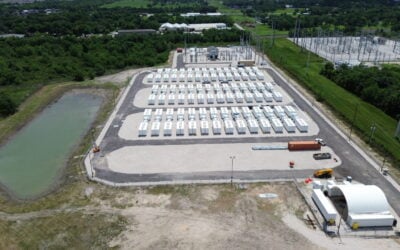
Agilitas recently brought a 4.8MW/23.7MWh battery energy storage system (BESS) online in New York, a project for which it won a 10-year contract with local utility Con Edison to discharge during peak demand periods.
Bilotta added that the pricing for lithium-ion BESS project equipment is down 30% per kWh – across batteries, transformers and inverters – versus last year which he attributed to lower demand because fewer of those ‘marginal’ projects are going ahead, and that this offsets some of the increased costs from financing and long development timelines.
But more primarily the interest rate environment has switched the focus in the market from development shops to being a fully integrated developer and independent power producer (IPP), he claimed. Developer-IPPs in Europe have said the same thing to Energy-Storage.news, expressing scepticism about early-stage pipelines and the ‘develop-and-flip’ model.
Bilotta estimated that the current dip in valuations for projects and companies in the space is ‘bottoming out’ and will reach a trough in Q1 2024.