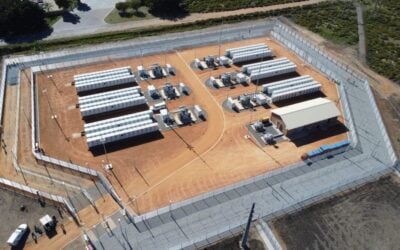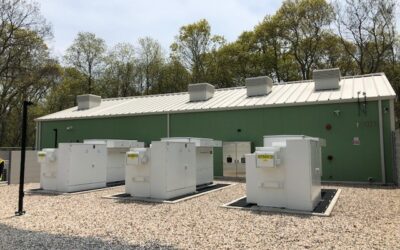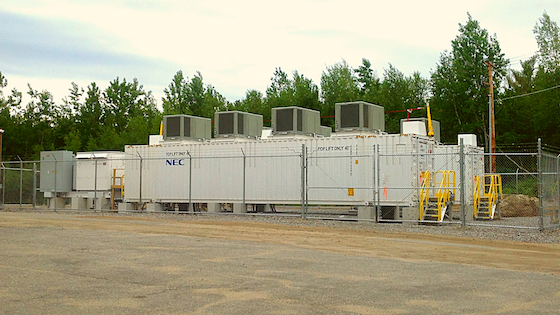
Investing in numerous smaller grid-scale energy storage projects minimises downside risk and can mean getting projects in the ground two years’ quicker, developer Agilitas Energy told Energy-Storage.news.
The firm is known for distributed front-of-the-meter – i.e. smaller but still grid-scale – solar and storage projects in the Northeast US, but recently expanded regionally with a US$75 million acquisition of six 9.96MW/20.72MWh battery energy storage system (BESS) projects in ERCOT, Texas.
That came after a US$350 million equity investment from CarVal Investors in mid-2022 to build a national solar and storage footprint, with the emphasis on storage, president & CEO Barrett Bilotta said.
Seeing as it has taken its focus on the smaller-scale opportunities to a completely new market, Energy-Storage.news asked Bilotta why this was its segment of choice.
Try Premium for just $1
- Full premium access for the first month at only $1
- Converts to an annual rate after 30 days unless cancelled
- Cancel anytime during the trial period
Premium Benefits
- Expert industry analysis and interviews
- Digital access to PV Tech Power journal
- Exclusive event discounts
Or get the full Premium subscription right away
Or continue reading this article for free
“We look at these assets being very active in terms revenue management, how the market dynamics shift and change, and being able to go ahead and live and roll with that market. So from our standpoint it doesn’t make sense to build a 200MWh four-hour system at this point in time. There’s not necessarily clear economic signals, in terms of how the power markets operate, for that,” Bilotta said.
“So by going ahead and placing a multitude of smaller bets, we feel like we’re in a better position to go ahead and capture that upside and and minimise our downside.”
Another developer with a similar strategy, Available Power, told Energy-Storage.news whilst at Energy Storage Summit USA in March that there are also ‘fewer eyes’ on the 9.9MW-or-less opportunities in ERCOT, which Bilotta agreed with. He added that the difference between a 10MW and a 100MW project in terms of getting grid connection could be as much as two years.
Projects in ERCOT which are under 10MW are a good example, benefitting from a much faster interconnection process.
It should be noted that Available Power sells projects at notice-to-proceed (NTP) while Agilitas Energy is a long-term owner and operator, which also does its own EPC (engineering, procurement and construction) and asset management.
While Agilitas is employing the distributed approach in both the Northeast and Texas markets, the two are very different revenue opportunities for storage. In the ISO New England market energy storage is all about connecting to a solar array and shifting that renewable load into the evening peak demand period. In ERCOT, it is a merchant model based around energy trading and bidding into ancillary service markets.
In Massachusetts, for example (part of ISO New England), energy storage has to pay fees like any other consumer to draw power from the grid, denting the business case of revenue applications requiring charging from the grid (like energy trading or regulation-down ancillary services).
Bilotta contributed to our most recent round of end-of-year reviews of the energy storage market with a Q&A interview, which you can read here.