Peak Energy, ESS Tech Inc, and Unigrid have made recent announcements advancing sodium-ion energy storage technology in the US and Europe.
Sodium-ion (Na-ion) batteries are gaining traction as an alternative to lithium-ion (Li-ion) for several compelling reasons.
Fire safety is a primary driver—while Li-ion cell failures are rare, deployment scale makes fire risk a significant investor concern, and Na-ion presents considerably lower risk.
Transportation is also safer, as Na-ion batteries can be fully discharged to 0V without affecting performance, whereas Li-ion must be transported at low charge levels, paradoxically increasing safety risks. Na-ion also operates across wider temperature ranges, enabling deployment in extreme climates.
Try Premium for just $1
- Full premium access for the first month at only $1
- Converts to an annual rate after 30 days unless cancelled
- Cancel anytime during the trial period
Premium Benefits
- Expert industry analysis and interviews
- Digital access to PV Tech Power journal
- Exclusive event discounts
Or get the full Premium subscription right away
Or continue reading this article for free
Beyond safety, material abundance is key: lithium, while abundant as an element, is constrained by supply chains and processing capability, while also being subject to price volatility driven by geopolitical tensions, whereas sodium is the sixth most abundant element on Earth and can be extracted from seawater, simplifying domestic production and potentially reducing dependence on China-dominated battery supply chains.
Industry forecasts suggest Na-ion demand could reach hundreds of gigawatt-hours by the late 2020s, positioning it as a critical energy storage technology with development expanding globally across BESS, electric vehicle (EV), and electronics applications.
While multiple US companies are working to commercialise Na-ion, China-based companies such as CATL, which signed the world’s largest Na-ion BESS order to date, a three-year strategic partnership with system integrator HyperStrong, covering 60GWh of Na-ion capacity, are making significant progress.
Peak Energy to launch Na-ion manufacturing facility in Sacramento, California
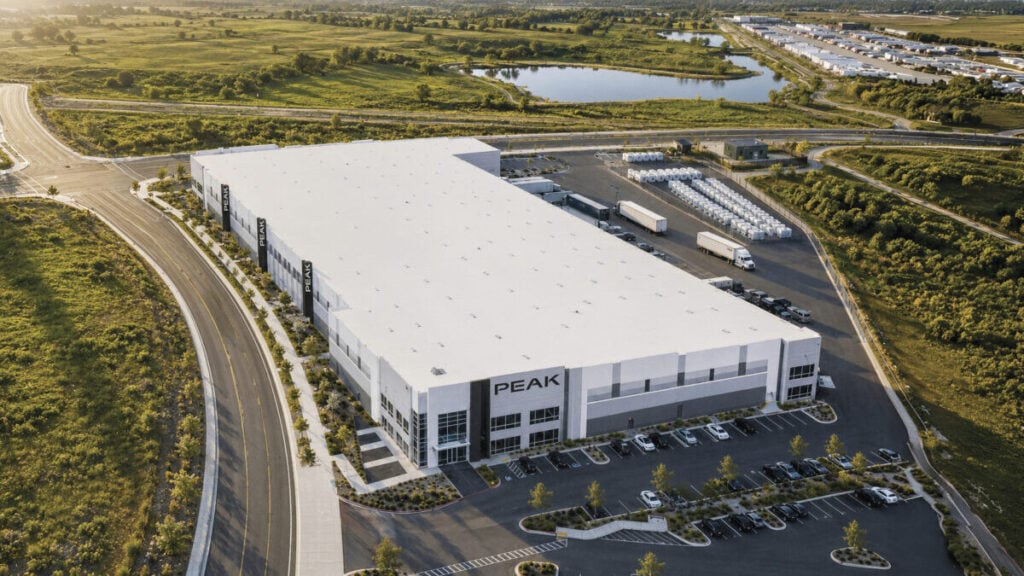
Na-ion BESS startup Peak Energy has selected Sacramento, California, US as the home of its new Na-ion energy storage system manufacturing facility.
Announced 8 July, Peak claimed the facility will produce up to 4GWh of battery energy storage systems (BESS) annually.
The new facility in Sacramento’s Metro Air Park involves a capital investment of up to US$71 million and will generate 239 local jobs over the next 18 months, with average annual salaries exceeding US$90,000.
The project is anticipated to stimulate additional economic activity among local suppliers, contractors, logistics providers, and service businesses throughout the Sacramento region, while expanding the local tax base and supporting long-term community investment. Combined with Peak’s broader California expansion, the company expects to create 348 net new jobs across its Sacramento facility and Burlingame headquarters by 2030.
According to Peak, it chose Sacramento following a competitive nationwide site selection process, citing “the region’s manufacturing talent, proximity to California’s growing energy storage market, strong state and local support, and the Greater Sacramento Economic Council’s leadership in bringing together workforce, utility and economic development partners.”
Peak’s growth in California is supported by a US$10.5 million CalCompetes tax credit, which was awarded in May 2026.
Peak claims it is commercialising the world’s first fully passive grid-scale BESS, engineered to operate for more than 20 years without scheduled maintenance and designed as a drop-in replacement for current BESS solutions.
Energy-Storage.news Premium spoke with Peak Energy CCO Cameron Dales in 2024, after the company opened its battery cell engineering centre in Broomfield, Colorado.
Dales noted that the centre was not designed as a production facility, further stating, “The plan of the company is to scale up a sodium-ion battery in the US. We’re well along the planning stages of that. It’s a three-phase approach to reaching scale.”
He continued, “First, purchasing sodium-ion cells, integrating them into our own ESS solution. We’re piloting 3.5MWh systems next year as part of our Peak pilot program in Colorado. There are six of the largest IPP and utility customers in the US who are participating in the program. Then, leading to deployment of those systems at customer sites starting in 2026.”
Since that time, Peak has secured a multi-year phased agreement with developer Jupiter Power to supply up to 4.75GWh of its Na-ion BESS in 2025.
This year, energy storage developer and system integrator Energy Vault announced a 1.5GWh strategic development agreement with Peak, and Energy firm RWE Americas will pilot a 3.1MWh system from Peak at its Eastern Wisconsin lab.
Most recently, in June, US automotive giant General Motors (GM) announced a partnership with Peak to develop prototype Na-ion cells at its Wallace Battery Cell Innovation Center R&D facility in Warren, Michigan. GM also made a strategic investment in Peak through its GM Ventures venture capital (VC) arm.
In the same month, Peak joined a group of Na-ion battery-focused companies in launching a new industry coalition, the American Battery Leadership Coalition (ABLC).
ABLC is led by Na-ion startups Peak, Alsym Energy, Batri, iron flow battery startup ESS Tech Inc, chemical company Ingevity, Na-ion battery cell platform Mana Battery Inc, a company building “North America’s first Na-ion gigafactory,” NAION, domestic manufacturing company Re:Build Manufacturing, manufacturer of separators for lithium-ion and lead-acid batteries, Microporous, and others.
ESS Tech Inc launches Na-ion BESS
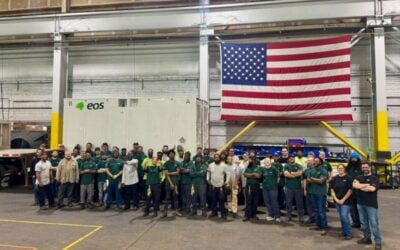
ABLC member ESS Tech Inc, better known for its iron flow battery technology, has launched the ESS Bridge, a modular Na-ion BESS designed for utilities, AI-driven data centres, critical infrastructure operators, and commercial and industrial (C&I) customers.
Announced 8 July, ESS claimed that the Bridge name “reflects the platform’s role in connecting energy generation and consumption while bridging the gap between today’s energy needs and a more secure and resilient energy future.”
Bridge is a 1.2MWh building-block AC BESS that combines Na-ion technology with ESS’s experience in system integration, controls, energy management, and project execution.
With the solution, ESS highlighted that it will provide complete system integration, including battery cells, modules, racking, power conversion, cabling, and battery management system (BMS) hardware and software in a 10-foot container. ESS is also providing an energy management system (EMS) to enable plant-level monitoring, optimisation, and control.
The modular design allows the blocks to be stacked. They can deliver up to 4.8MWh of storage capacity in the same footprint as a traditional 20-foot battery container, “maximising site utilisation.” The system scales easily to support both commercial and large, utility-scale applications.
Notably, ESS claimed that Bridge was designed to “eliminate” the risk of fire and requires nocomplex HVAC or liquid coolingsystems, reducing operational complexity, maintenance requirements, and total cost of ownership. It is capable of a wide range of charge and discharge profiles, from 1 to 16 hours or more depending on configuration.
ESS also emphasised that its technology utilises widely available materials, minimising dependence on constrained critical minerals and mitigating geopolitical sourcing risks. The solution enables development of a domestic energy storage supply chain while helping customers navigate foreign entity of oncern (FEOC) compliance requirements.
In May, ESS announced its Q1 2026 financials, showing that the company remained unprofitable, but focused on recent partnerships, like the one the company announced the same month, with other ABLC member and Na-ion startup Aslym Energy.
That partnership will see ESS adding 8.5GWh of Alsym’s Na-ion cells and modules to its portfolio.
Unigrid ships first Na-ion residential BESS
US Na-ion battery technology company Unigrid has announced deliveries of its first-generation Na-ion residential BESS, Na+Casa.
Announced 8 July, the initial units, rated at 9.25kWh capacity, have been installed in homes across Europe, with US residential installations expected by the end of 2026, pending completion of additional compliance requirements for Na-ion batteries in North America.
Unigrid claimed its sodium chromium oxide (NCO) Na-ion technology is designed for a 25-year operational lifespan, offering a “safer, more reliable, and longer-lasting option for backup power, solar self-consumption, and long-term energy resilience that matches the durability of solar installations.” Na+Casa is also designed for compatibility with most existing hybrid inverters.
Unigrid is currently producing cells at 200MWh per year and plans to expand to 2GWh per year in 2027 through foundry relationships in China, Korea, and Japan. The company uses a fab-less, foundry-subscription model to expand its proprietary NCO cell chemistry by collaborating with manufacturing partners rather than building expensive gigafactories.
In January, Unigrid began international shipments of its NCO cathode cells at commercial volume.
Commercialisation gained momentum in early last year following Unigrid’s achievement of UN38.3 transport certification for its Na-ion cells—the same certification that validates Li-ion batteries for safe transportation.
By the end of 2025, the company had transitioned from pilot-scale to full-scale commercial exports. These shipments marked the first Na-ion exports at several international ports, which were historically configured for Li-ion batteries and required adaptation to new procedures and declarations for the alternative battery chemistry.
Unigrid’s transportation capability is significant, considering that safely moving Li-ion batteries represents a major supply chain complexity in the industry. The US National Fire Protection Association (NFPA) is currently developing a new standard, NFPA 800, addressing all aspects of battery transportation and storage.
In March, Unigrid announced its NCO chemistry achieved 5,000 full-depth cycles, 100% depth of discharge, with greater than 95% capacity retention in commercial-grade cells.
Lithium iron phosphate (LFP) batteries have a cycle life of up to about 12,000 cycles, which is higher than that of many other Li-ion batteries.