Iron flow battery company ESS Tech Inc has signed a letter of intent for a strategic partnership with US sodium-ion (Na-ion) battery startup Alsym Energy.
The partnership, announced 30 April, will see ESS Tech add 8.5GWh of Alsym’s Na-ion cells and modules to its portfolio.
ESS Tech and Alsym noted that this partnership also marks ESS’ entry into the short and medium-duration battery energy storage system (BESS) segment.
The change in duration is notable for ESS, which has recently doubled down on a strategy of deploying long-duration energy storage (LDES), in an effort to reach profitability.
Try Premium for just $1
- Full premium access for the first month at only $1
- Converts to an annual rate after 30 days unless cancelled
- Cancel anytime during the trial period
Premium Benefits
- Expert industry analysis and interviews
- Digital access to PV Tech Power journal
- Exclusive event discounts
Or get the full Premium subscription right away
Or continue reading this article for free
In March, the company reported its Q4 2025 and full-year 2025 financial results, reporting a fiscal year (FY) 2025 net loss of US$63.4 million, which was a US$22.8 million improvement from FY 2024.
In 2025, ESS noted it would pivot to its Energy Base product, while discontinuing two smaller configurations. Energy Base is a 12–14-hour LDES system which the company developed for data centres and other large load customers.
In February of this year, the company acquired the intellectual property and assets of VoltStorage GmbH, an iron-salt battery developer. During that move from ESS, it also highlighted that VoltStorage GmbH’s resources would assist with longer discharge periods.
Drew Buckley, CEO of ESS, said of the Alsym partnership, “Alsym’s sodium-ion Na-Series is an ideal solution for ESS’ short- and medium-duration applications where high power, fast cycling, and rapid response are paramount. ESS’ existing Energy Base iron flow platform is engineered for the 8–24 hour long-duration segment, where deep daily cycling, 25-year asset life, and zero capacity degradation deliver the lowest levelised cost of storage.”
Buckley continued, “Together, the two chemistries form a unified, non-lithium platform that enables ESS to meet customers’ full storage needs from a single trusted provider, whether the application calls for firming renewables over a few hours, shifting energy across a full day, or pairing both within a single project to optimise economics across the full duration curve.”
The move also comes as battery manufacturer CATL and system integrator HyperStrong enter a three-year, 60GWh Na-ion battery order deal.
As reported by Energy-Storage.news, CATL said the agreement shows it “has overcome the challenges of the entire sodium-ion battery mass production chain and has the capability for large-scale delivery”. In particular, it has solved Na-ion’s issues of energy density and manufacturing process problems of foaming and moisture control.
ESN Premium also shared insights from industry sources on the significance of the CATL-Hyperstrong deal, with mostly positive reactions, but a few notable sceptics.
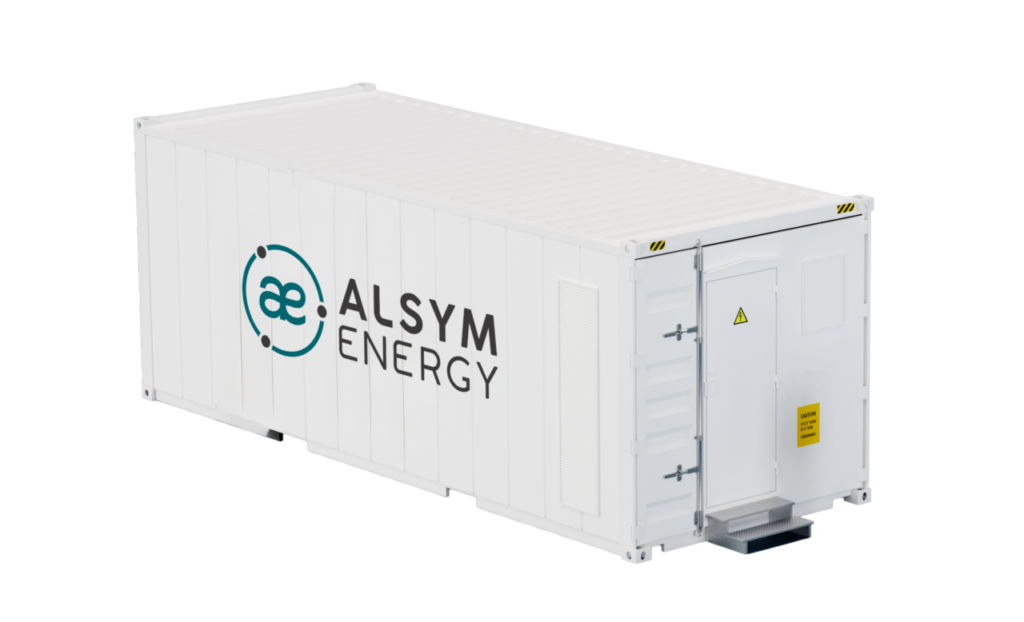
Alsym has previously remained discreet about its technology, however, last October, the company launched its Na-Series energy storage battery, a “non-flammable, non-toxic, and cost effective” solution for data centres and renewables projects.
In January, Mukesh Chatter, president, CEO, and co-founder of Alsym Energy spoke with ESN Premium, for the site’s Year in Review series, about the prospects of its Na-ion solution.
“Sodium-ion is not a one-to-one replacement for lithium-ion. It is an expansion of what is possible for energy storage. Today, many projects are delayed or rejected because they are too risky to site near schools, hospitals, data centres, or dense urban infrastructure,” Chatter said.
He continued, “Non-flammable chemistries such as Alsym’s NFPP+ remove that permitting wall without sacrificing performance, enabling ‘storage-anywhere.’ In practice, that is the difference between a project that stays on paper and one that actually gets built in a city centre or critical load zone.”
ESS and Alsym claim that by combining the Na-ion and iron-flow platforms, ESS will be better positioned to “support utilities, IPPs, data centres, and commercial & industrial (C&I) customers seeking American-made, flexible, and future-proof energy storage solutions across a wide range of applications.”