The UK’s first listed fund for energy storage is setting out to raise £100 million (~$139 million) for investment in battery projects, with a seed portfolio of an estimated 18MW/20MWh already arranged.
The Gore Street Energy Storage Fund (GSESF) from Gore Street Capital is seeking to invest in a diversified portfolio of utility scale energy storage projects primarily in the UK, with a consideration for projects in North America and Western Europe.
The fund is targeting “a sustainable and attractive dividend” of 7% annually, although will aim for 3% for the period from first admission on 12 April 2018 to 31 March 2019.
GSESF has already gained significant backing from NEC Energy Solutions and Nippon Koei (NK), which have committed £14 million ($19.4 million) of the target £100 million to the fund between them, in addition to £2.4 million ($3.3 million) from the directors of Gore Street Capital and affiliates.
Try Premium for just $1
- Full premium access for the first month at only $1
- Converts to an annual rate after 30 days unless cancelled
- Cancel anytime during the trial period
Premium Benefits
- Expert industry analysis and interviews
- Digital access to PV Tech Power journal
- Exclusive event discounts
Or get the full Premium subscription right away
Or continue reading this article for free
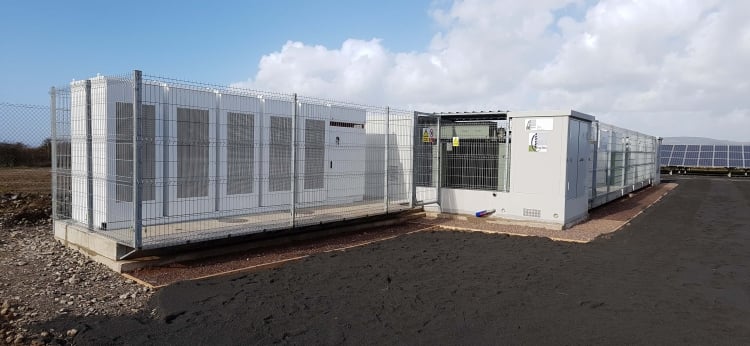
Support from Nippon Koei has also been translated into initial project agreement for the 6MWh Boulby project and the 4MW/4.8MWh Tesla battery at Cenin Renewables. NK Energy Storage Solutions is a wholly owned subsidiary of Japanese engineering company and holds a 100% and 49% stake in the two projects respectively and are to be acquired by GSESF for around £7.5 million ($10.4 million).
Alex O’Cinneide, managing partner of Gore Street Capital, said: “We have already built strong strategic partnerships with our cornerstone investors, NEC ES and NK, and believe that our existing operational assets, complemented by the company’s robust and actionable pipeline will deliver excellent near-term shareholder value in a growing market.”
The fund is also in talks to take on the 10MWh Lower Road project currently being developed by Origami Energy, taking the aggregate value of the seed portfolio up to £11.2 million ($15.5 million). However, this is dependent on the project achieving a “satisfactory result” in the frequency auction due to take place in April 2018 and agreeing final legally binding terms with Origami.
Laying out the investment risk
Such a condition also applies to a number of risks outlined by the funds’ prospectus published last week. It lays out a plan to use the flexibility of energy storage technologies to ensure diversification of revenues through the potential to ‘stack’ revenues such as frequency response services, the Capacity Market, grid charge reductions and arbitrage.
However, it also explains that the revenues generated by its portfolio will be dependent on the prices secured from National Grid for various balancing services. As has already been seen with the firm frequency response (FFR) market, the fund managers expect a decline in the market price of balancing services “which may adversely affect the company’s ability to meet target dividend distributions or rates of return”.
The same is stated to be true for revenue dependent on the savings of TNUoS and DUoS charges that the company’s energy storage systems can offer to its industrial and commercial customers through the deployment of behind-the-meter batteries.
“Any decline in the TNUoS tariff levels or DUoS tariffs or charging mechanisms in the future could materially adversely affect the company’s revenues and financial condition,” the prospectus states, while the same is said of capacity market contracts.
With National Grid is still developing a new suite of grid service products, Ofgem embedded in a charging review expected to cut the revenues available from grid charge avoidance, and the recent cuts to capacity market de-rating factors, many of these warnings have already been noted across the UK storage sector as a consideration for investors.
However, GSESF maintains that it intends to hold a diversified portfolio of projects with targeted unleveraged internal rates of return once fully invested of 10-12%.
The fund has identified a pipeline of more than 60 potential projects totalling 1.34GW. While it is primarily looking for energy storage projects using lithium-ion battery technology, the fund is ultimately agnostic as to which energy storage technology is used and would consider a range of alternative technologies.
It will not seek to invest in any projects under development so that, save in respect of final delivery and installation of the battery systems, all other key components of the projects are in place before investment or simultaneously arranged at the time of investment.
Patrick Cox, chairman of the Gore Street Energy Storage Fund, said: “We believe that investment in energy storage projects will deliver strong returns. Our first-mover advantage in the UK energy storage sector will help us to deliver through an asset base that provides high-yielding income returns.”
Typical investors are expected to be institutional investors, professionally advised retail investors and non-advised retail investors, and the publication of the results of the issue is expected on 10 April 2018.