Distribution network operators (DNOs) in Britain should be able to own and operate a minimal amount of battery storage capacity in certain cases, and be able to compete in the ancillary services market to fund the projects, according to the head of regulation and strategy at Northern Powergrid (NPg), one of the country’s seven DNOs.
Speaking to our sister site Clean Energy News, at a recent event at which the DNO’s customer-led distribution system project was unveiled, Jim Cardwell explained that NPg was working on a series of ‘smart resilience’ use cases which could be stifled by prescriptive rules being proposed by the regulator.
In October national regulator Ofgem launched a consultation that set out plans to introduce a new condition in the electricity distribution licence to ensure that DNOs remained legally separate from the operation of storage assets.
Operation would have to be carried out by a legally separate party such as an independent third party or a legally separate affiliate of the DNO, and sets out to ensure network companies cannot distort the current market for frequency response and grid balancing services tendered to the private sector.
Try Premium for just $1
- Full premium access for the first month at only $1
- Converts to an annual rate after 30 days unless cancelled
- Cancel anytime during the trial period
Premium Benefits
- Expert industry analysis and interviews
- Digital access to PV Tech Power journal
- Exclusive event discounts
Or get the full Premium subscription right away
Or continue reading this article for free
Cardwell explained that this could stand in the way of DNOs developing new innovative use cases for storage technologies that could benefit consumers.
“One of the areas that we’re looking at is increased resilience so we’re also thinking about if there is a way we can put storage out there onto our network… in areas of our grid that are more prone to power cuts just by virtue of their typography.
“We’re calling this ‘smart resilience’ of our networks. That’s a future use case that we’re innovating now… at a time when we don’t know what those use cases are yet. So it wouldn’t be in customers’ best interest for Ofgem to stifle that innovation by virtue of trying to protect a market for flexibility,” he said.
Cardwell went on to explain that NPg is calling for “a de minimis level, not a massive level that will distort the market for flexibility” for DNOs to own and operate storage to explore any potential benefits to the network and its customers.
“If we’re not careful we hold back some of the benefits of this technology for our customers and then that would be the wrong thing to do,” he added.
Funding innovation work, “not to make money”
Cardwell went on to explain how DNOs should also still be able to play in the ancillary services market, despite Ofgem’s position to specifically stop this activity for fear it would distort what the regulator has said should be a market-led activity.
“If we did have a use case [primarily for] resilience of the system and had some spare capacity that we could then trade off the top of that battery at times when it’s not needed for resilience, that might pay for it. It might help pay for a community to get their battery to improve their resilience [and] we don’t want to straight jacket ourselves against providing value to customers,” he said.
This, Cardwell added, would not come near the distortions concerning Ofgem and would provide value to customers of regional networks.
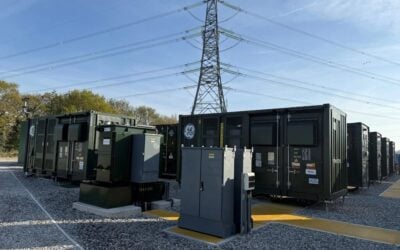
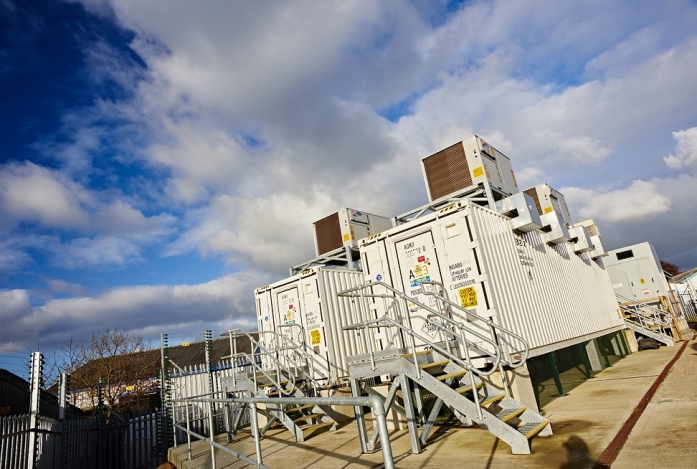
The company already uses an existing battery asset to trade in ancillary services, namely the 2.5MW (5MWh) battery in Darlington which provides grid frequency services via a contract with aggregator Kiwi Power.
The £4 million (US$5.34 million) battery was paid for by consumers as part of NPg’s Customer-Led Network Revolution (CLNR) smart grid innovation project. While drawing in some of National Grid’s spending for grid services, Cardwell explained that use of the battery in this area was also playing in to the DNO’s innovation work.
“We have a large battery asset that we’ve funded through innovation funding, so we are trading the output of that to fund our innovation work – not to make money. We are trading services to the national system operator and with an energy supplier, both through an aggregator, and that’s because we want to learn from that.
“We want to be an informed buyer of services in the future and to do that we’re doing some selling today to get involved in that market and understand what it’s about, build our skills and our competencies.”
Procurement of flexibility services has long been anticipated by DNOs as they move to a more active distribution system operator role. Another of the DNOs, UKPN (UK Power Networks) has already revealed it is seeking over 34MW of flexibility services across its network to be available in January 2018 and, like NPg, uses a battery to provide grid services.
NPg is expecting to approach the market with its own flexibility tender within two years.