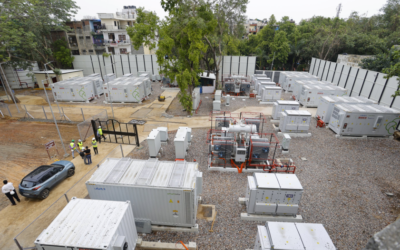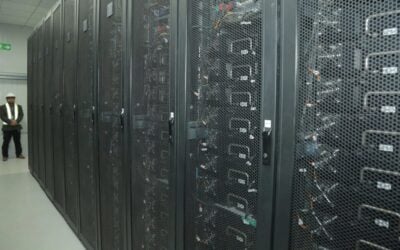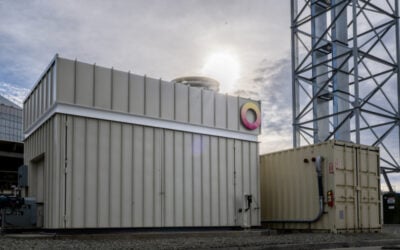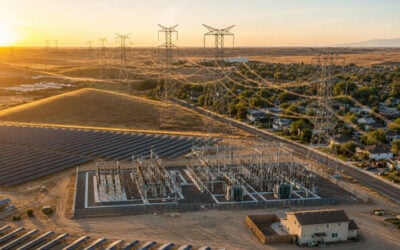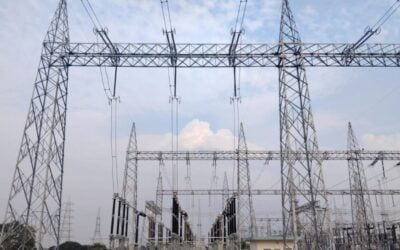
India’s Union Cabinet has approved INR 1.86 trillion (US$ 19.3 billion) for the third phase of the Green Energy Corridor, including INR 500 billion for 50GWh of battery energy storage systems (BESS) to support renewable integration through FY2032-33.
The Green Energy Corridor Phase III (GEC-III) scheme aims at reducing renewable energy curtailment and improving grid flexibility as the country adds large volumes of solar and wind capacity.
The scheme has a total outlay of INR 1.86 trillion, with INR 500 billion (US$ 5.2 billion) allocated specifically for 50GWh of BESS. A further INR 1.37 trillion will fund intra-state transmission infrastructure designed to enable the evacuation of up to 135GW of renewable energy across states and Union Territories by FY2032-33.
The BESS component is the first dedicated storage provision under the Green Energy Corridor programme. The government said the systems will be deployed at renewable energy developer or generator sites, as well as at other strategically important grid locations.
Try Premium for just $1
- Full premium access for the first month at only $1
- Converts to an annual rate after 30 days unless cancelled
- Cancel anytime during the trial period
Premium Benefits
- Expert industry analysis and interviews
- Digital access to PV Tech Power journal
- Exclusive event discounts
Or get the full Premium subscription right away
Or continue reading this article for free
The storage capacity is intended to address renewable generation intermittency, transmission congestion and peak-hour curtailment, while shifting renewable electricity into non-solar hours when demand remains high.
The announcement comes as India’s rapid expansion of renewable generation has increasingly exposed constraints between generation capacity and the availability of transmission infrastructure.
During FY2026, around 6,900GWh of clean electricity faced restrictions because of a mismatch between renewable energy deployment and the commissioning of associated transmission infrastructure, according to government data.
Between April and June, when peak power demand reached a record 270GW, grid operators curtailed 8,133GWh of solar generation because of transmission constraints and grid security requirements, according to information provided by the Ministry of New and Renewable Energy (MNRE) to Parliament in July.
According to JMK Research & Analytics’ Q2 2026 India RE Update, India’s variable renewable energy (VRE) curtailment surged to 1,874.09 million units (MUs) in Q2 2026, a 558.5% quarter-on-quarter increase from 284.59MUs in Q1 2026.
The GEC-III storage allocation is therefore designed to provide flexibility alongside transmission expansion, allowing surplus renewable generation to be stored rather than curtailed and subsequently discharged during periods of higher demand or lower renewable output. The scheme is scheduled to be implemented through FY2032-33.
US$5.2 billion allocated to 50GWh BESS
Of the total GEC-III allocation, INR 500 billion has been earmarked for 50GWh of BESS.
At an aggregate scheme level, this represents an allocation of approximately INR 10 million per MWh of planned storage capacity, although the government has not provided project-level details on the technology configuration, duration or procurement structure for the 50GWh.
The systems can be located at renewable generation sites or at grid locations where storage can provide flexibility to the wider power system.
The government said the storage deployment will help address intermittency and transmission congestion, while supporting electricity supply during non-solar hours.
The inclusion of storage also reflects the increasing need for flexibility as India moves towards higher renewable penetration. Battery systems can provide short-duration shifting of renewable electricity, manage periods of excess generation and support grid operations during peak-demand periods.
The GEC-III scheme will provide total Central Financial Support of INR 540.82 billion. The government said this support will help offset intra-state transmission charges and reduce the transmission-related component of electricity costs for end users.
The scheme comes as India scales up BESS to address renewable intermittency, grid congestion and curtailment.
This month, the Central Electricity Regulatory Commission (CERC) proposed new grid-operating requirements for standalone energy storage systems, including a minimum 50MW aggregate trial run, staged commissioning provisions for larger projects and primary frequency-response requirements for qualifying storage systems connected at 33kV and above.
Additionally, the Central Electricity Authority (CEA) proposed mandatory grid-forming inverter capability and co-located storage for new renewable energy projects from July 2027.
135GW of renewable energy evacuation capacity
The remaining INR 1.37 trillion of the scheme will be used to develop Intra-State Transmission Systems (InSTS), with the overall programme targeted at enabling the evacuation of up to 135GW of renewable energy by FY2032-33.
The transmission investment is intended to address constraints within states, connecting renewable generation with demand centres and strengthening networks required to integrate additional solar and wind capacity.
State Transmission Utilities (STUs) will serve as the overall implementing agencies.
Greenfield InSTS projects will be developed through Tariff-Based Competitive Bidding (TBCB), while brownfield upgrades and network-strengthening projects will be implemented on a cost-plus basis.
Transmission Service Providers selected through TBCB will develop projects under a Build-Own-Operate-Maintain model.
The government said the scheme will support the infrastructure required to integrate higher volumes of renewable energy and contribute towards India’s target of 900GW of installed non-fossil fuel capacity by 2035.
Storage added as transmission constraints increase
The dedicated BESS allocation comes against a backdrop of continuing transmission bottlenecks affecting renewable energy projects.
Around 21GW, or approximately 9% of installed renewable energy capacity, is currently being transferred through temporary grid connections while dedicated transmission infrastructure is awaited. Of this capacity, around 12GW faces restrictions on evacuation during periods of peak solar generation.
These restrictions can result in renewable energy curtailment and reduce the utilisation of installed generation assets.
India is targeting 500GW of renewable energy capacity by 2030, compared with around 295GW currently, increasing the need for transmission and flexibility infrastructure to be developed alongside new generation.
The Green Energy Corridor programme is already being implemented through two earlier phases covering both intra-state and inter-state transmission infrastructure.
Under GEC Phase I, 9,130 circuit kilometres of transmission lines had been constructed across eight states as of 30 June, against a target of 9,461 circuit kilometres.
GEC Phase II covers seven states, with a target of 7,863 circuit kilometres of transmission lines and 24,388MVA of substation capacity. As of 30 June, 93 of 95 packages had been tendered and 85 had been awarded, while 1,124 circuit kilometres of transmission lines had been charged and 6,860MVA of substation capacity commissioned.
Implementation delays have previously been highlighted by a parliamentary panel, with right-of-way compensation issues identified as a major cause of delays in transmission-line construction.
India’s renewable energy transition, from solar PV and energy storage to grid integration, will be a key topic of discussion at the Renewable Energy India (REI) Expo, co-located with the Energy Storage Summit India (ESS India), in Greater Noida on 22-24 October 2026. For the full agenda and booking details, click here.