
We hear from Angus Gordon Lennox, chair of the Gore Street Energy Storage Fund (GSF), which faces a shareholder vote next week on its future.
In July, shareholder Saba Capital Management tabled resolutions which, if passed, would see GSF cease to be an operational company and its assets sold off. GSF agreed to include them in its annual general meeting on 16 September, next week, but has urged shareholders to vote against them.
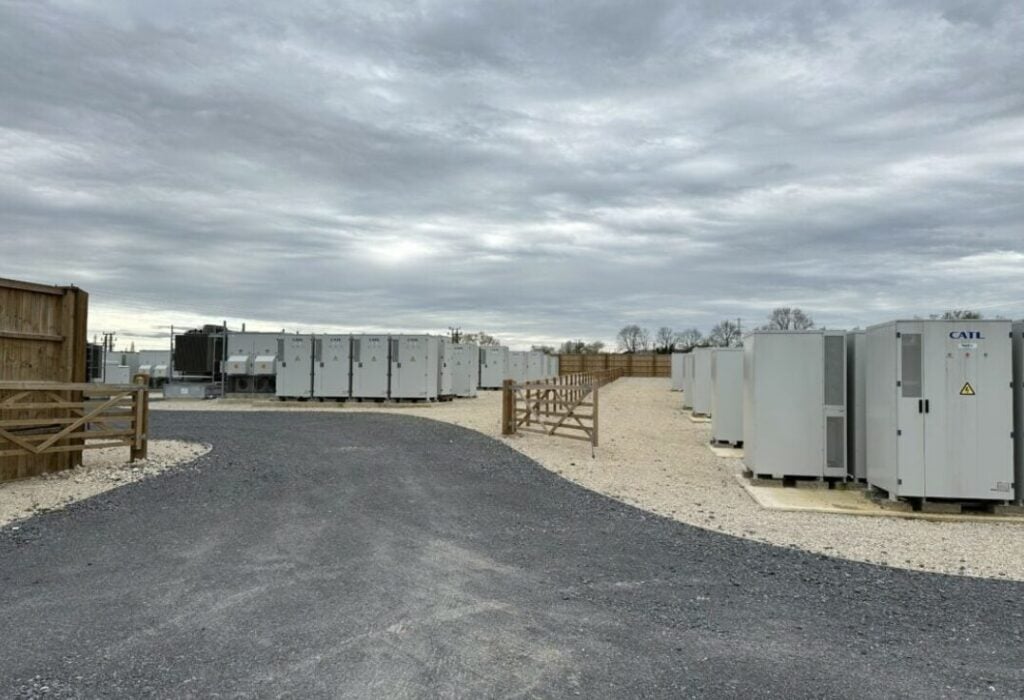
Saba has been highly critical of the GSF board and management team after poor share price performance and net asset value (NAV) declines in the past few years, as has fellow shareholder RM Funds. GSF has large-scale battery energy storage system (BESS) assets across the UK, plus a few scattered through Ireland, Germany and the US, totalling around 643.11MW/840.9MWh of operational capacity.
Hoping to turn things around, GSF appointed a new board last year (including Lennox) and in Spring this year announced a new strategy of selected asset sales and project augmentations. “But one of our shareholders has thrown a grenade into that, just five months after we announced it,” Lennox says.
Try Premium for just $1
- Full premium access for the first month at only $1
- Converts to an annual rate after 30 days unless cancelled
- Cancel anytime during the trial period
Premium Benefits
- Expert industry analysis and interviews
- Digital access to PV Tech Power journal
- Exclusive event discounts
Or get the full Premium subscription right away
Or continue reading this article for free
Why you can’t compare it to the Harmony Energy fund sale
Describing the ‘perfect storm’ of the buildout of other large-scale BESS projects and high interest rates, Lennox says the board thinks the sector is at a low, so portfolio-wide asset sales would not be the best outcome for shareholders.
“We decided the best thing for shareholders would be to trade out of the position that the company had got into, rather than try and sell assets at what we think was a sectoral low, or sell assets in an accelerated way,” he says.
We point out that when Harmony Energy sold the Harmony Energy Income Trust (HEIT) in 2025, it still got a price well above its NAV and well above its share price when the sales process was announced. The CEO of Harmony told us this was because private investors currently value BESS assets more highly than public ones.
But Lennox argues you cannot compare the two.
“There’s a difference selling individual assets and selling a portfolio. Harmony had an all-UK portfolio, and there was an all-UK bidder,” he explains.
“You can argue both ways about our geographic diversification, as the revenues are higher elsewhere than in the UK. But there’s also a negative. There is no one currently raising a fund, for instance, to buy a portfolio that’s based in California, in Texas, in Germany, in Northern Ireland, in Southern Ireland, and in the UK, there isn’t anyone like that. That is something we looked at at the time of our strategic review in March. So, not by design, but by outcome, if you like, it’s a very difficult thing to do to sell this as a whole.”
Irish asset sales
However, the company is pursuing selected asset sales as part of its strategy. Those include two Irish ones in development, the 120MW/240MWh Kilmannock project and the 75MW/150MWh Mucklagh project.
However, they were sold to a separate Gore Street Capital-managed storage fund, launched for EU investments. This was highly criticised by shareholder Saba, particularly as the price was not disclosed.
“The buyer is an independent entity, with its own investment management committee, with its own thoughts, and run by the LPs who decided to buy those Irish assets,” Angus Lennox responds.
“I can confirm that they were the highest bidder, and therefore we were delighted with it. Meanwhile, other people are throwing rocks about it because they just want to throw rocks. I don’t think they’ve thought it through.”
He says the price not being disclosed was at the wishes of the LPs of the buying fund.
Note that Gore Street today (10 September) announced that a sales process for its operational 22MW BESS in Germany has fallen through after ‘….at a late stage the prospective buyer sought to significantly alter its offer to a level the Board considered represented poor value for Shareholders’.
It said there was no market-based rationale for the reduction and that the most likely reason was the uncertainty caused by Saba’s resolutions.
Discussing this principle, Lennox says: “The grenade being chucked has a number of facts, not least the fact that potential buyers of assets see us coming. If that resolution passes, then they know that we’re a seller, so therefore they’re never going to pay top dollar.”
However, after this article went to press, Saba Capital sent out a note in response to Gore Street’s German update, saying: “The Board says its German asset sale failed because of Saba. The Company’s own filings say otherwise.”
“The Board put Cremzow up for sale on 2 October 2025 and appointed an adviser three weeks later. In March 2026 it told shareholders the asset had attracted strong initial interest and would be sold by 30 June 2026. That date passed in silence. Saba’s requisition was not public until 30 July. Eleven months on, there is no buyer.”
“At its results on 15 July, the Company revalued Cremzow in line with the price it expected a buyer to pay, and raised the discount rate on the asset to reflect a more cautious view of the operational risks it carries. Analysts covering the Company put the reduction at around half. Two months later the Board says a buyer cutting its price has no obvious market rationale. Its own accounts said otherwise.”
Augmentation
The company has also launched the process of prioritising its capital to augmenting its BESS projects from 1-hours to 2-hours.
However, you could argue that the company has come to it a bit late. Gresham House’s GRID fund, the other listed UK-focused BESS fund, started a portfolio-wide augmentation process over two years ago.
Though augmentation is not the only factor, its share price has performed better than GSF in the same period. GRID’s NAV rose 15.8% recently, while GSF’s fell 27% (though again this was affected by much more than just augmentation strategies).
Tolls
We ask Lennox why the company has not entered into any tolls with offtakers for its BESS projects. It’s another area where GSF and GRID differ, with most of GRID’s revenues now being contracted via floors or tolls. And many, if not all, BESS owner-operators have some level of contracted revenues.
“Any contractual arrangement like this will reflect current pricing. So, if one had 20/20 vision looking backwards, then they probably should have entered into some of these contractual arrangements when they were getting £22/MWh, wouldn’t that have been nice? But they didn’t, and I can’t tell you why they didn’t at that stage. I think they were busy building things,” Lennox says.
“Frankly, I think that to do it now would be to lock in the lows rather than to. We’re absolutely not against those contractual arrangements in due course, but at the right level. And I’m not sure that right now is at the right level, I think you might be just locking in poor performance.”
Several of the GSF team will be speaking at the Battery Asset Management Summit UK & Ireland 2026, which runs 13-14 October in London. Get your tickets here.
