
Welcome to another edition of hot takes, snap analysis, gossip and of course, valuable insights from the LinkedIn feeds of energy storage and electricity insiders.
ERCOT’s shifting battery storage economics
“Battery storage economics in ERCOT no longer make sense,” wrote Ashish Verma, co-founder and chief business officer at engineering and technical advisory Sunstripe.
Oversupply is crushing margins in both ancillary services and arbitrage markets, a far cry from the strong numbers posted between 2021 and 2023, and according to Verma, the issue is duration.
Try Premium for just $1
- Full premium access for the first month at only $1
- Converts to an annual rate after 30 days unless cancelled
- Cancel anytime during the trial period
Premium Benefits
- Expert industry analysis and interviews
- Digital access to PV Tech Power journal
- Exclusive event discounts
Or get the full Premium subscription right away
Or continue reading this article for free
Google’s time-matching pilot attracts attention
Christos Mavrokefalos, founder of consultancy Evreka, was one of many intrigued by Google’s recent pilot project to match hourly renewable energy production with consumption, with the help of BESS resources from esVolta.
“The structure matters as much as the mechanism. Google did not toll the batteries or take on dispatch risk. It paid to shift environmental attributes it already held, leaving esVolta free to keep chasing energy price signals and respond to grid emergencies on the same assets. That is a genuinely new category: a carbon-timing payment layered on top of, not instead of, existing market revenue,” Mavrokefalos wrote.
See Christos Mavrokefalos’ post about the Google pilot.
World’s densest AC block
Industry veteran Marek Kubik often pops up on these pages, of course. The self-styled ‘Energy Storage Afficionado’ this week gave his LinkedIn connections a sneak peek into a database he keeps of every AC and DC block above 5MWh on the market.
“Sungrow’s PT3 ‘Plus’ 30ft holds the density record in my dataset at 561 kWh/m² (nominal). It’s 12.5 MWh in one piece. But at the same time, it’s for domestic China only: too large and heavy to ship.
Gotion’s Grid Q is 20 MWh and 170 tonnes, with much of assembly done on site. International launch plans appear postponed,” Kubik wrote.
See Marek Kubik’s detailed post about energy storage system sizes and configurations.
UK regulator assessing wholesale electricity market and generation sector
Akshay Kaul, a senior director responsible for energy networks at the UK regulator Ofgem, said this week that Ofgem is running a study of the wholesale electricity market and generation sector.
Currently seeking a consultancy to support the project, Ofgem wants to gather “robust evidence base on how costs, prices and returns relate to one another; what drives profits across the sector; and whether observed market outcomes are driven by market power, market design, system conditions or other factors,” Kaul wrote.
See Akshay Kaul’s explanation of the Ofgem study.
Curtailment is not just about oversupply
Australia’s New South Wales (NSW) is seeing “sharp” changes in how batteries operate, with the state recently hitting a new record 9.51GW solar peak on 29 September, according to Geoff Eldridge, a principal advisor on energy transition at Global Power Energy,
Interestingly, on that day, only 8% of curtailment occurred during negative price events, Eldridge wrote, although on the same day a year earlier, ~85% of NSW curtailment happened during negative pricing.
“That suggests yesterday’s curtailment was not simply a regional oversupply and negative-price story.” Eldridge wrote.
“Network congestion, local constraints, system-security and dispatch limitations appear increasingly important alongside the regional energy balance.”
See Geoff Eldridge’s analysis, including a simple breakdown of NSW BESS economics.
WEM revenue mix ‘is about to change’
On the other side of Australia, the Wholesale Electricity Market (WEM) for Western Australia saw flat revenues last month but all could be about to change, wrote Marcus Freese, a WEM and National Electricity Market (NEM) expert at Modo Energy.
This is because all six large-scale BESS tracked by Modo’s Index of the WEM will start receiving Capacity Credits from October, as opposed to two receiving them until now.
Read Marcus Freese’s quick take on the WEM, with a link to Modo analysis in comments.
Moss Landing’s troubled legacy
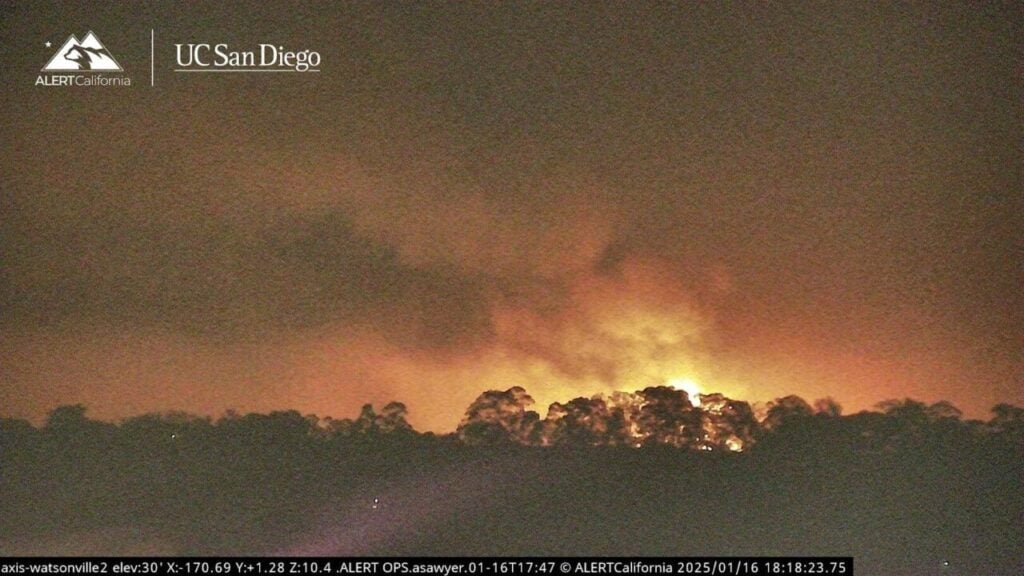
Once the world’s biggest BESS project, now a partially operational husk, you may have seen reports that some materials at Moss Landing Energy Storage Facility in California reignited, nearly two years after the devastating fire.
Shawn Shaw, CEO and founder of consultancy Camelot Energy Group mentioned Moss Landing in a passionate post this week. While Shaw refused to comment on Moss Landing itself in this instance, he described how the incident has affected the conversations he now has with industry and, crucially, with local authorities.
“Every thermal event on a legacy BESS project sets new development and public trust back significantly,” Shaw wrote and he pointed out that while standards and best practices are in place today, the industry must take responsibility for legacy systems installed pre-NFPA 855 in 2020.
