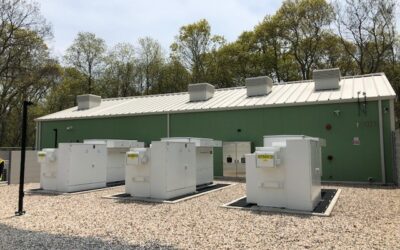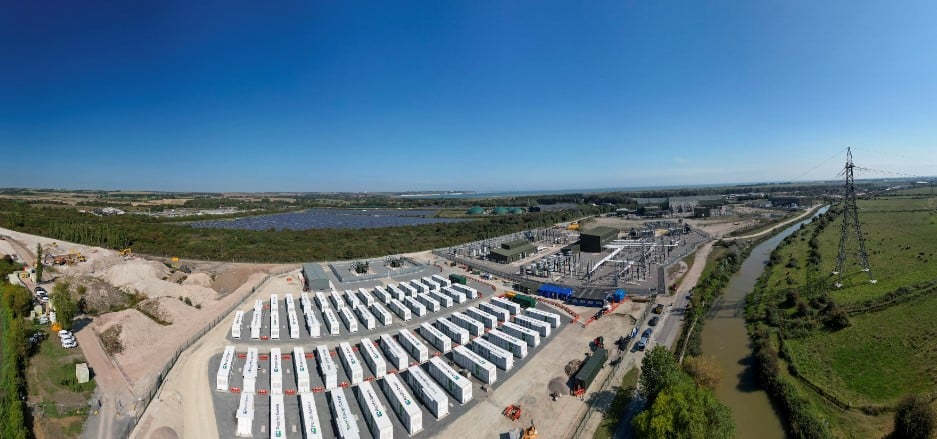
A 100MW battery storage project in the UK connected to National Grid’s transmission network has gone online, developed by Pacific Green on the former site of a coal plant.
UK transmission system operator (TSO) National Grid has plugged in the 100MW/100MWh battery energy storage system (BESS) project to its 400kV Richborough substation.
The project, dubbed the Richborough Energy Park battery, is owned by asset manager Sosteneo Infrastructure Partners which acquired it from developer Pacific Green in July 2023, as reported by our sister site Solar Power Portal.
Most BESS projects in the UK connect into the lower-voltage networks run by distribution network operators (DNOs) rather than National Grid’s high-voltage network. Benefits of the latter include a more reliable connection and better visibility in National Grid control rooms.
Try Premium for just $1
- Full premium access for the first month at only $1
- Converts to an annual rate after 30 days unless cancelled
- Cancel anytime during the trial period
Premium Benefits
- Expert industry analysis and interviews
- Digital access to PV Tech Power journal
- Exclusive event discounts
Or get the full Premium subscription right away
Or continue reading this article for free
One of the first UK developers to opt for transmission-connected BESS projects was Pivot Power, which was acquired by EDF Renewables.
The BESS project was built on a brownfield site which previously occupied a coal-fired power station. As Energy-Storage.news has previously written, building renewables on sites formerly housing legacy power plants allows for the use of existing grid capacity.
Richborough substation hosts the connection for National Grid own 1GW Nemo Link interconnector with Belgium while the 300MW Thanet Offshore Wind Farm also connects into an adjacent substation on the wider Richborough Energy Park site.
Energy-Storage.news’ publisher Solar Media will host the 9th annual Energy Storage Summit EU in London, 20-21 February 2024. This year it is moving to a larger venue, bringing together Europe’s leading investors, policymakers, developers, utilities, energy buyers and service providers all in one place. Visit the official site for more info.