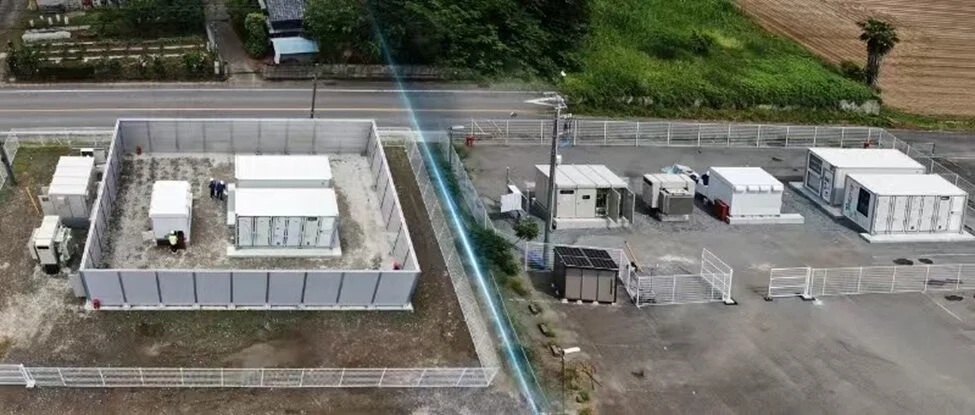
Trina Storage, the battery storage arm of major Chinese solar PV company Trinasolar, has signed a 1GWh Memorandum of Understanding (MoU) to supply products in Japan.
Trina Storage announced this morning that it has signed the MoU with Japanese renewable energy developer AMP-lify, agreeing to supply around a gigawatt-hour of battery energy storage system (BESS) equipment to the developer’s projects.
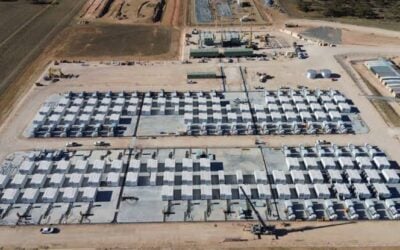
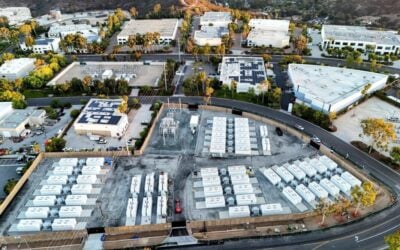
Under the agreement, Trina Solar would supply its Elementa 3 BESS units for AMP-lify projects. Launched in late 2025, the third generation of Trina’s Elementa BESS solution features the company’s in-house 587Ah high-capacity lithium iron phosphate (LFP) cell, with up to 6.25MWh storage capacity in each 20-foot unit.
The company also offers Elementa 3 Flex, a 1.56MWh version that has a footprint of around 5 square metres and can potentially overcome limitations such as land constraints, transportation logistics and proximity to nearby communities. The lack of available land is a major consideration for developers in Japan.
Try Premium for just $1
- Full premium access for the first month at only $1
- Converts to an annual rate after 30 days unless cancelled
- Cancel anytime during the trial period
Premium Benefits
- Expert industry analysis and interviews
- Digital access to PV Tech Power journal
- Exclusive event discounts
Or get the full Premium subscription right away
Or continue reading this article for free
Trina Solar Asia-Pacific’s energy storage head, Dr Leo Zhao, noted that the Japanese market “has its own unique technical and delivery requirements.”
“Road weight restrictions and access to narrow sites affect transportation, and system configurations must take into account mountainous areas, limited land, noise requirements considering the surrounding environment, seismic design, and coastal conditions.”
Collaborating with developer AMP-lify from the early stages of development will enable the partners to address those factors, Zhao said.
“By combining our on-site construction capabilities, our ‘Elementa 3’ portfolio, and Japan-based technical support, we can configure each project to meet the requirements of its installation site while progressing towards the scale envisioned by this partnership,” Zhao said.
Partner AMP-lify is a developer and independent power producer (IPP) of renewable energy and energy storage projects. Founded in 2016 as a subsidiary of Canadian renewable energy platform Amp Energy, with backers including Carlyle Group, AMP-lify entered the BESS market in 2022. It received further investment from its now-main shareholders, Singapore’s Aravest and Thailand’s Banpu Next, in 2024 and has operated as an independent business platform in Japan since last year.
According to its website, AMP-lify has 556MW of mostly solar PV projects under operation or construction and 432MW under development across Japan. Its website currently lists one 215MWh battery storage project in operation or under construction in Fukui Prefecture, western Japan.
In a May interview with Energy-Storage.news, Trina Storage APAC head of BESS sales Warrick Stapleton, said that Australia, India, Japan and the Philippines are, alongside China, key focus areas for the company in the region.
While maturity levels differ substantially across the APAC region, in those four countries, Trina is typically seeing project sizes move from 10MW to 30MWh to the range of hundreds of megawatt-hours, Stapleton said. Trina Storage delivered 16MWh of BESS projects for a customer in Japan’s Gunma Prefecture in 2025 and, in June, signed a 160MWh BESS contract with an undisclosed customer in Kyushu.
Japan’s energy storage market is currently seeing something of a mini-boom, driven by three key business models: projects awarded capacity market contracts through the Long Term Decarbonisation Power Sources Auction (LTDA), small merchant projects making their money through ancillary services and larger projects underpinned by tolling contracts.