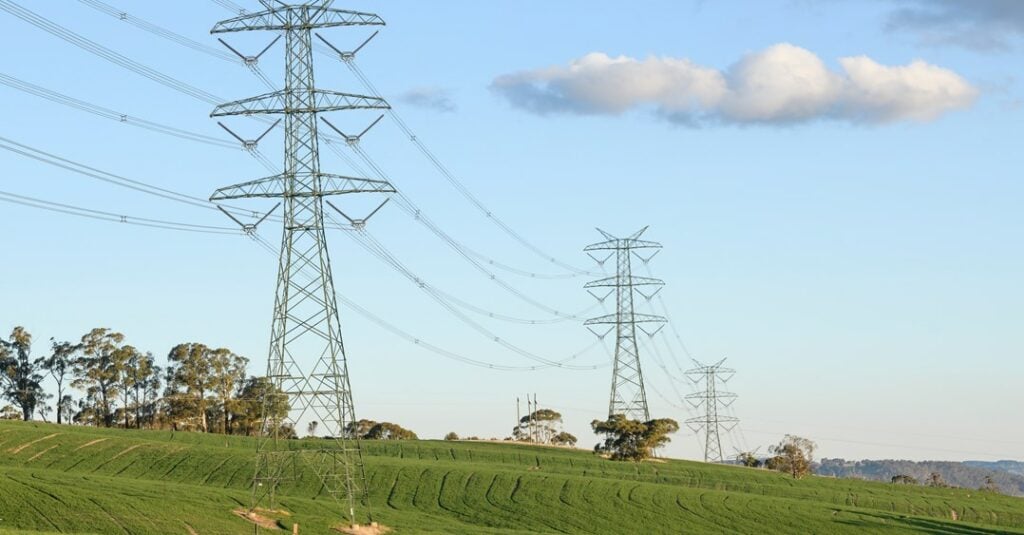
Grid-scale battery storage has emerged as the preferred option to ensure reliable electricity supplies in regions of New South Wales, Australia, transmission operator Transgrid has said.
Transgrid has looked at “multiple options” for addressing load constraints on the network in and around the towns of Bathhurst, Parkes and Orange as well as the North West Slopes regions of New South Wales (NSW).
Each area is experiencing growth in electricity demand and the trend is expected to continue. Constraints could lead to failures in delivering reliable supplies of electricity.
Transgrid is manager and operator of the high voltage electricity network serving New South Wales and the Australian Capital Territory (ACT).
Try Premium for just $1
- Full premium access for the first month at only $1
- Converts to an annual rate after 30 days unless cancelled
- Cancel anytime during the trial period
Premium Benefits
- Expert industry analysis and interviews
- Digital access to PV Tech Power journal
- Exclusive event discounts
Or get the full Premium subscription right away
Or continue reading this article for free
The grid operator issued Project Assessment Conclusions Reports last week, relating to potential investment options that it would seek approval for from the Australian Energy Regulator, with Bathhurst, Orange and Parkes regions considered in one report and the North West Slopes in another.
“We looked at multiple options for addressing load constraints on our network and we are excited to say that grid-scale batteries have been identified as the preferred option as they provided the greatest overall benefit,” Transgrid executive general manager of network, Marie Jordan said.
It is one of the first times to date large-scale batteries for the National Electricity Market (NEM) “have outperformed other options throughout the regulatory test,” Jordan said.
Battery projects proposed by two third-party providers ranked equally as the top option in the Project Assessment Conclusions Reports.
They would be able to participate in the market in addition to meeting their network support commitments, but this participation would be limited during winter and summer periods when network support needs are likely to be more acute. In spring and autumn, market participation would be less limited.
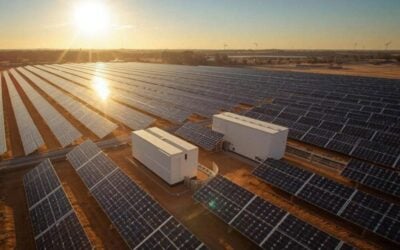
Batteries would be able to charge with renewable energy at times of abundant generation and off-peak demand periods, discharging to the network when generation is lower and demand higher. They would also provide services like reactive power support.
For Bathhurst, Orange and Parkes, the buildout would comprise a 20MW/40MWh battery energy storage system (BESS) at Parkes and a 25MW/50MWh BESS at Panorama in the suburb of Bathhurst. A 25MVa synchronous condenser and a new 132 kV transmission line are also among considered options which could be picked as complementary to the battery systems.
In the North West Slopes, a 50MW/50MWh BESS has been proposed for construction in the locality of Narrabri as well as another BESS of unspecified output and capacity at Gunnedah substation. The North West Slopes plan also includes some transmission upgrades, which Transgrid said could be executed with minimum disruption by being place on existing lines.
In each case, batteries were selected in part because of their ability to be constructed and commissioned much sooner than other proposals. The BESS could be in place and in operation by a 2024-2025 timeline.
Competitive solicitation set to begin
A competitive procurement process will now be launched by the transmission operator and commercial negotiations carried out.
The Narrabri BESS could provide roughly A$513 million (US$350.33 million) in net benefits and the BESS at Gunnedah about A$496 million. The two BESS options for Bathhurst, Orange and Parkes could provide A$3,221 million and A$3,202 million in net benefits, according to Transgrid.
The announcement comes just after the Australian Energy Market Operator (AEMO) forecast that batteries and other energy storage would be a major player in transitioning the NEM to low carbon energy in the coming decades.
By 2050, as coal declines in importance and disappears entirely from the provision of base load energy to the NEM, the market’s firming capacity mix will require 46GW/640GWh of dispatchable storage capacity, AEMO said.
This would be in addition to 7GW of existing non-pumped hydro hydroelectric capacity and some 10GW of gas generation, according to AEMO’s Integrated System Plan (ISP) 30-year roadmap for the NEM.
Australia’s energy market is currently in crisis mode, with high electricity prices driven by gas price volatility and outages at around 3GW of coal plants – although the latter situation is thought to have been resolved. This comes as the country experiences some of its coldest winter weather for decades and for a couple of weeks last month AEMO temporarily suspended spot market trading in the NEM.
The situation has driven calls for greater investment in renewables and storage – and for a national energy storage target policy.
As reported by the Sydney Morning Herald newspaper last week, there are also considerations for greater drilling for fossil fuels in the area around Narrabri.