Following February’s excellent Energy Storage Summit at London’s Victoria Park Plaza hotel and hosted by our publisher Solar Media, here’s a short series of videos posing some of the big questions around energy storage, renewables, climate change, business and the industry, and more.
A large tranche of utility-scale solar – and storage – projects in Hawaii has been approved by the state’s Public Utilities Commission (PUC), each quoting a cost per kilowatt hour of US$0.10 or under.
UK company Solarcentury has commissioned two solar-storage-diesel mini-grids in rural communities in Eritrea that are far away from the grid and have relied purely on diesel power until now.
Saba Electric Company, sole supplier of electricity to the Dutch Caribbean island of Saba, celebrated as the island ran on 100% solar for the first time ever this month, with the switch-on of a solar-plus-storage microgrid.
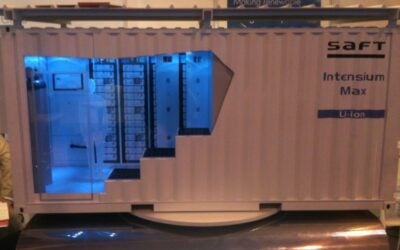
Battery and energy storage system maker Saft has confirmed the go-ahead of a project in Bermuda that was reported by local press sources earlier this month.
After another record-breaking year, in which the US surpassed 1GWh of deployed energy storage and China began its programme of building flow batteries several hundred megawatts in size each, we canvassed opinion on what 2018’s biggest challenges and successes were. In this first part, we look at the challenges faced by the industry in 2018.
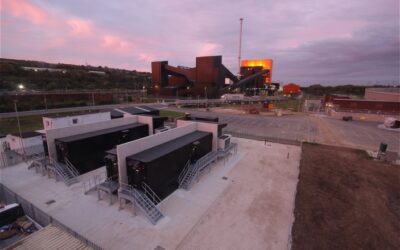
While the relationship between renewable energy and energy storage is a close one, combining storage with natural gas is also an important stepping stone measure in the transition to 100% renewables, Energy-Storage.news has heard.
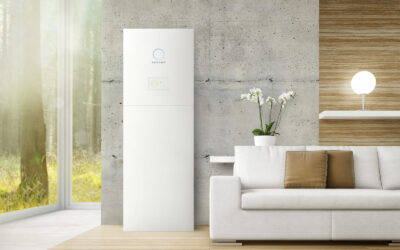
Shell has continued to scale-up its interest in distributed energy by participating in a €60 million (US$70.23 million) investment round by German battery storage firm sonnen.
In short, energy storage technology is set to revolutionise our society, EVs and beyond, with power companies among the most affected – whether they like it or not. The sector needs to wake up to this and decide what it is going to do about it. Education could provide the wake-up call that power professionals need, says Bo Normark of InnoEnergy.
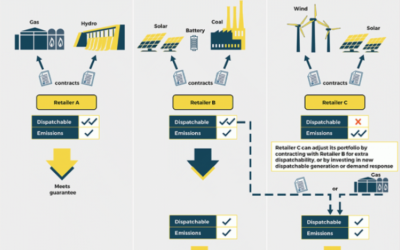
Australia’s government has dropped plans for introducing a Clean Energy Target (CET) post-2020, opting instead for a technology-neutral plan that it claimed would prioritise reliability and bringing prices down.