When lithium-ion’s dominance of the energy storage market begins to wane, redox flow batteries are well positioned as a strong competitor, emerging technology market research and business intelligence group IDTechEx has said.
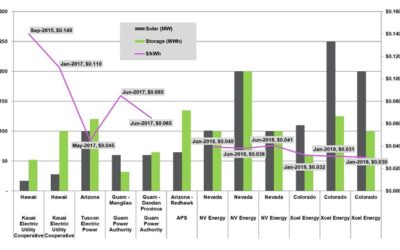
In this article, experts at consultancy Apricum examine with some simple “reverse engineering” how recent low solar-plus-storage PPAs in the USA were achieved, yet another example of the competitiveness of energy storage and new market opportunities emerging via storage-plus-renewables projects.
More than 14-fold increase is forecast to 2025, from 523MW recorded in 2019, with the “sharp scale-ups” both regionally and nationally to be driven primarily by a combination of “utility procurements and the accelerating residential market,”
Dimitrios Pappas, analyst at new energy consultancy Delta-EE, considers the impact the novel coronavirus (COVID-19) could have on the energy transition, particularly for batteries used in EVs and ESS, while Energy-Storage.news editor Andy Colthorpe adds his own take.
While pumped hydro plants still account for around 96% of installed capacity of stationary energy storage worldwide, there will be more than 28GW of lithium batteries deployed for stationary storage applications by the year 2028, Navigant Research has predicted.
The success of efforts to decarbonise economies in the UK and elsewhere could hinge largely on how governments and business communities – particularly large commercial lenders – engage with the sector in 2020, a UK-based financier of solar and storage has said.
While lithium-ion batteries get most of the headlines, long-duration solutions of various types are gaining ground. Alice Grundy and Andy Colthorpe profile some of the established and emerging concepts in this increasingly important field.