Sumitomo Electric Industries has followed up the US launch of its newest vanadium redox flow battery (VRFB) technology, announcing a deal in Japan.
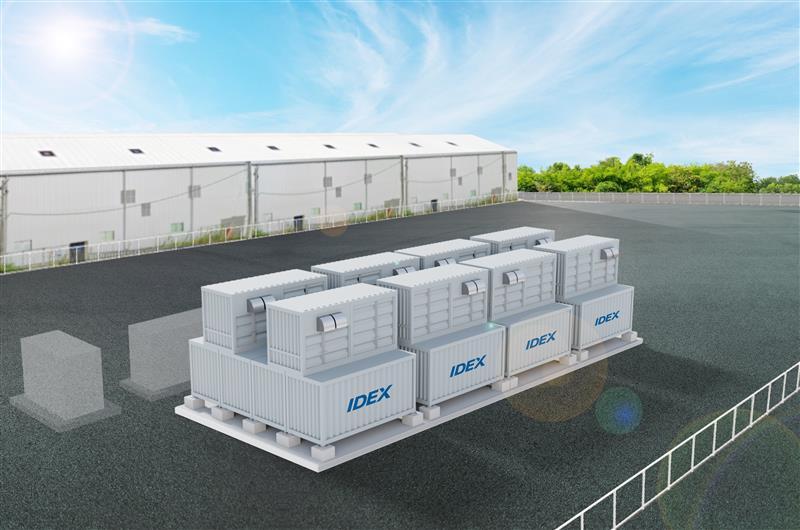
The company said last week (28 March) that it had received an order for a grid-scale 2MW/8MWh VRFB from Shin-Idemitsu (IDEX). The asset will help stabilise the electricity grid on the southern Japanese island of Kyushu.
According to Sumitomo Electric, it will be the first redox flow battery project to receive support through a government subsidy programme for large-scale energy storage, run by the Ministry of Economy, Trade & Industry (METI) and Agency for Natural Resources and Energy.
Beneficiaries of the scheme to date have been large-scale lithium-ion (Li-ion) battery energy storage system (BESS) projects.
Try Premium for just $1
- Full premium access for the first month at only $1
- Converts to an annual rate after 30 days unless cancelled
- Cancel anytime during the trial period
Premium Benefits
- Expert industry analysis and interviews
- Digital access to PV Tech Power journal
- Exclusive event discounts
Or get the full Premium subscription right away
Or continue reading this article for free
Customer IDEX, headquartered in Kyushu’s Fukuoka prefecture, is primarily known for operating roadside service stations on the island. It is also a liquified natural gas (LNG) and industrial liquified petroleum gas (LPG) distributor and sells marine fuels and industrial lubricants.
IDEX is seeking to increase its uptake of variable renewable energy (VRE) sources, including solar PV, and will install the flow battery system at Nagasu Energy Storage Facility, a project at a site in Tamana District in Kumamoto, Fukuoka’s neighbouring prefecture.
Kyushu enjoys some of Japan’s highest solar irradiance and feed-in tariffs (FiTs), which were introduced in 2012 and have led to the island becoming a hotbed of solar PV deployment. However, there have been challenges to integrate this uptake of renewables.
As noted by the Japan Renewable Energy Institute (REI) in April 2024, the island was the first power system to experience curtailment in the country, from the 2018 financial year (FY) to FY2021.
Although it was joined by other regions of Japan in experiencing generation curtailment after that, in 2023, it saw 6.7% of its total solar PV and wind production curtailed, which the REI noted was double the levels of the grids of fellow rapid solar adopters California, US, and Australia in the same year.
As a result, Kyushu has some of Japan’s lowest electricity prices, with 55% of its power coming from nuclear and renewables, but its surplus during the daytime is problematic.
Sumitomo Electric said IDEX had selected the VRFB solution for three key factors: extremely low fire risk and corresponding high level of safety, as unlike lithium-ion batteries, VRFBs do not have cells that can go into thermal runaway; long lifespan, whereby neither their electrodes nor liquid electrolyte stored in tanks experience degradation as Li-ion batteries do even under many years of operation and thousands of charge-discharge cycles; and the reusable and recyclable nature of the technology, for which Sumitomo Electric claimed up to 99% of system materials can be recycled if separated correctly.
Construction on the project is already underway and it is expected to go into commercial operation in October 2026.
Next-generation VRFB launched in North America
Last month, Sumitomo Electric showcased its newest vanadium flow battery solution at the Intersolar North America show in California.
The company said the next-generation VRFB has up to a 30-year operating lifetime, comes with improved energy density to reduce physical footprint by 15%, and optimised system design, electrolyte circulation, and manufacturing processes to reduce costs by 30% compared to previous iterations.
Sumitomo deployed what is thought to be the US’s largest operational VRFB system in California in 2017, which at 2MW/8MWh is the same output and capacity as the company’s newest project in Kyushu.
The company was also behind the world’s former largest flow battery ten years ago when it commissioned a 15MW/60MWh system on the Japanese island of Hokkaido, where it more recently brought online a 17MW/51MWh VRFB system in 2022.
Those systems are now dwarfed by Rongke Power’s 175MW/700MWh grid-connected system in Dalian, China, which was completed late last year.
However, Sumitomo Electric’s direct competitors are thought to be other non-Chinese VRFB manufacturers such as the UK’s Invinity Energy Systems, which like the Japanese company makes modular, productised systems, whereas most flow battery projects in China are thought to be bespoke engineering projects built onsite.
8-hour long-duration VRFB went online last year
Other recent VRFB deals for Sumitomo Electric include a 4MW/12.5MWh system ordered by utility Chugoku Electric Power Transmission & Distribution Co for deployment on the Oki islands, an archipelago off the Sea of Japan coast in the west of the country.
In December, the company announced the start of commercial operations at a 1MW long-duration energy storage (LDES) project in Niigata prefecture, further north of the coast of the Sea of Japan.
At the time of the announcement, Sumitomo Electric said it had reached a total installed capacity of 50MW/176MWh of VRFBs across Japan.
The 8-hour duration (8MWh) flow battery purchased by municipal electric power company KASHIWAZAKI IR Energy has been deployed in Niigata’s Kashiwazaki City, a historically significant hub for nuclear and oil industries now focused on decarbonisation in line with Japan’s 2050 carbon neutrality policy target.
As reported by Energy-Storage.news in 2023 when the sale was announced, the VRFB system will assist with integrating renewable energy, and its stored energy will also be used to participate in energy trading markets. Sumitomo said that the project had been completed a couple of months prior to last December’s announcement, and that it had received another order from KASHIWAZAKI IR Energy for another system of the same output and capacity.