Uninterruptible power supply (UPS) provider Vertiv is to use energy flexibility specialist Upside Energy’s cloud-based platform to enable its customers to provide unutilised energy to the UK electricity grid.
‘Energy resilient infrastructure upgrades’ planned for a US military facility will involve the deployment of 20MW of solar PV, 4MW / 8MWh of battery storage and 4MW of gas-fired backup generation in a project worth US$133.5 million.
As Japan’s heavily regulated energy markets continue a process of liberalisation and supposedly increasing consumer choices, utility TEPCO has launched a smart electricity tariff enabled by the capabilities of residential battery storage.
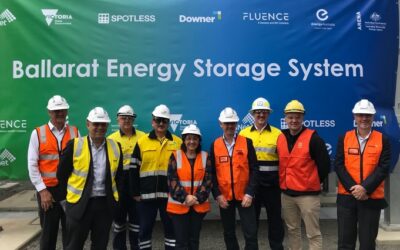
A 30MW / 30MWh battery energy storage system has been inaugurated with a ceremony in Victoria, Australia, with one project partner describing the switching-on as “a real watershed moment in the continuing modernisation” of the state’s energy supply.
South Africa’s state-owned utility Eskom has unveiled its Distributed Battery Storage Programme at an event this week, committing to solar-plus-storage and energy storage projects totalling 1400MWh.
Four energy storage projects that have been proposed as an alternative to expensive transmission and distribution (T&D) network upgrades, totalling 38.5MWh of capacity, have been awarded to developer EsVolta by California utility Southern California Edison (SCE).
Australia is to trial using solar and wind power to produce hydrogen via electrolysis, with the hydrogen then being used for long-term energy storage in the Sydney gas network.
Ireland’s DS3 flexibility market will deploy the fastest-reacting batteries in the world under an opportunity dubbed “Enhanced Frequency Response on steroids” by energy expert Felicity Jones, partner for energy storage and flexibility at UK-based consultancy Everoze.
It’s likely a strong indication of the way the world is adopting renewable energy rapidly that just under a month ago, one of the best-established trade shows for solar in the US featured what seemed like almost as much space dedicated to national and international energy storage companies and technologies, as it did for solar.