New sodium-ion battery production facilities have been announced in the US and Sweden by Natron Energy and Altris, respectively, with both set to start production in 2023.
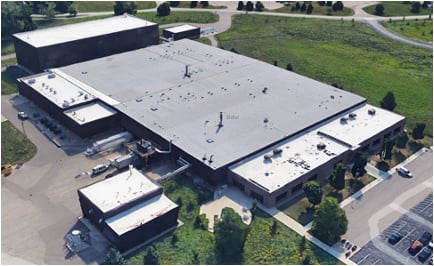
Sodium-ion battery producer Natron Energy has announced a strategic partnership with battery producer Clarios International to develop the production facility at Clarios’ exiting lithium-ion Meadowbrook facility in Michigan. It will produce 600MW a year of Natron’s batteries when mass production begins in 2023.
In the same week, Swedish sodium-based cathode material startup Altris said it signed a deal with Sandvik Materials Technology to house its first industrial scale manufacturing facility in Sandviken, called ‘Ferrum’. Ferrum will produce 2000 metric tonnes of Altris’ cathode material, Fennac, each year, enabling 1GWh of sodium-ion battery production.
‘Largest sodium-ion battery production facility in the world’
California-based Natron Energy claimed the facility, which will use a portion of the Meadowbrook site, will be the largest sodium-ion battery plant in the world.
Try Premium for just $1
- Full premium access for the first month at only $1
- Converts to an annual rate after 30 days unless cancelled
- Cancel anytime during the trial period
Premium Benefits
- Expert industry analysis and interviews
- Digital access to PV Tech Power journal
- Exclusive event discounts
Or get the full Premium subscription right away
Or continue reading this article for free
Under the agreement with Clarios, electrodes and large format cells based on Natron’s proprietary
Prussian blue electrode sodium-ion chemistry will be manufactured in the Michigan plant.
The company has been working on its sodium-ion battery chemistry for mass production for a decade and was the first to achieve a UL 9540A fire testing certification for the battery chemistry. Its batteries are primarily used for critical power applications like data centres and telecoms networks but the company hopes future applications include EVs and grid-scale energy storage.
“This project marks the beginning of a new era for Natron, in which we move from product development to serving our customers at a massive scale. Natron is grateful for the continued support from ARPA-E and Clarios which has helped make this project possible,” said Colin Wessells, Natron’s founder and CEO.
Sodium-ion cathode gigafactory from Northvolt-backed Altris
The Ferrum facility, housed in one of Sandvik Materials Technology’s factories, will be Swedish startup Altris’s first industrial manufacturing facility. Sandvik is a developer and producer of advanced stainless steels, special alloys, titanium and other high-performance materials.
Altris says its patented method for manufacturing that uses a low temperature and ambient pressure makes it a more sustainable and cost-efficient alternative to sodium-ion battery cathode material in the market today.
The Ferrum facility will total 1,800 square meters and development will start imminently with the first output expected in early 2023. It is Altris’ third location along with its head office in Uppsala and sales office in Guangzhou, China. It raised €9.6 million in a Series A funding round in March this year, which included investment from gigafactory startup Northvolt.
Tim Nordh, Altris CTO, said: “We’re delighted to name Sandviken as the home of our first industrial manufacturing facility. Ferrum is not only an important milestone in Altris’ history, but its very existence shows the confidence of our investors and customers in the future of sodium-ion batteries.”
Other sodium-ion battery moves
Sodium does not have the same energy density as lithium, and is three times heavier, but the material is widely cheap and available and interest in sodium-ion batteries is growing.
Chinese battery giant CATL, which has by far the largest planned battery manufacturing capacity globally, is looking at commercialising sodium-ion batteries while Indian conglomerate Reliance Industries acquired a British sodium-ion battery startup Faradion in January.