Engineering firm KBR will work with Shell to design an energy storage facility combining green hydrogen and battery storage at a wind farm off the coast of the Netherlands.
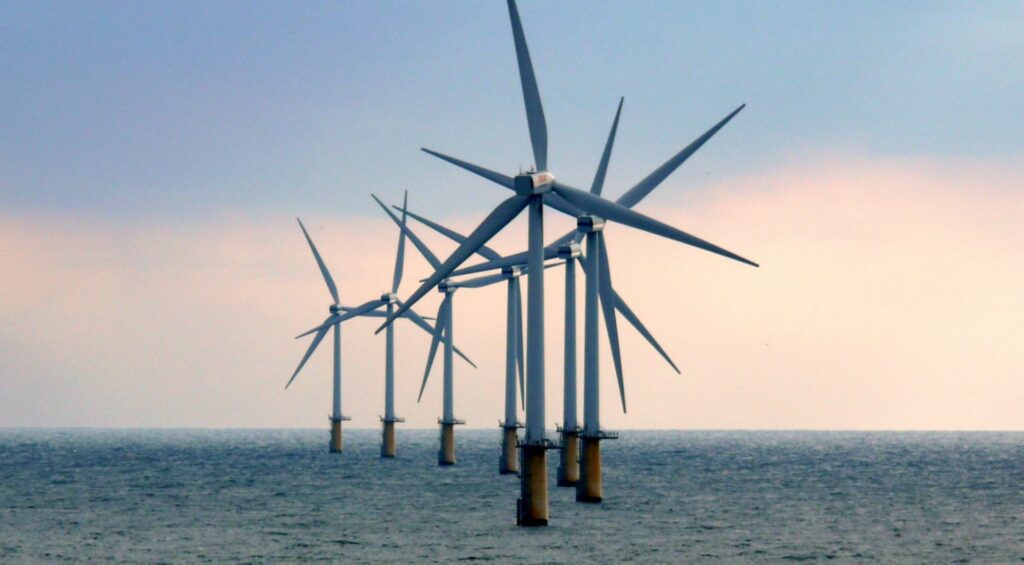
KBR announced yesterday (5 December) that it had won a contract to provide engineering services for an energy storage project at the Hollandse Kust (north) wind farm off the Dutch coast. The project is being developed by CrossWind, a joint venture (JV) entity between Shell and Dutch utility company, Eneco.
The offshore energy storage system is being described by the project partners as a ‘baseload power hub’ (BPH) for the wind farm.
KBR and Shell will together design and develop facilities that integrate lithium-ion battery storage and green hydrogen production at a megawatt scale, a press release said. Hydrogen will be produced during periods of high power production and converted to electricity via a fuel cell during periods of lower power production.
Try Premium for just $1
- Full premium access for the first month at only $1
- Converts to an annual rate after 30 days unless cancelled
- Cancel anytime during the trial period
Premium Benefits
- Expert industry analysis and interviews
- Digital access to PV Tech Power journal
- Exclusive event discounts
Or get the full Premium subscription right away
Or continue reading this article for free
That means the project is opting for a use case of green hydrogen, power-to-X-to-power, which is widely agreed to have a round trip efficiency too low to be economical. Most green hydrogen projects outside of transportation are planning to produce it as a feedstock for industrial processes (especially ammonia production) or to blend it with natural gas in conventional gas power plants (including the world’s largest in Utah).
The release added that ‘electricity’ will be stored during the periods of high production but didn’t say whether this was in the form of electrochemical energy storage via the lithium-ion batteries or in the form of stored hydrogen.
Battery energy storage systems (BESS) can be utilised to maximise the utilisation of the green hydrogen electrolyser by ‘firming’ the power supplied to it, for example. One recent project to pair batteries and green hydrogen is the Pilbara Green Hydrogen Hub in Australia, being developed by Engie. It will pair a 10MW electrolyser, 18MW of solar PV and an 8MW BESS. However, the green hydrogen from that project will be used at an ammonia production facility.
Jay Ibrahim, president of KBR Sustainable Technology Solutions, said: “To solve the current global ‘energy trilemma,’ the world needs an energy mix that relies more on wind, solar and nuclear power. With our deep expertise in engineering and energy solutions, KBR is positioned to help our valued customers — partners like the CrossWind JV —drive the energy transition.”
In a similar piece of news, last week saw the announcement that a facility manufacturing integrated green hydrogen and battery storage electrolyser equipment will be built at the Port of Rotterdam, by Battolyser Systems.
The company said its Battolyser can produce hydrogen from solar and wind when prices are low and provide electricity to the grid when prices are high.
It will have an annual production capacity of 1GW and will open in the second half of 2024, with a total investment of €100 million (US$105 million). However, it still requires more funding to get the final go-ahead.
“The factory allows us to deliver Battolysers at industrial scale and affordable prices. We are in constructive conversation with the Dutch government and EU institutions, and we are confident that together we can secure the required funding,” said Mattijs Slee, CEO, Battolyser Systems.
Energy-Storage.news’ publisher Solar Media will host the eighth annual Energy Storage Summit EU in London, 22-23 February 2023. This year it is moving to a larger venue, bringing together Europe’s leading investors, policymakers, developers, utilities, energy buyers and service providers all in one place. Visit the official site for more info.