The UK needs “robust energy storage technologies and clear strategies for implementing them,” to accelerate the transition towards decarbonisation, the lead author of a new roadmap detailing the role of energy storage technologies in the country over the next 10-15 years has said.
The battery storage optimisation and energy trading teams at EDF and Centrica Business Solutions – stalwarts of the UK’s Big Six of utility companies – have won 40MW of new deals to optimise large-scale battery storage systems.
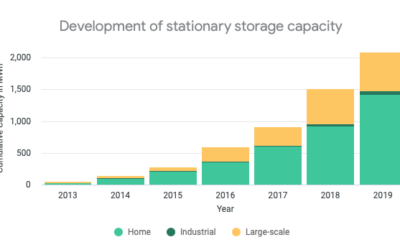
Around 2.1GWh of battery storage had been installed in Germany by the end of 2019, in households, at commercial and industrial (C&I) facilities and at large-scale in grid-connected applications.
London Stock Exchange-listed investor Gresham House Energy Storage Fund has raised £120 million (US$159.86 million) to finance six new energy storage projects.
A new market for providing ancillary services to the UK’s grid has been highlighted as more valuable in its first seven weeks of operation than any other frequency response service run by the network operator, National Grid ESO.
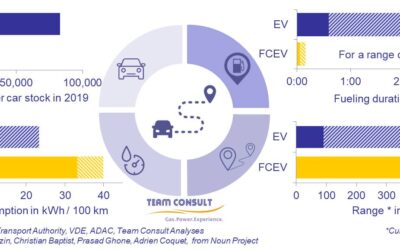
What are the roles of battery storage and hydrogen in the clean energy system of the future? Matthias Simolka, a consultant at Germany-based TEAM CONSULT takes a look at the roles each plays today and where we might see the dynamics go from here, with regard to everything from large-scale renewables integration to electric transport.
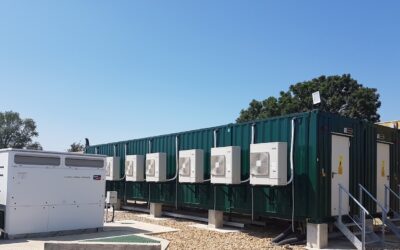
A 10MW / 20MWh battery energy storage project in Belgium has achieved financial close and is expected to begin construction shortly, the consortium behind the project has said.
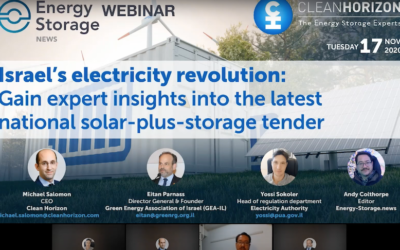
Energy-Storage.news was delighted to host a sponsored webinar with consultancy Clean Horizon on the Israeli context for renewables and storage as the country undergoes an ‘electricity revolution’ – and you can watch the whole thing on our YouTube channel.