Australia’s CSIRO has revised pumped hydro storage costs upward in the final version of its annual GenCost electricity cost report, citing evidence from a current domestic development, while battery storage costs continue to fall.
The GenCost 2025-26 final report raised the current capital costs of pumped hydro energy storage (PHES) relative to the consultation draft released in December 2025, with GHD’s updated cost assessment incorporating “additional data becoming available regarding the costs of a current PHES development.”
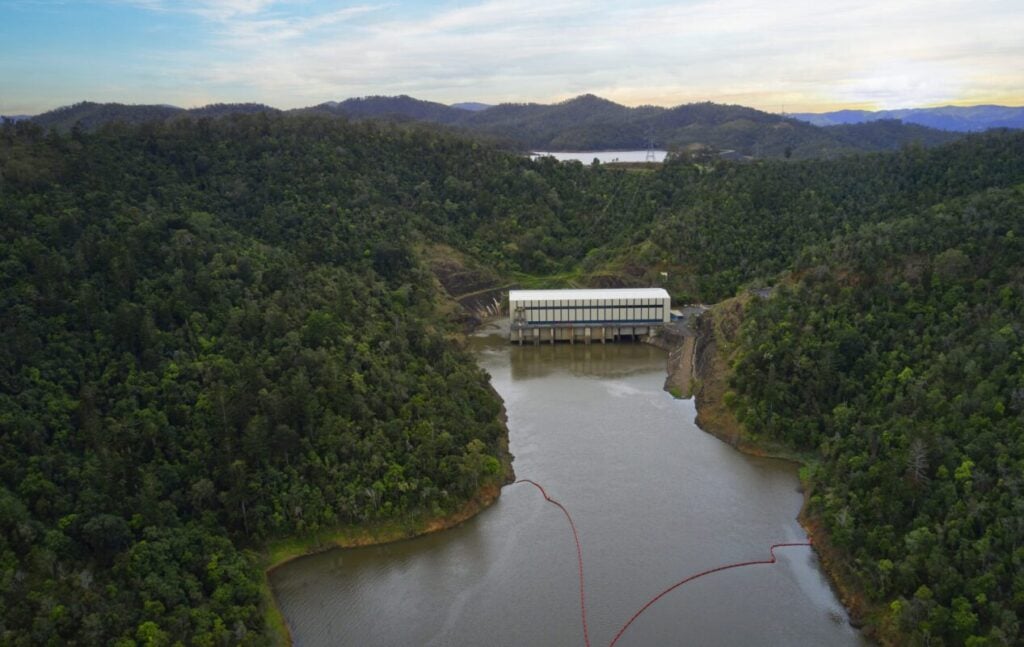
The report does not name the project but given the timing and Queensland’s turbulent pumped hydro programme, the reference could relate to the Borumba Dam project, which has seen costs blow out to AU$18.4 billion (US$12.84 billion).
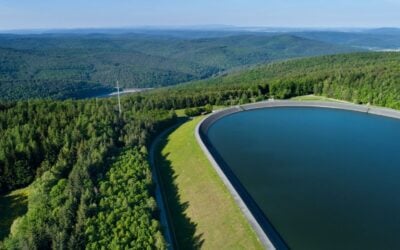
On a 24-hour duration basis, PHES is now priced at AU$5,687/kW in 2025, or AU$237/kWh. This figure is lower than the per-kW cost because energy capacity scales with duration.
Try Premium for just $1
- Full premium access for the first month at only $1
- Converts to an annual rate after 30 days unless cancelled
- Cancel anytime during the trial period
Premium Benefits
- Expert industry analysis and interviews
- Digital access to PV Tech Power journal
- Exclusive event discounts
Or get the full Premium subscription right away
Or continue reading this article for free
This divides the total project cost by 24 hours of storage, spreads it across a much larger energy base, which is why long-duration PHES appears more competitive on a per-kWh basis than short-duration battery storage systems, despite higher upfront costs.
Under all three of CSIRO’s global scenarios, Current Policies, Global NZE post 2050, and Global NZE by 2050, those costs are projected to rise further through to 2055 as construction and land costs escalate, with no meaningful offset from technology learning given PHES’s status as a mature technology.
By 2055, 24-hour PHES costs are projected to range from AU$5,745/kW to AU$6,166/kW, depending on the scenario, equivalent to AU$239-$257/kWh.
The report notes that PHES has a wider range of cost uncertainty than battery energy storage systems (BESS) owing to the greater influence of site-specific conditions, a factor that has proven costly in the Australian context.
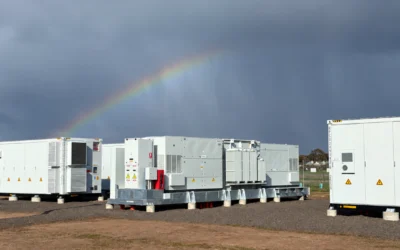
Battery storage tells a different story. As reported when the consultation draft was released in January 2026, battery costs fell 11-16% in 2025, depending on duration, taking them back below their pre-pandemic levels.
The final report confirms those numbers and projects continued, if slower, cost reductions across all durations. A 4-hour battery currently costs AU$385/kWh in total, compared to AU$237/kWh for 24-hour PHES on a per-kWh basis.
However, as storage duration increases, battery costs per kWh rise sharply while PHES costs per kWh fall, showcasing the different power-versus-storage cost structures of the two technologies.
A 24-hour BESS now sits at AU$266/kWh, barely above the equivalent PHES cost, and continues to decline across all scenarios to AU$158-$169/kWh by 2050.
The final report also confirms that a 4-hour BESS has moved below the capital cost of a large open-cycle gas turbine, and that competitive gap is expected to widen over the next two years as gas turbine costs remain elevated by surging data centre demand.
The report cites International Energy Agency (IEA) analysis finding that if data centres were a country, they would rank as the second-largest destination globally for gas turbines ordered between the first quarter of 2025 and the first quarter of 2026.
Gas turbine costs have risen for four consecutive years, and CSIRO projects further increases before manufacturers can bring supply in line with demand after 2028.
This shift has direct implications for the economics of the battery-versus-peaking-gas comparison that has driven much of Australia’s recent BESS investment pipeline.
A widening divergence with policy consequences
The divergence between falling battery costs and rising pumped hydro costs arrives at a moment when Australia’s long-duration storage pipeline is under pressure from multiple directions.
The Queensland government reportedly shelved the proposed AU$6 billion Mt Rawdon pumped hydro project recently, opting to concentrate state investment in the already cost-blown Borumba Dam project, itself now projected to cost AU$18.4 billion.
Evolution Mining, which held a 50% stake in Mt Rawdon alongside ICA Partners, described the decision as a surprise given the depth of engagement throughout the review process.
The Mt Rawdon site would have repurposed an existing mine pit as a lower reservoir, removing most of the civil engineering costs that have driven PHES cost overruns elsewhere.
The GenCost cost trajectory makes it harder to reconcile the relative economics of the two Queensland decisions.
Borumba’s AU$18.4 billion price tag for a 2GW/48GWh system works out at approximately AU$9,200/kW or AU$383/kWh, materially above the CSIRO benchmark of AU$5,687/kW for a 24-hour system.
Mt Rawdon’s mine-repurposing approach would have removed the reservoir excavation cost that drives that gap.
The report’s finding that PHES costs will continue to rise due to construction cost escalation adds weight to concerns raised about Australia’s heavy reliance on a small number of large, complex pumped hydro commitments.
In an interview with ESN Premium earlier this year, Keith Lovegrove, managing director of ‘sustainable thermal energy’ engineering consultancy ITP Thermal, warned that Australia risks over-reliance on lithium-ion at the expense of technology diversification, but also cautioned that the answer is not simply to assume pumped hydro will deliver at planned costs and timelines.
At the time, Lovegrove called for a more deliberate assessment of the full portfolio of storage technologies, including solar thermal, given their different cost and duration profiles.
GenCost’s own analysis supports that view, noting that solar thermal is competitive within the system cost range for 2050 and offers built-in long-duration storage, though additional transmission costs of up to AU$20/MWh apply due to the need to access stronger solar resources further from load centres.
What the system cost modelling says
GenCost’s 2025-26 report introduces a new system-levelised cost of electricity (SLCOE) methodology for 2050 analysis, replacing the previous integration cost approach with a direct open-source electricity system model of the National Electricity Market (NEM).
The results are clear on the least-cost pathway. Solar PV and onshore wind deliver 93% of generation in 2050, supported by hydro, storage, transmission and gas or hydrogen firming, at a wholesale generation cost of AU$120-$130/MWh excluding transmission, or AU$141-$152/MWh inclusive of new transmission infrastructure.
The model finds that cost increases as the emissions intensity of the electricity sector falls are driven primarily by storage and transmission costs rather than generation costs.
Moving from a moderate net zero scenario at 0.05 tonnes of CO2 equivalent per MWh to CSIRO’s strong net zero scenario at 0.02t CO2e/MWh, which aligns with AEMO’s Step Change scenario in the 2024 and draft 2026 Integrated System Plan, requires greater storage deployment and the introduction of hydrogen-fired generation as a replacement for gas.
Both of those shifts increase system costs, meaning the efficiency with which long-duration storage is procured and priced will directly affect the total cost of the energy transition.
For context, NEM-wide generation prices averaged AU$104/MWh in the 2025 calendar year, down from the AU$189/MWh peak in 2022 when high gas prices drove the market. Futures prices indicate a further fall to AU$80-$90/MWh by 2030, supported by continued solar and wind deployment.
Beyond 2030, as existing capacity retires and new-build technologies carry higher costs, generation prices are expected to rise above AU$100/MWh regardless of whether net zero policies are in place, because every new-build technology option, fossil or non-fossil, exceeds that threshold when firming costs are included.
The report also introduces electricity futures prices as its primary indicator of 2030 generation costs, replacing the SLCOE modelling for near-term analysis following stakeholder feedback that the treatment of existing capacity in that approach was too uncertain.
Baseload futures prices across NEM states range from AU$68/MWh to AU$92/MWh over the next three years, with evening peak contracts ranging from AU$152/MWh to AU$220/MWh.
CSIRO also conducts research beyond lithium-ion and PHES. In March 2026, a collaborative team including CSIRO researchers demonstrated the world’s first working quantum battery prototype, a proof-of-concept device that charges using quantum mechanical principles rather than conventional electrochemical processes.
While the technology remains at laboratory scale and decades from commercialisation, the demonstration established that quantum charging effects are physically achievable outside theoretical models.
Our publisher, Solar Media (part of Informa Group), will host the Battery Asset Management Summit Australia 2026 on 25-26 August at Amora Hotel Jamison in Sydney. You can find out more about the Summit on the official website.