The government of Portugal has announced plans to invest €400 million (US$466 million) to improve its grid management capabilities and increase its battery energy storage system (BESS) capacity.
Energy and environment minister Maria da Graca Carvalho announced the plans with local press this week, including an interview with news network RTP3 earlier this week (28 July), in light of the Iberian blackout earlier this year.
The action totals 31 measures, some of which have already been implemented and some of which will have their implementation sped up. It will be part-funded by EU funds, but the costs borne by the Portuguese state will increase energy bills by around 1%, the minister added.
One of those is €137 million to go towards improving the operational and control capacity of the electricity grid to help it deal with complex intermittent renewable power sources such as wind and solar, she said.
Try Premium for just $1
- Full premium access for the first month at only $1
- Converts to an annual rate after 30 days unless cancelled
- Cancel anytime during the trial period
Premium Benefits
- Expert industry analysis and interviews
- Digital access to PV Tech Power journal
- Exclusive event discounts
Or get the full Premium subscription right away
Or continue reading this article for free
The plan also includes the launch of an auction for large-scale BESS capacity by 2026, as well as €25 million in financial support to improve the resilience of critical infrastructure like hospitals, by equipping them with solar PV and BESS, for example.
The blackout was due to three issues, for which the blame can be imparted on the country’s transmission system operator (TSO) Red Eléctrica, not renewable energy, as some have speculated. The grid possessed insufficient voltage control capacity, suffered unusual oscillations in voltage and frequency and experienced the improper disconnection of some power plants, as covered by our colleagues at PV Tech.
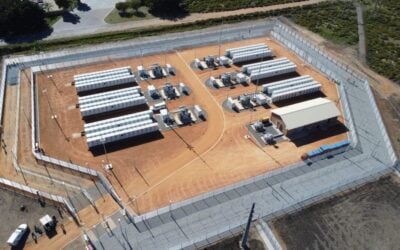
Portugal has about 13MW of BESS capacity operational today and the goal is to reach 750MW, local reports said. A 5MW/20MWh project was taken into commercial operation by oil, gas and renewables firm Galp in April, deployed by now-in-administration system integrator Powin.
Some 500MW of capacity across 43 projects will be supported via a €100 million scheme using EU Recovery and Resilience Plan (RRP) funding, a bloc-wide scheme. Winning projects were announced in January.