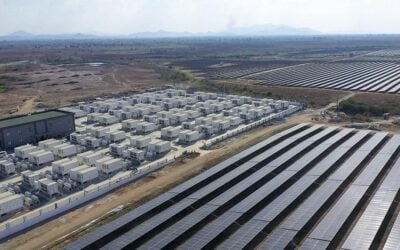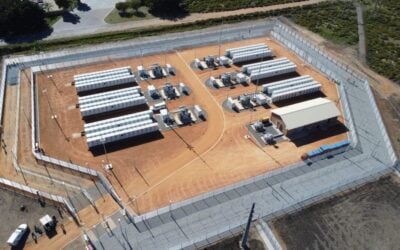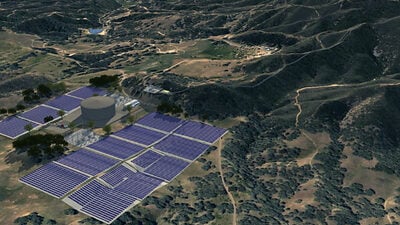
Utility PG&E has selected six new California microgrid projects for a US$30 million investment, while Massachusetts’ Department of Energy Resources is awarding US$40 million across 36 BESS projects.
PG&E selects six new California microgrids for US$30 million investment
California’s largest electric utility, PG&E, selected six new microgrids for a US$30 million investment in the US state.
Announced 17 September, the projects were selected through the second application window of PG&E’s Microgrid Incentive Programme (MIP).
The MIP originated from Senate Bill 1339, passed in 2018, which directed the California Public Utilities Commission (CPUC) to develop statewide microgrid policies in partnership with the California Energy Commission (CEC) and California Independent System Operator (CAISO).
Try Premium for just $1
- Full premium access for the first month at only $1
- Converts to an annual rate after 30 days unless cancelled
- Cancel anytime during the trial period
Premium Benefits
- Expert industry analysis and interviews
- Digital access to PV Tech Power journal
- Exclusive event discounts
Or get the full Premium subscription right away
Or continue reading this article for free
The CPUC authorised the US$200 million MIP in April 2023, with funding provided by California’s three investor-owned utilities (IOUs): PG&E, San Diego Gas & Electric (SDG&E), and Southern California Edison (SCE).
The programme prioritises California’s most vulnerable communities that face the greatest risk from power outages. In 2025, PG&E announced its intent to award up to US$43 million in grant funding for nine community focused microgrid projects, through the MIP.
PG&E stated that together, the projects represent more than US$73 million in authorised community microgrid investments. The projects span rural, coastal, Tribal and high wildfire risk areas across Northern and Central California.
Community microgrids are localised energy systems that remain connected to the main electrical grid but can operate independently during power outages. These systems help maintain electricity supply to hospitals, health clinics, fire stations, emergency services, schools, local businesses, and other essential facilities and services.
These microgrids typically incorporate solar panels, battery energy storage systems (BESS), and alternative energy sources such as biomass. They also utilise smart grid technology including switches, circuit breakers, and reclosers working in conjunction with microgrid controllers that enable communities to safely disconnect from the main grid and sustain local power distribution during outages.
When the primary grid fails, microgrids can maintain essential services for extended periods ranging from hours to multiple days.
Three proposed Lake County projects are advancing an innovative approach called Firemain Linked Auxiliary Supply/Hydraulic Energy Storage (FLASHES). These projects plan to combine substantial locally generated solar capacity with pumped hydroelectric storage utilising underground water resources.
The system would use solar energy to pump water into covered elevated tanks during periods of abundant energy production. During times of electricity demand, stored water would flow through turbines to generate power.
This design could deliver long-duration energy storage (LDES) and multi-day resilience during outages while simultaneously providing additional water resources for firefighting emergencies. If proven successful, these projects could establish a blueprint for communities throughout California seeking to leverage local renewable energy and extended-duration storage for enhanced resilience.
Brad Rasmussen, Chair of the Lake County Board of Supervisors, emphasised that the FLASHES projects could deliver both energy security and wildfire resilience for Lake County communities while generating construction employment and apprenticeship opportunities.
He noted that the hardened infrastructure would protect critical community facilities including the County Jail and Northwest Wastewater Treatment Plant. Rasmussen highlighted that pre-development funding has historically been a significant obstacle to project advancement, expressing appreciation that PG&E’s MIP grant would enable the county to complete the initial environmental and financial feasibility assessment of this initiative.
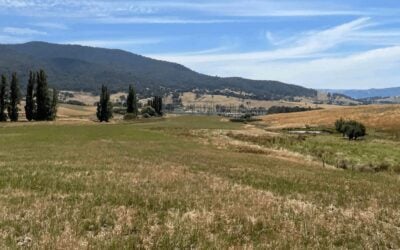
The three proposed microgrids would provide service to communities along Clear Lake’s northwest shore, spanning from North Lakeport to Nice, and portions of the Hidden Valley Lake region.
All three projects are entering early development phases to assess feasibility, with geotechnical core sampling, preliminary test well drilling, and related activities scheduled for the upcoming months. The FLASHES projects emerged from collaborative efforts between local government entities and Trane Energy Services.
This second allocation directs US$30 million dollars toward projects that will serve more than 2,200 customers and support critical facilities including schools, fire stations, and health centres.
These projects employ various combinations of solar power, BESS, biomass, and biodiesel. Collectively, they extend access to reliable local energy solutions throughout PG&E’s service territory, encompassing projects in Humboldt, Sonoma, San Mateo, Butte, Placer, and El Dorado counties. Individual award amounts range between US$2-US$6 million dollars.
One second-round project is already progressing in San Mateo County, where the Pescadero project will be led by WestLight Energy, formerly known as Peninsula Clean Energy.
Announced 27 August, this system will provide electricity to most of Pescadero, a remote coastal community along the San Mateo coastline.
The project encompasses more than 200 customers including key critical facilities. The microgrid will incorporate approximately 1.5MW of solar PV generation capacity and a 2MW BESS designed to support at least 24 hours of independent operation. Beyond PG&E’s MIP funding, this project will receive additional financial support from WestLight Energy and the County of San Mateo.
Massachusetts awards US$40 million across 36 BESS projects
Meanwhile, in Massachusetts, the state’s Department of Energy Resources (DOER) has awarded funding to 36 projects through its Advancing Massachusetts Power Energy Storage Grant Programme.
DOER is distributing approximately US$40 million with the majority directed towards deploying BESS at critical community facilities across the state.
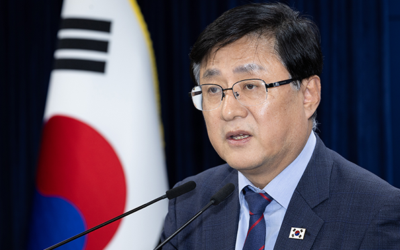
Energy and Environmental Affairs Secretary Rebecca Tepper noted that batteries supplied more electricity to the grid in the first eight months of 2026 than in all of 2025, with the programme bringing that momentum to communities most in need.
Energy Resources Commissioner Elizabeth Mahony emphasised that the vast majority of funding is headed to environmental justice communities, which typically experience longer power outages, an aging grid, and higher energy bills.
The community resilience grants will fund BESS installations at schools, affordable housing developments, community centres, public works facilities, wastewater treatment plants and other critical sites to maintain operations during outages whilst reducing energy costs. The projects will add approximately 10MW, or 44MWh, of BESS capacity across Massachusetts.
The largest single project awards US$2.5 million each to the Springfield Water and Sewer wastewater treatment plant for a 2,500kW/10,030kWh system and the Braintree Department of Public Works for a 1,250kW/4,500kWh installation. The Barnstable County Jail received US$2.17 million for a 1,000kW/3,456kWh system.
Multiple school facilities received funding for 250kW/1,728kWh BESS, including Acushnet Ford Middle School (US$1.36 million), Cape Cod Technical High School (US$1.32 million), Chelmsford McCarthy Middle School (US$1.34 million), Falmouth High School (US$1.36 million), Hopkinton High School (US$1.32 million), and Mohawk Trail Regional School (US$1.44 million).
The Mattahunt Elementary School and Community Centre in Boston received US$2.49 million for a larger 1,043kW/2,087kWh system.
Several affordable housing developments received funding, including Heritage Apartments in Boston (US$1.24 million for 200kW/1,044kWh), Leventhal House 2LifeCommunities in Boston (US$780,750 for 250kW/627kWh), and Lower Mills Apartment in Boston (US$749,421 for 125kW/522kWh).
Multiple other affordable housing projects received US$521,640 each for 125kW/261kWh systems.
Community centres also received substantial awards, with the Josiah Willard Hayden Recreation Center in Lexington receiving US$1.55 million for a 250kW/1,728kWh system, the Tobin Community Centre in Boston awarded US$1.25 million for a 250kW/500kWh installation, and the Nantucket Boys & Girls Club receiving US$765,180 for a 250kW/522kWh system.
The Lowell Regional Water Utilities wastewater treatment plant was awarded US$2.5 million for a 469kW/4,514kWh installation, whilst the Medway Department of Public Works received US$1.32 million for a 250kW/1,728kWh system.
LDES pilots test emerging technologies
Two projects will deploy LDES technologies capable of storing electricity for 10 to 20 hours, helping communities maintain reliable power during extended outages and periods of high electricity demand whilst enabling innovative companies to test and scale new storage technologies in Massachusetts.
The Berkshire East Mountain Resort in Charlemont received US$4.51 million for a 4MW/80MWh sodium-iron chloride battery system from iron-sodium battery manufacturer Inlyte, providing 20 hours of storage duration.
The Mystic Place Apartments in Medford was awarded US$883,500 for a 0.24MW/2.4MWh aqueous zinc battery system from zinc hybrid cathode battery and storage system maker Eos Energy, offering 10 hours of storage capacity.
The programme also includes funding for safety and education initiatives to support first responders, municipal officials, electricians, contractors and regional planning organisations with training on battery safety, fire codes, permitting, inspections and emergency response protocols.
Five organisations received awards totalling approximately US$2.5 million for these training programmes across the state’s 13 planning regions.
More information about the grant programme can be found on the DOER’s website.
Earlier this month, Massachusetts Governor Maura Healey released a framework establishing principles for responsible data centre development in the state.
Announced 8 September, the framework addresses opportunities and challenges presented by data centre development, including construction jobs and local tax revenue alongside concerns about grid infrastructure costs, energy affordability, reliability, climate impacts, air quality, water resources, noise, and land use.
The framework provides clarity for developers on responsible practices and expectations for those seeking sales and use tax exemptions under Massachusetts law, whilst guiding executive agencies, municipalities, legislative discussions, and Department of Public Utilities actions
In July, the DOER issued a request for proposals (RFP) for 1,000MW of energy storage in the state. Governor Healey signed comprehensive energy legislation mandating the procurement of 5,000MW of BESS by 31 July 2030, in November 2024.